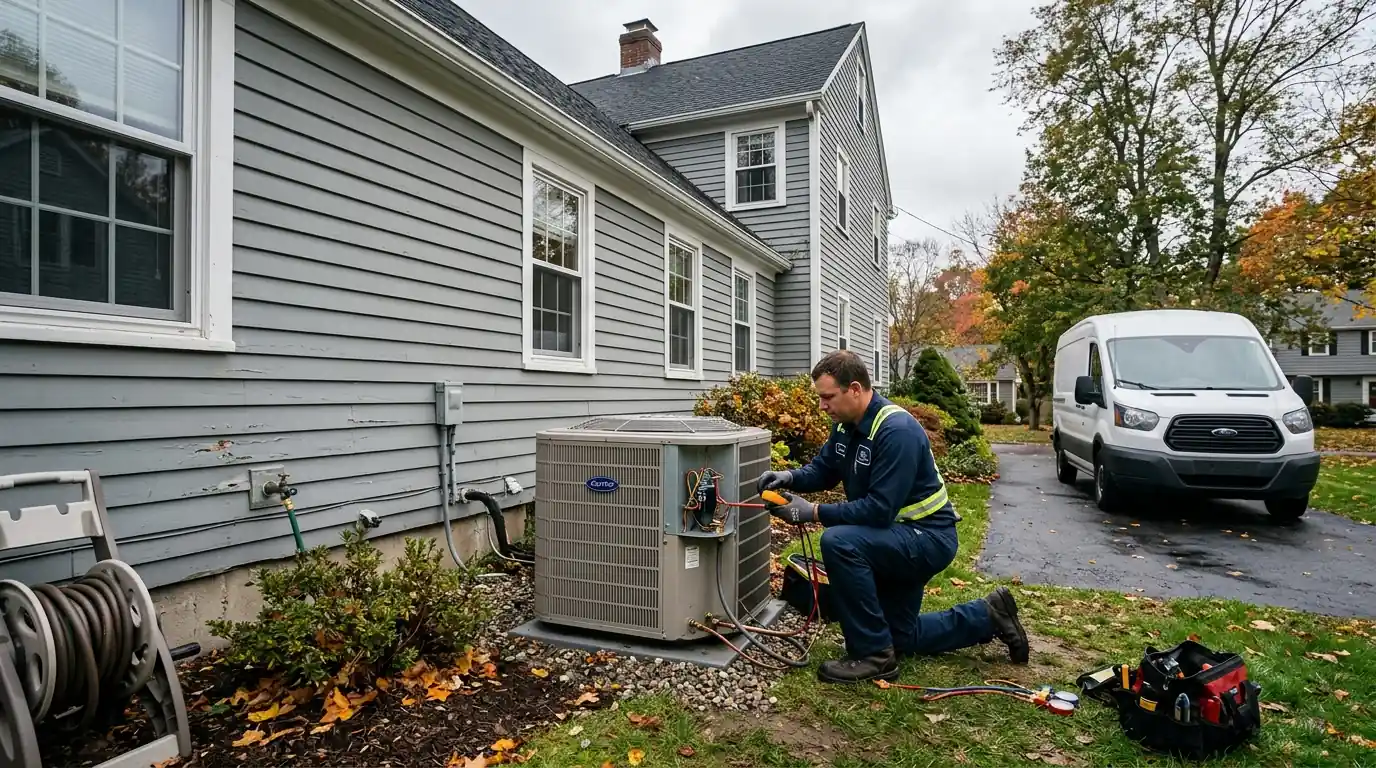
Air conditioner tune-ups in Bridgeport before the first heat wave
A spring visit that cleans the coils, tests the parts that fail on the hottest day, and checks the refrigerant, with the readings in writing.
An AC tune-up in Bridgeport is a spring visit that cleans the outdoor and indoor coils, tests the capacitor, contactor and motors, checks refrigerant pressures and clears the condensate drain. It takes about an hour for a central system, and you get the readings in writing, including any part that is close to failing.
Updated October 2026
What a spring tune-up catches
The parts that fail on the first ninety-degree day, capacitors, contactors and fan motors, usually show weakness in April. A capacitor reading low or a contactor with pitted points is a ten-minute replacement in spring and an emergency call in July.
A clean coil also moves heat out of the house more easily, which shortens run times and takes some weight off the summer bill.
What every AC tune-up covers
- Outdoor coil cleaning and fin straightening
- Indoor coil inspection
- Refrigerant pressure and temperature readings
- Run capacitor microfarad test
- Contactor inspection
- Compressor and fan motor amp draw
- Electrical connection tightening
- Condensate drain flush and float switch test
- Written report with readings and findings
The Bridgeport side of this job
Condensers near the water in Black Rock and along the Bridgeport shore take salt air all year, which corrodes coil fins and electrical terminals faster than inland units, so the spring rinse and connection check matter more there. With Connecticut electricity running roughly 24 to 30 cents per kWh, a clean coil and a correctly charged system also shave real money off every summer bill, which is the other half of why the visit pays for itself.
Coil Cleaning and Refrigerant Check
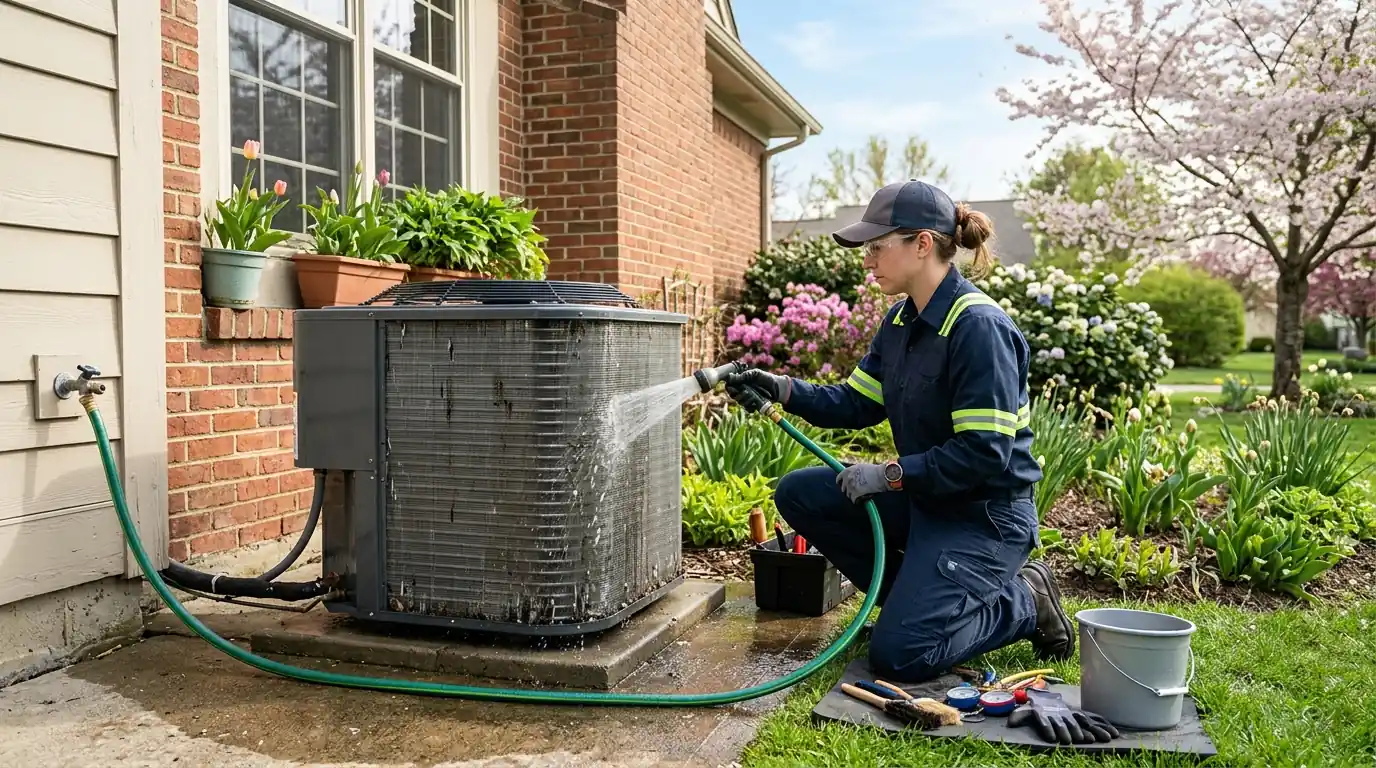
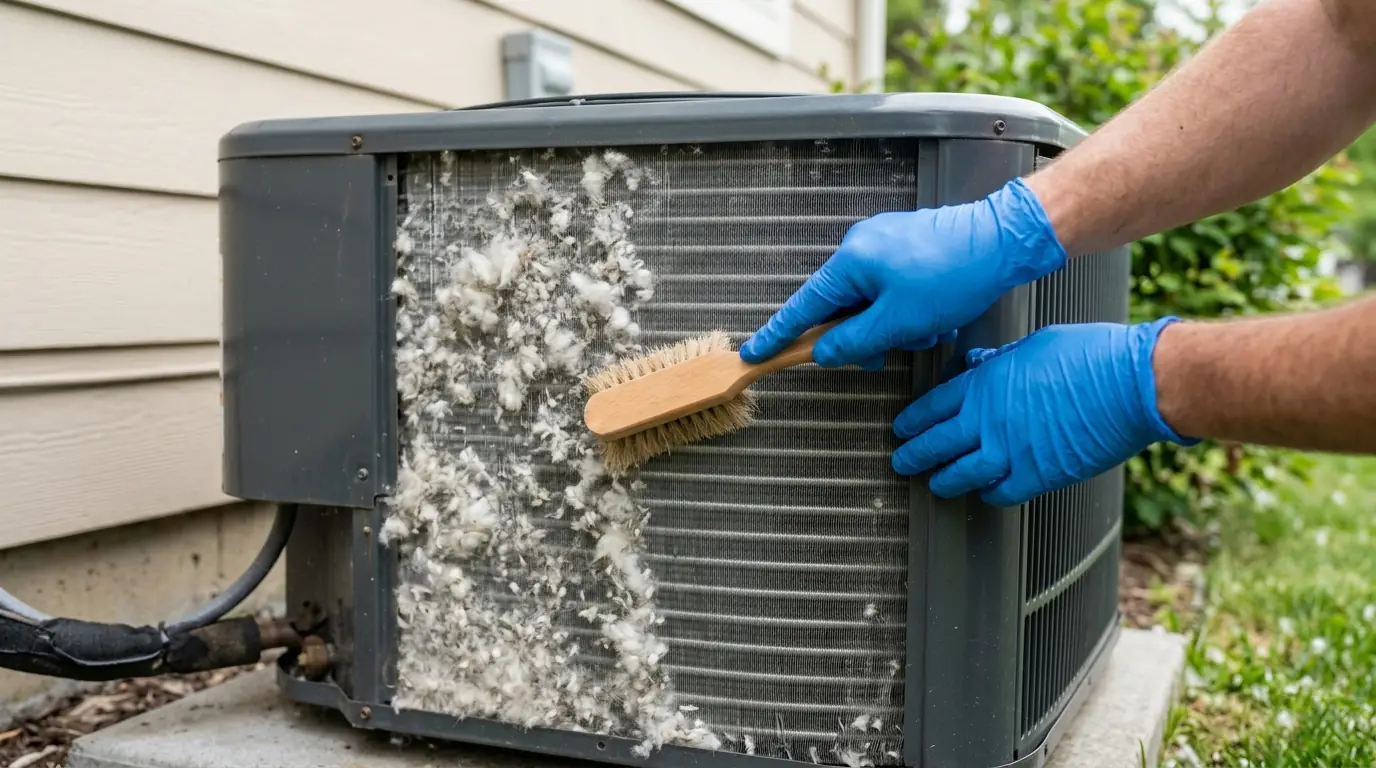
The outdoor coil collects cottonwood fluff, grass clippings and dust through the year, and a dirty coil forces the compressor to work harder and run hotter. We shut the power off, clean the coil from the inside out and straighten bent fins. Indoors, we inspect the evaporator coil for dirt and corrosion. Then we read refrigerant pressures and temperatures. A system that is low has a leak, and we note it rather than simply topping it off. The leak search is quoted separately.
Capacitor and Amp Draw Testing
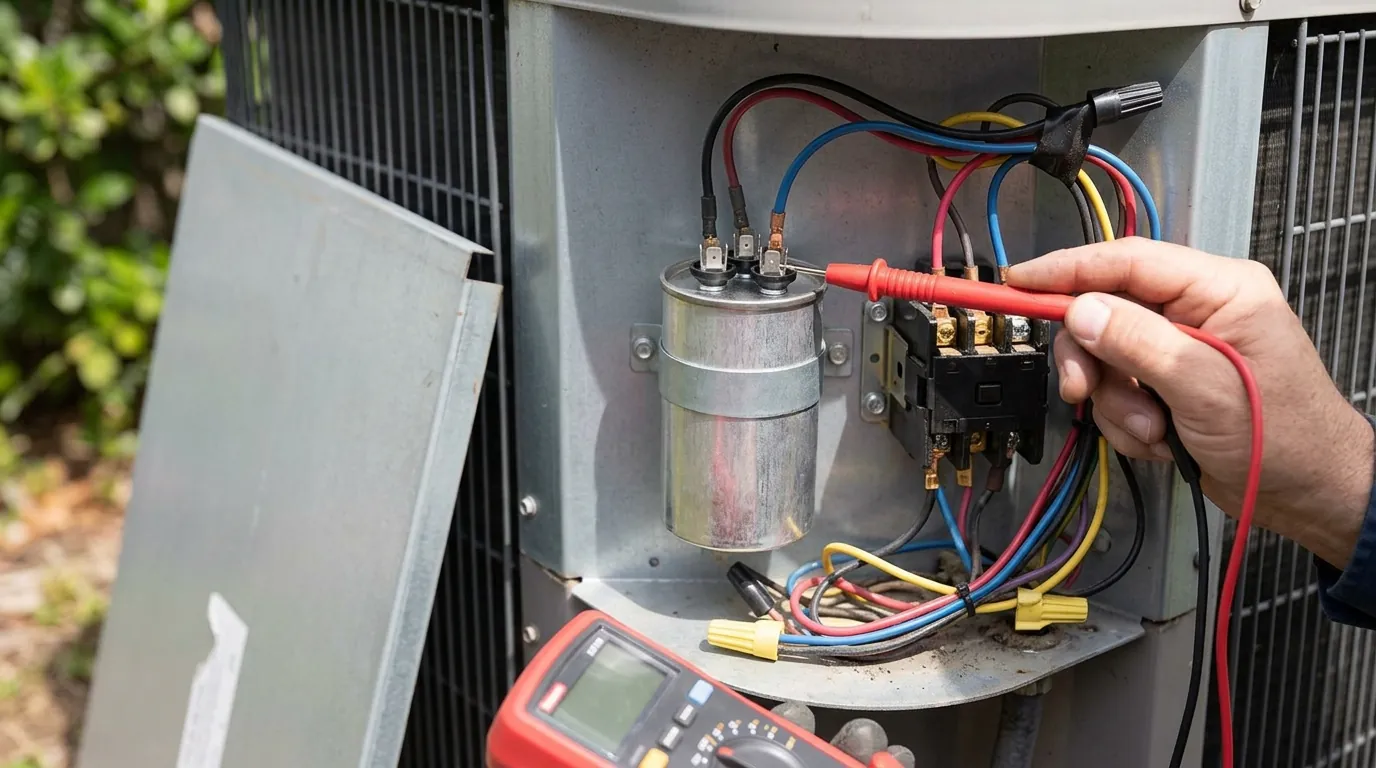
The run capacitor helps start and run the compressor and fan motor, and it is the single most common part to fail on a hot afternoon. We measure its microfarad rating against its label; one reading well below spec is replaced before it strands you. We also check the contactor for pitting, measure the compressor and fan amp draw against their rated values, and tighten electrical connections, which loosen over a season of vibration and heat. Loose lugs are a common cause of burned wiring.
Condensate Drain Clearing
An air conditioner pulls gallons of water out of the air on a humid day, and that water has to drain. Algae and sludge in the drain line cause the overflow that stains ceilings under attic air handlers and floods basements. We flush the drain, check the trap, test the float switch where one is installed and treat the pan to slow new growth. On mini splits we clear each indoor head's drain as well, since those clog the same way.
How an AC tune-up visit runs
- 1
Book before summer
We schedule spring visits before the first heat wave.
- 2
Power off and inspect
Disconnect off, panel open, wiring and parts inspected.
- 3
Clean the coil
Outdoor coil cleaned and fins straightened.
- 4
Test electrical
Capacitor, contactor and motor amp draw measured.
- 5
Check refrigerant
Pressures and temperatures recorded.
- 6
Clear drains
Condensate lines flushed and float switch tested.
- 7
Report
Readings and weak parts written up for your decision.
What you can do between tune-ups
Change the filter every one to three months while the AC runs, keep two feet of clearance around the outdoor unit, and hose loose debris off the outside of the coil with the power off. Keep indoor registers and returns open.
Leave refrigerant, electrical parts and the inside of the condenser to a technician. The capacitor can hold a charge even with the power off, and a pressure washer on a coil flattens the fins it is meant to clean.
What changes the cost of a tune-up
Central or ductless
Each mini split head adds cleaning time.
Coil condition
Heavily clogged or corroded coils take longer to clean.
Attic air handlers
Harder access adds time for the indoor side.
Parts found weak
Capacitors or contactors are quoted and replaced only with approval.
Refrigerant found low
A leak search is a separate repair, not part of the tune-up.
Plan or one-time
Plan visits are scheduled together with heating service.
AC Tune-Up questions from Bridgeport homeowners
In spring, before the first stretch of hot weather, when parts can be replaced on your schedule.
It includes checking the charge. A low system has a leak, which is repaired separately.
Yes. Indoor heads need their coils, blower wheels and drains cleaned, usually yearly.
About an hour for a central system, longer with several mini split heads.
No. Weak parts are written up with a price and replaced only if you approve.
Yes. It confirms the charge and airflow and catches installation issues early.
Related jobs we handle
High-Velocity AC Systems
Small-duct central air for homes without ductwork.
How we handle high-velocity AC systemsEvaporator Coil Replacement
Leaking indoor coils replaced with a matched coil.
How we handle evaporator coil replacementHeat Pump Installation
Cold-climate heat pumps, often replacing oil, with rebate filing.
Heat Pump Installation in BridgeportBook the spring visit before the heat
Call to schedule an AC tune-up now, before the first hot week fills the calendar.