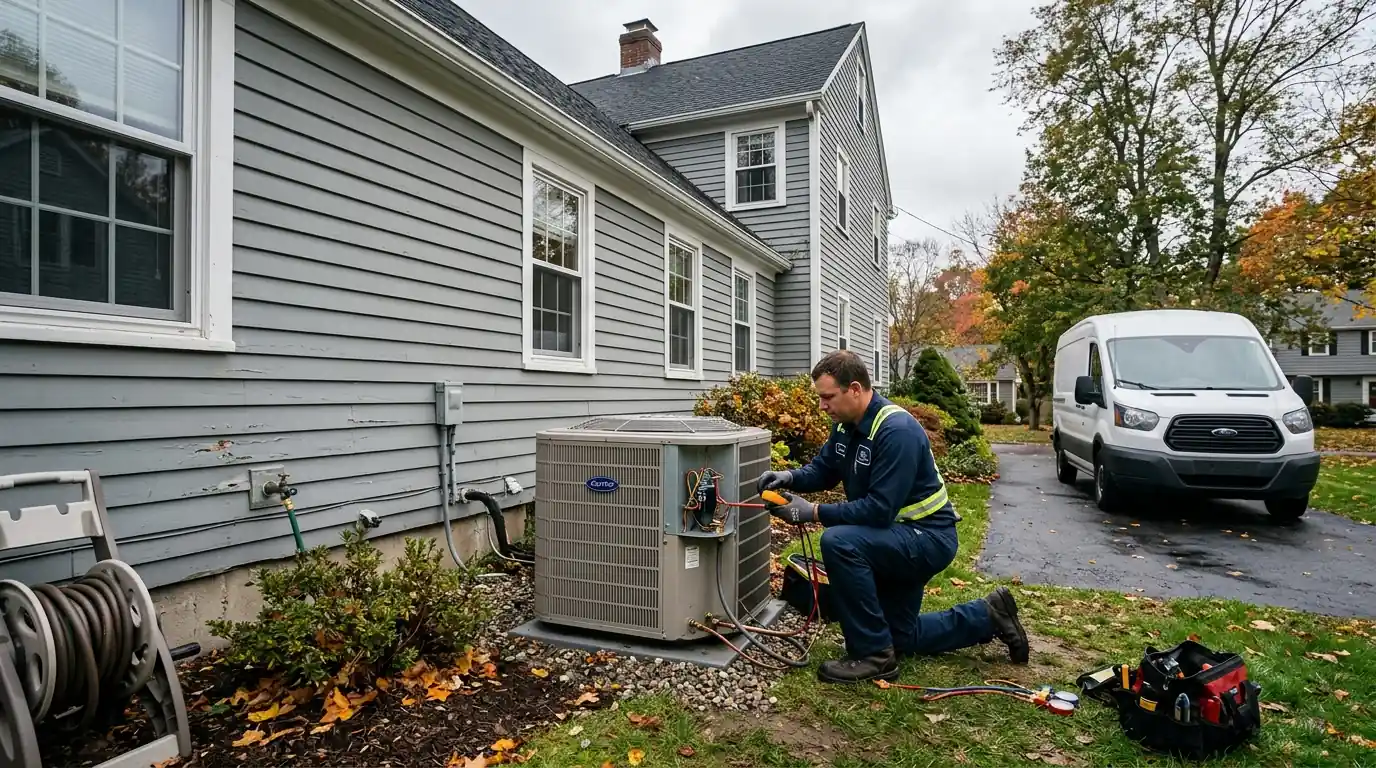
Seasonal heating and cooling maintenance for Bridgeport homes
Two visits a year, timed before the first freeze and the first heat wave, with a written report each time.
A Bridgeport HVAC maintenance plan is two scheduled visits a year: a fall heating check before the first freeze and a spring cooling check before summer. Each visit covers cleaning, safety testing and measurements on the equipment, and you get a written report of what was found and what, if anything, needs attention.
Updated October 2026
What maintenance actually prevents
Most no-heat calls in January trace back to parts that were visibly worn in October: a cracked ignitor, a dirty flame sensor, a clogged oil nozzle, a weak capacitor. A maintenance visit is where those get caught while replacing them is a scheduled ten-minute job instead of an overnight emergency.
We time the visits so heating equipment is checked before it has to run hard and cooling equipment before the first humid week. You are called to book each one, so nothing depends on remembering.
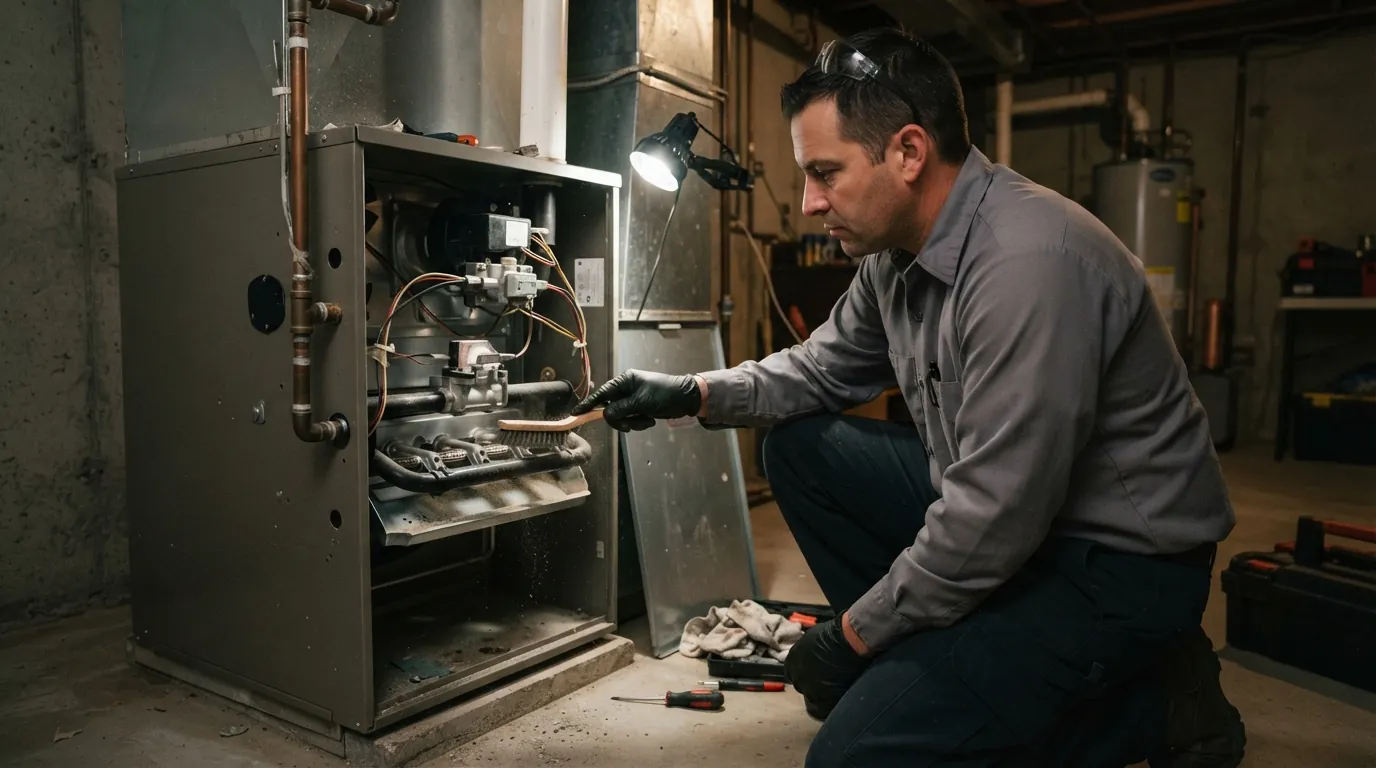
What every plan visit includes
- Burner or coil cleaning
- Combustion and carbon monoxide test on fuel-burning equipment
- Heat exchanger or boiler section inspection
- Flame sensor, ignitor and safety switch check
- Oil nozzle, filter and strainer change on oil systems
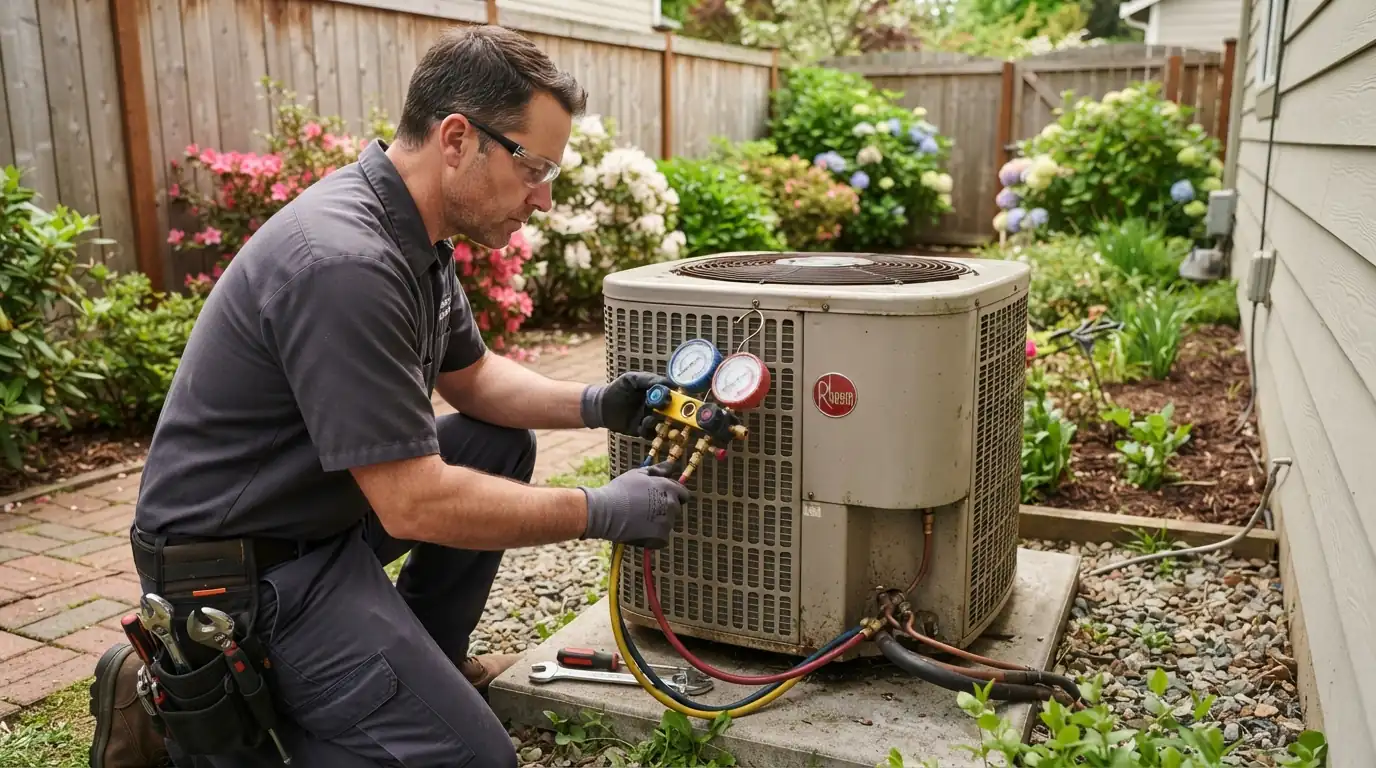
- Refrigerant pressure and temperature split on cooling
- Capacitor, contactor and amp draw test
- Condensate drain clearing
- Written report with readings and ranked findings
Why Bridgeport houses change the approach
Bridgeport January lows average around 27 degrees, and July highs sit near 81 with humidity in the mid 70s year round, so equipment here works hard in both seasons with only a short break between. Homes near the water in Black Rock also see salt air on outdoor condensers, which corrodes coil fins and electrical connections faster than inland. We rinse those coils on the spring visit and check the disconnect and contactor for corrosion every time.
Spring Cooling and Fall Heating Visits
The fall visit covers whatever heats the house: a gas or oil furnace, a hot-water or steam boiler, or a heat pump in heating mode. We clean the burner, test combustion and carbon monoxide, check the heat exchanger, flame sensor and safeties, and change the oil nozzle and filter on oil equipment. The spring visit covers cooling: coil cleaning, refrigerant pressures, capacitor and contactor testing, condensate drain clearing and a temperature split across the coil. Homes with both a boiler and central air get both visits covered.
Priority Scheduling
When a cold snap or a heat wave hits, the phone lines fill in hours. Plan customers are booked ahead of new calls on the next open slot, which matters most in the first week of real cold, when the equipment that was never serviced all fails at once. We still answer every call around the clock; the plan simply moves you up the list for the visit. If your system does fail between visits, the report from the last visit usually tells the technician where to look first.
What Each Visit Covers
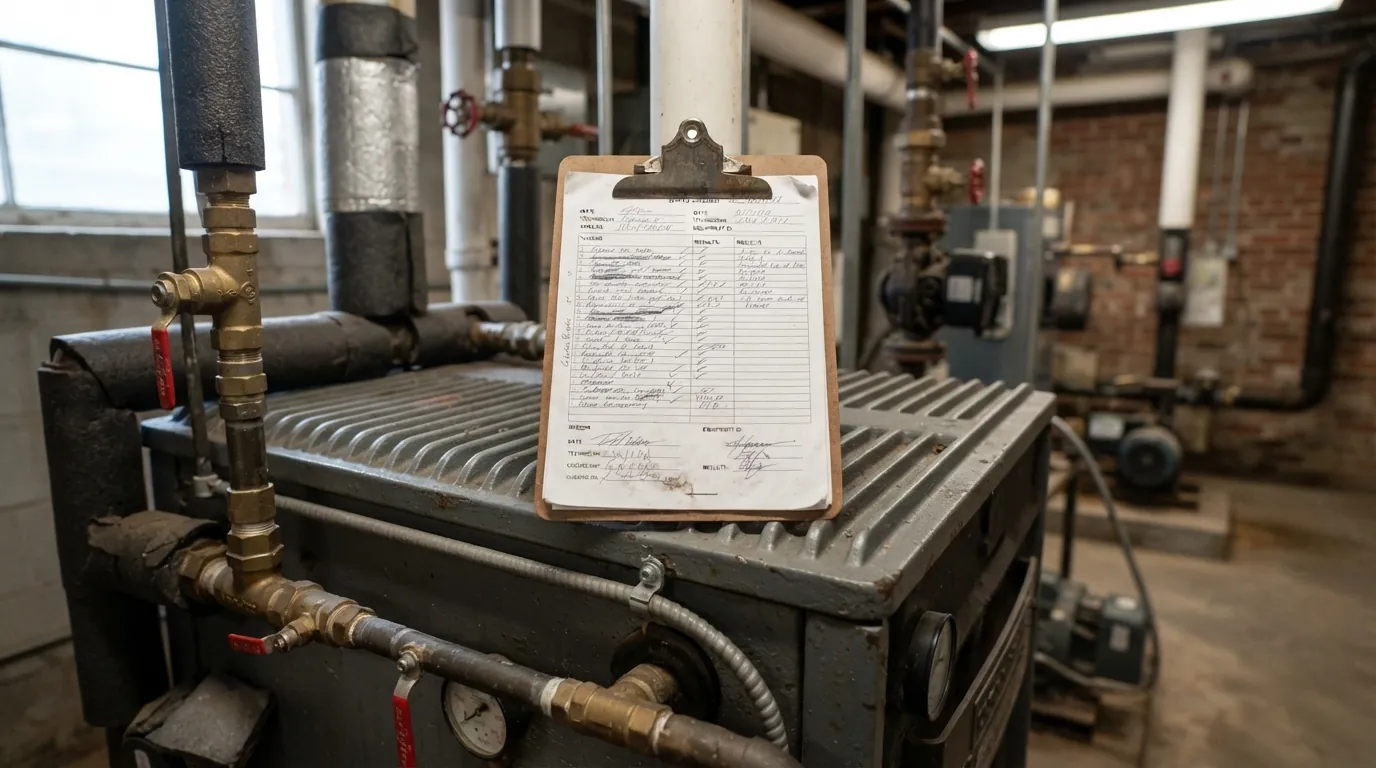
Every visit ends with a written report listing the readings we took, the parts we cleaned or adjusted, and anything we found worn or failing, ranked by urgency. Nothing is replaced without your approval. The report stays with you and with us, so the next technician sees the history: the capacitor that was reading low in April, the nozzle size on the oil burner, the zone valve that was slow to open. That history is what turns a maintenance plan into fewer surprises rather than a sticker on the furnace.
How a plan visit runs
- 1
We call to book
You get a call before each season with open times.
- 2
Arrive and review
The technician reads the last report before touching anything.
- 3
Clean
Burners, coils, blower wheels and drains are cleaned as the system needs.
- 4
Test safety
Combustion, carbon monoxide, limit switches and flame sensing are checked.
- 5
Measure
Pressures, temperatures, amp draw and static pressure are recorded.
- 6
Report
You get the readings and any worn parts, ranked by urgency.
- 7
Approve or not
Any repair is your decision, priced before work starts.
One-time tune-up or a plan?
| Option | Good fit when | Tradeoff |
|---|---|---|
| One-time tune-up | You want a single check before selling or after moving in | You have to remember to book it next year |
| Heating visit only | You have a boiler and window units | Central air or mini splits go unchecked |
| Heating and cooling plan | You have both systems and want them booked for you | Two visits a year to schedule around |
What changes the cost of a plan
Equipment count
A furnace plus central air is two systems; a boiler, air handler and condenser can be three.
Fuel type
Oil equipment needs a nozzle, filter and strainer change each fall.
Steam or hot water
Steam boilers need extra checks on the low-water cutoff and sight glass.
Heat pumps and mini splits
Each indoor head adds cleaning time.
Access
Attic air handlers and crawlspace units take longer to reach.
Parts found worn
Replacements are quoted separately and only done with your approval.
HVAC Maintenance Plans questions from Bridgeport homeowners
Heating equipment once a year before winter, cooling once a year before summer. Oil burners especially should not skip a year.
No. Visits include cleaning, testing and a report. Repairs are priced separately and only done with your approval.
Yes. We schedule the first visit for whichever system is due next.
Yes. Steam visits add the low-water cutoff, sight glass and main vent checks.
Call any hour. Plan customers are booked ahead of new calls for the next open slot.
Yes. Indoor heads collect dust and mold on the blower wheel and need cleaning, usually yearly.
Related jobs we handle
Home Buyer HVAC Inspection
Pre-purchase heating, cooling and oil tank inspection.
More on home buyer HVAC inspectionGet both seasons on the calendar
Call to set up a plan, and we will book the visit for whichever system is due next.