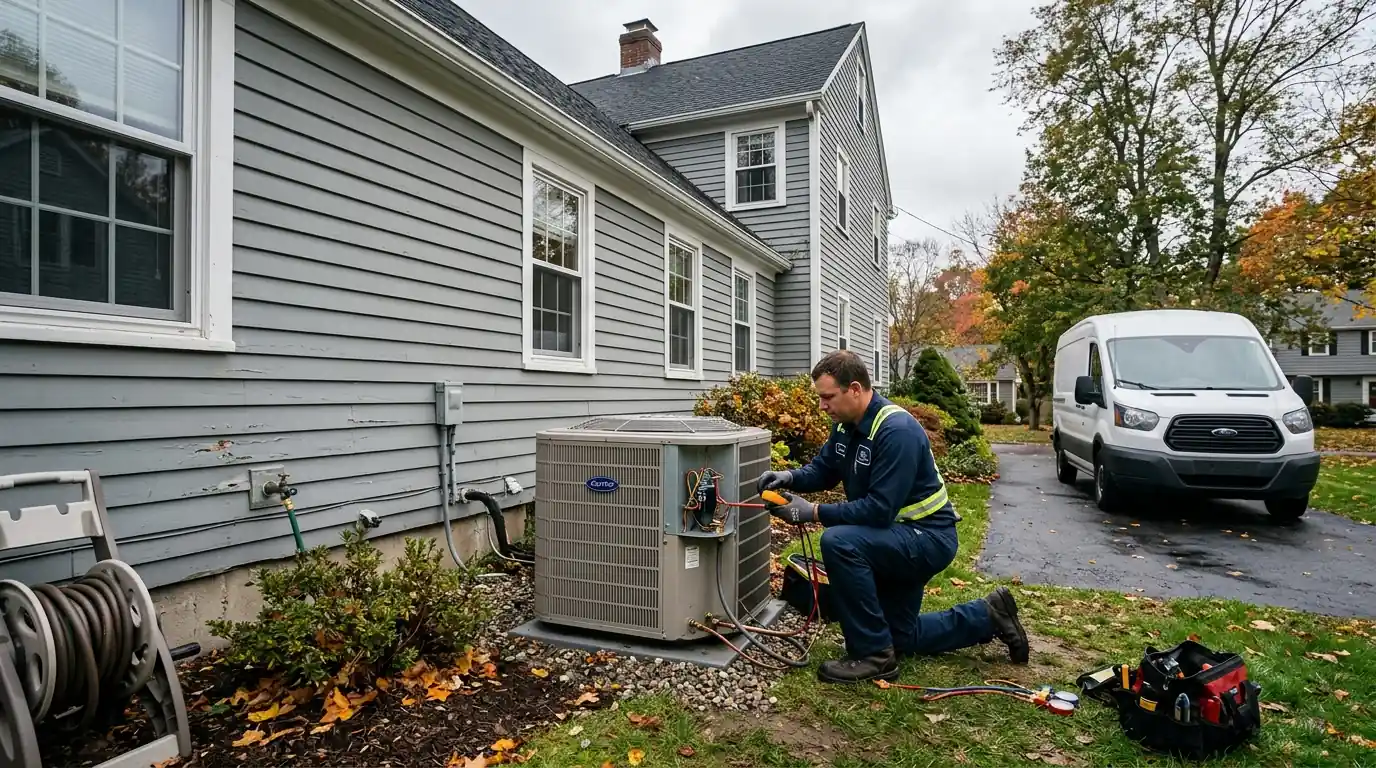
Oil furnace replacement for Bridgeport homes without gas service
When there is no gas line or you want to stay on oil, a new oil furnace with a correctly sized burner and a sound flue uses less fuel than the one it replaces.
An oil furnace replacement typically costs about $3,800 to $10,000, according to published national ranges, depending on size, efficiency, flue work and tank condition. In Bridgeport most swaps take one day. We size the furnace to the house, set up the burner, check the chimney and oil tank, and test combustion before we leave.
Updated October 2026
When a new oil furnace is the right call
Not every house can switch to gas, and not every owner wants to go fully electric. If gas is not in the street, if the oil tank is in good shape, or if you plan to add a heat pump later and keep oil as backup, a new oil furnace is a sensible choice.
A modern oil furnace with a correctly sized burner and nozzle burns cleaner and uses less oil than a unit from decades ago. We look at the chimney, the tank and the ducts before quoting, so there are no surprises on install day.
What decides the price of an oil furnace
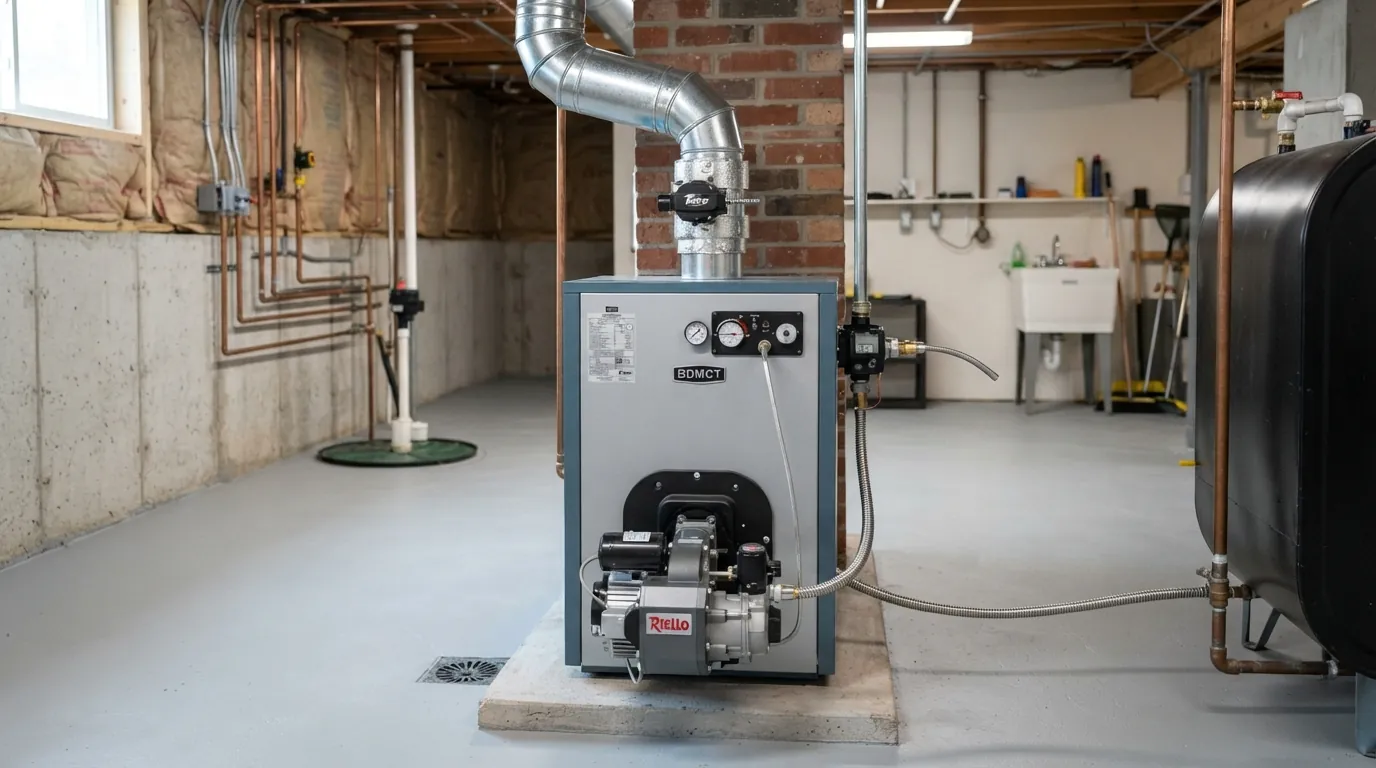
Published national ranges put oil furnace replacement at about $3,800 to $10,000. The factors below decide where a particular house lands.
Furnace size and efficiency
Higher-efficiency oil furnaces cost more to buy.
Chimney liner
An unlined or oversized chimney may need a liner.
Tank condition
An old or leaking tank may need replacing at the same time.
Ducts and coil
New transitions or a coil refit add labor.
Access
Narrow basement stairs slow removal and setting.
Permit
Connecticut heating permits typically run $100 to $300.
What an oil furnace install includes
- Room-by-room load calculation
- Removal and disposal of the old furnace
- New oil furnace set and leveled
- Duct transitions and filter rack
- Oil line connection with a new filter
- Burner nozzle and pump pressure set to spec
- Flue pipe and barometric damper
- Permit, inspection and combustion test
- Thermostat connection and walk-through
Oil furnace, gas conversion or heat pump?
| Option | Good fit when | Tradeoff |
|---|---|---|
| New oil furnace | No gas in the street and a sound oil tank | Oil remains the costliest common fuel |
| Oil-to-gas conversion | Gas is available and the furnace is due anyway | Gas service, piping and venting add scope |
| Heat pump with oil backup | You want lower running costs and cooling | Higher upfront cost; electrical work likely |
Oil Furnace Replacement
A replacement starts with sizing the furnace to the house, not to the old nameplate, since many older oil furnaces were oversized. The old unit is disconnected, the oil line capped, and the furnace removed. The new furnace is set on a level base, connected to the existing ducts with new transitions where needed, and wired to the thermostat. If the house has central air, the coil is checked for fit on the new furnace, since a mismatch there costs airflow.
Burner and Nozzle Sizing
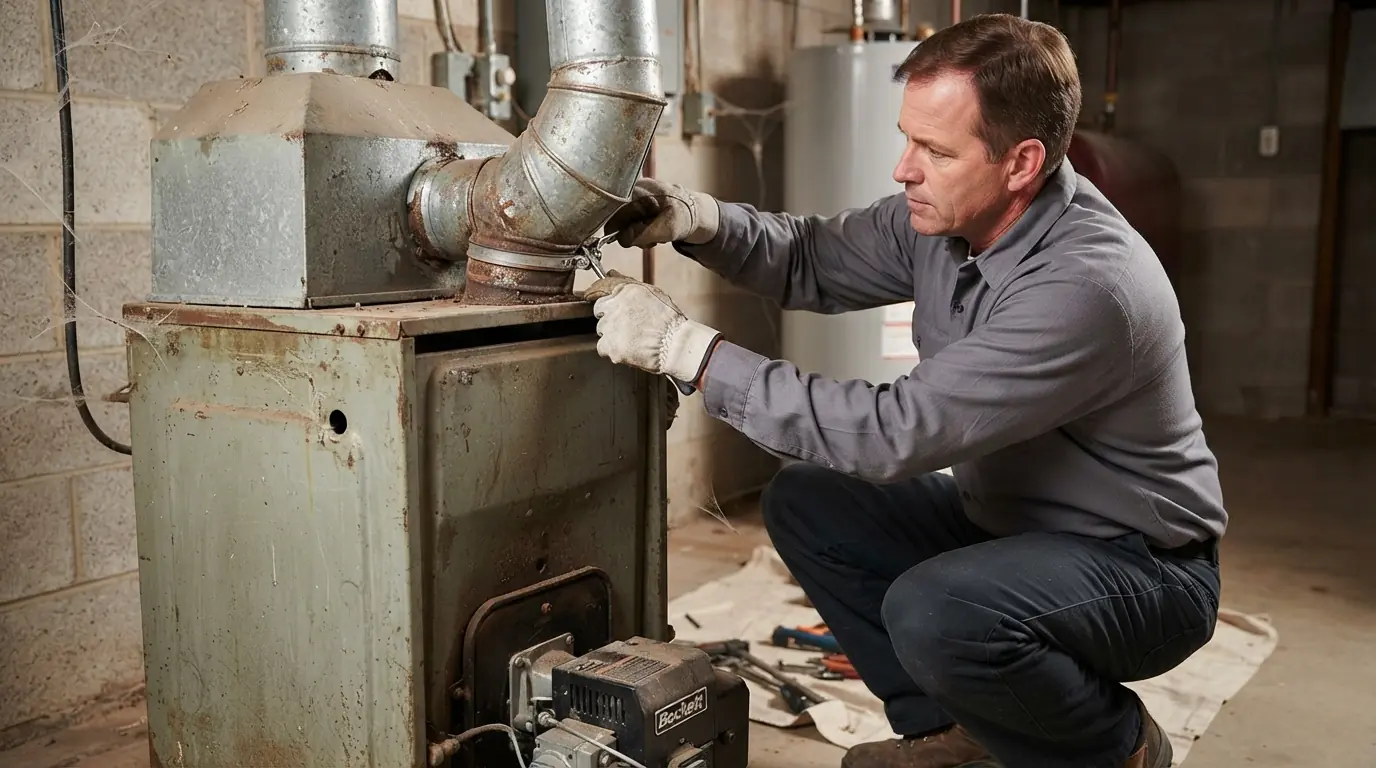
The burner and nozzle decide how much oil the furnace burns and how cleanly it burns it. We set the nozzle size and spray pattern the manufacturer specifies for the furnace's firing rate, set pump pressure, and adjust the air band with a combustion analyzer. A burner set up by ear smokes, soots the heat exchanger and wastes oil. One set up by instrument runs clean from the first season, which is also when an annual cleaning starts paying for itself.
Chimney and Flue Requirements
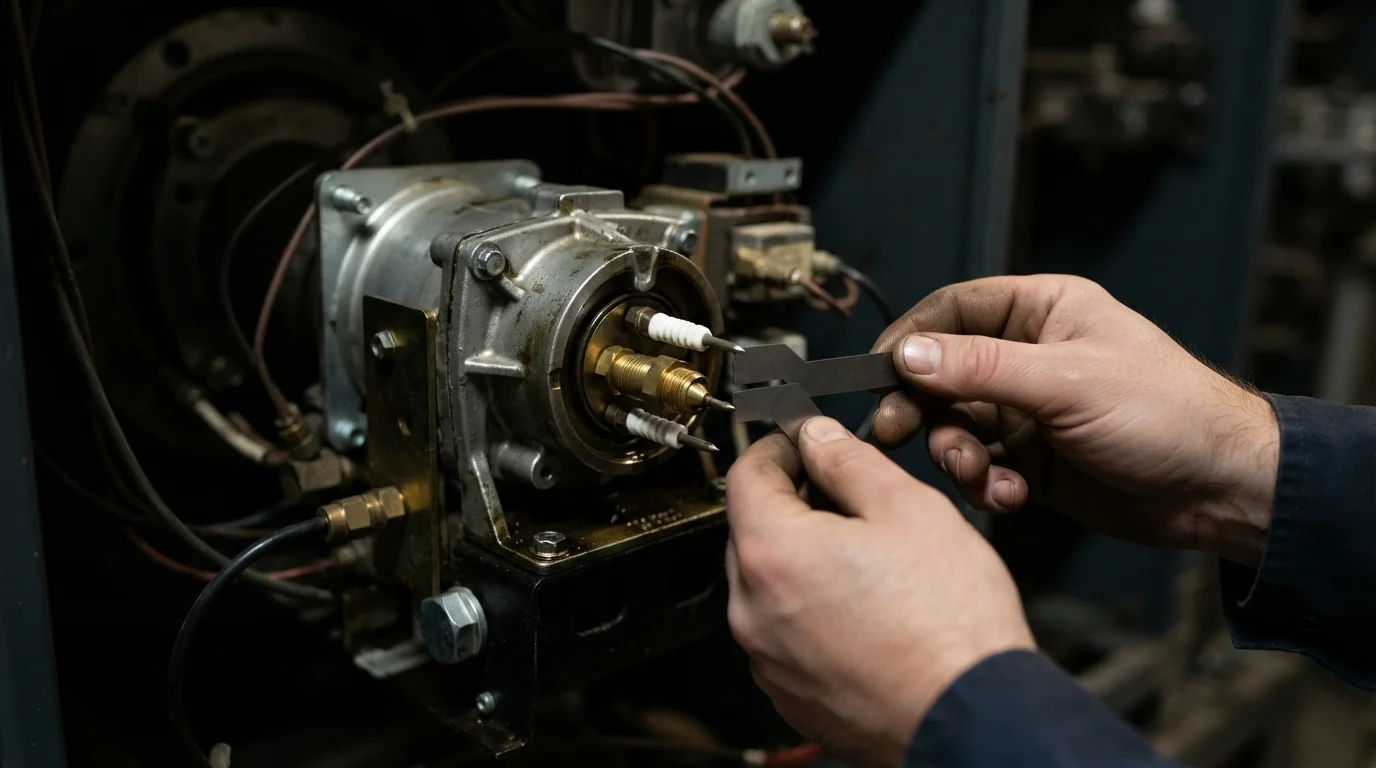
An oil furnace vents into a chimney, and the chimney has to draw properly for the burner to run safely. We inspect the flue for blockage, deterioration and correct size, and check that the flue pipe from the furnace pitches up to the chimney with sound joints and a barometric damper set to the right draft. An old unlined masonry chimney may need a liner, especially if a water heater shares it. Draft is measured with the new furnace running before we leave.
How this job plays out in Bridgeport
Connecticut's oil use varies sharply by place: around 7 percent of households in gas-served cities such as New Haven, and far higher in towns without gas mains. Statewide, only about 36 percent of homes heat with utility gas. That is why oil furnaces still make sense for parts of the area we serve, and why we look at gas availability on your street before recommending oil or a conversion.
We service and install Carrier, Lennox, Trane, Goodman and more
How an oil furnace replacement runs
- 1
Load calculation
The house is sized room by room.
- 2
Chimney and tank check
Flue, draft and tank condition are inspected.
- 3
Written quote
Furnace, venting and any tank work priced separately.
- 4
Permit
We file with the town.
- 5
Install day
Old furnace out, new furnace set, ducts, oil line and wiring connected.
- 6
Burner setup
Nozzle, pressure and air adjusted by combustion test.
- 7
Draft and safety test
Draft, carbon monoxide and limits verified with the furnace running.
Oil Furnace Installation questions from Bridgeport homeowners
If gas is in your street and the furnace is due, a conversion is usually worth pricing. Otherwise a new oil furnace is reasonable.
Published national ranges put it at about $3,800 to $10,000 installed.
Sometimes, especially with an old unlined chimney or a shared flue. We check draft first.
Yes, with a matched coil on the furnace and a condenser outside.
If it is old, corroded or leaking, doing it at the same time saves a second visit.
Usually one day.
Related jobs we handle
Oil-to-Gas Conversion
New gas furnace or boiler, chimney lining and oil tank removal.
Oil-to-Gas Conversion in BridgeportComplete HVAC System Replacement
Matched furnace and AC replaced together, ducts checked.
Complete HVAC System Replacement in BridgeportFurnace Tune-Up
Fall combustion, safety and airflow check with a written report.
How we handle furnace tune-upReplace your oil furnace the right way
Call to book a quote. We check the chimney, the tank and the ducts before we give you a number.