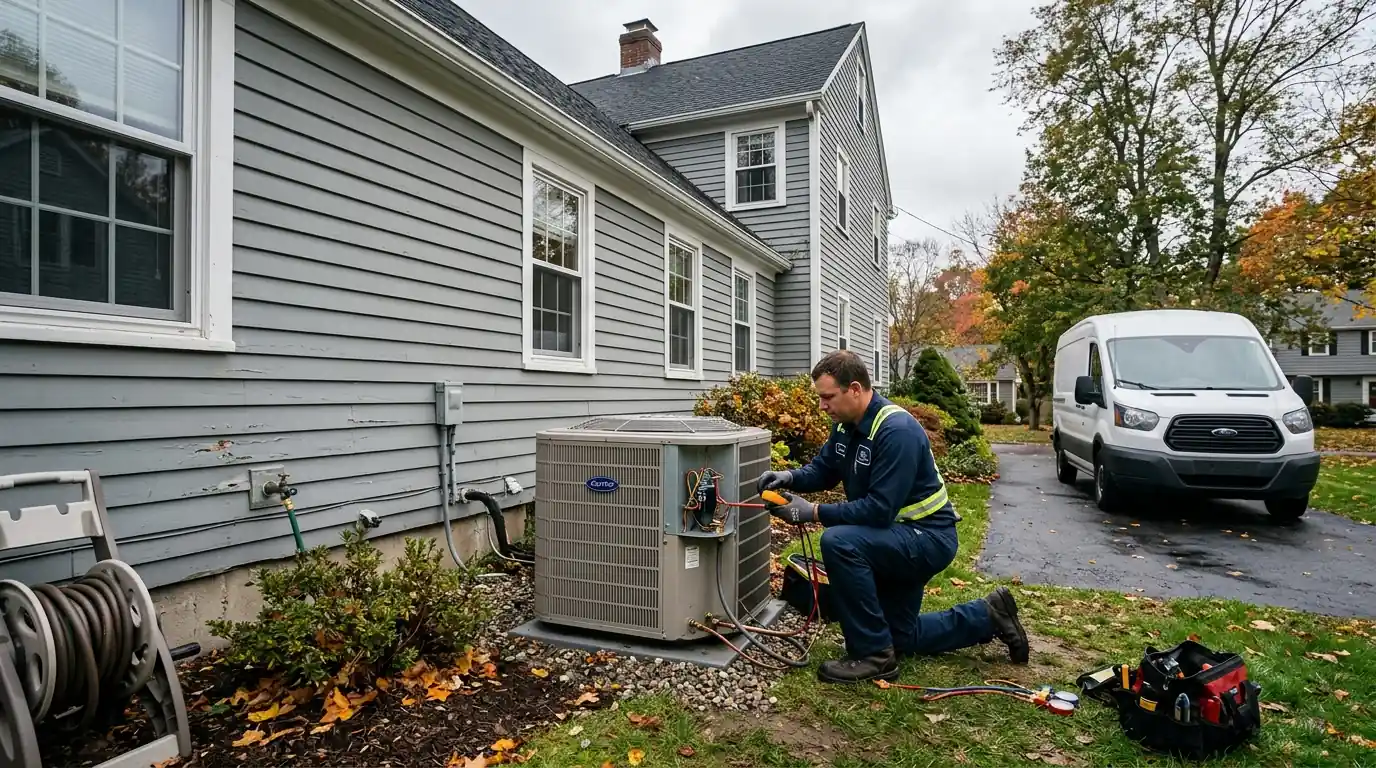
Furnace repair in Bridgeport when the heat quits or will not stay on
A furnace that will not light, lights and shuts off, or runs without heating: we find the failed part, price it and fix it, gas or oil.
Most Bridgeport furnace repairs come down to a failed ignitor, a dirty flame sensor, a bad capacitor or blower motor, or a limit switch tripping from poor airflow. We answer 24/7, test the furnace with meters before replacing anything, and price the repair before work starts. Common parts ride on the van.
Updated October 2026
Signs your furnace needs a technician
Lights then shuts off
Usually a dirty flame sensor or a failing ignitor.
Blower runs, air is cold
The burner is not lighting or not staying lit.
Short cycling
Often a limit switch tripping from restricted airflow.
Loud bangs at startup
Delayed ignition that should be checked promptly.
Carbon monoxide alarm
Leave the house and call; do not reset the furnace.
What happens on a furnace repair call
- 1
Call any hour
We ask what the furnace is doing and whether there is a gas smell.
- 2
Read the codes
The control board's fault code shows where the sequence stopped.
- 3
Test with meters
Ignitor, sensor, pressure switch and blower are tested.
- 4
Check safety
Carbon monoxide and flue draft are checked on every call.
- 5
Price the repair
You get the cost before any part goes in.
- 6
Repair
Most common parts are replaced from the van.
- 7
Cycle test
The furnace runs through several full cycles before we leave.
How we find the actual fault
A furnace runs through the same sequence every time: the thermostat calls, the inducer starts, the pressure switch closes, the ignitor heats, the gas valve opens, the flame is proven, and the blower comes on. When heat stops, one step in that chain has failed, and the furnace's fault code or the step where it stops tells us which.
We watch the sequence with meters, so the repair stays with the part that failed.
Ignitor and Flame Sensor Faults
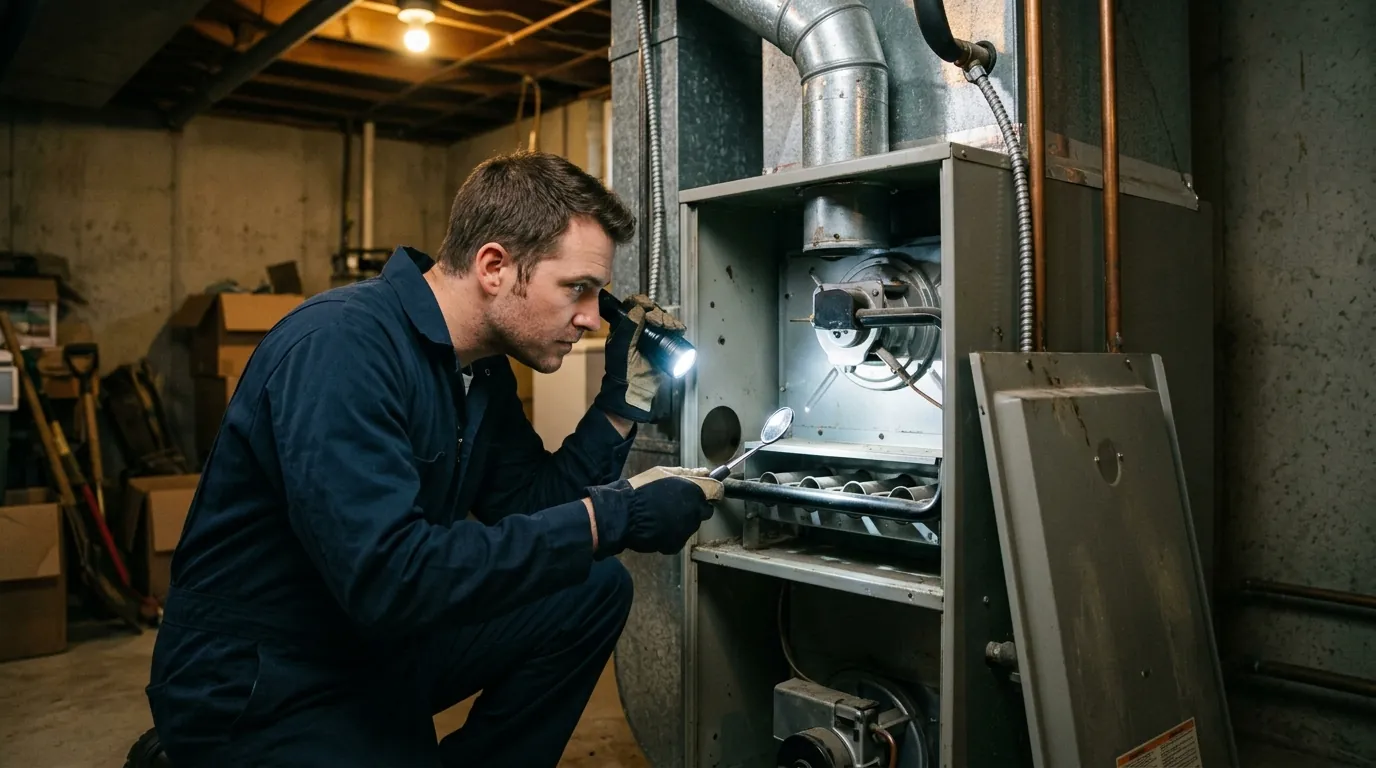
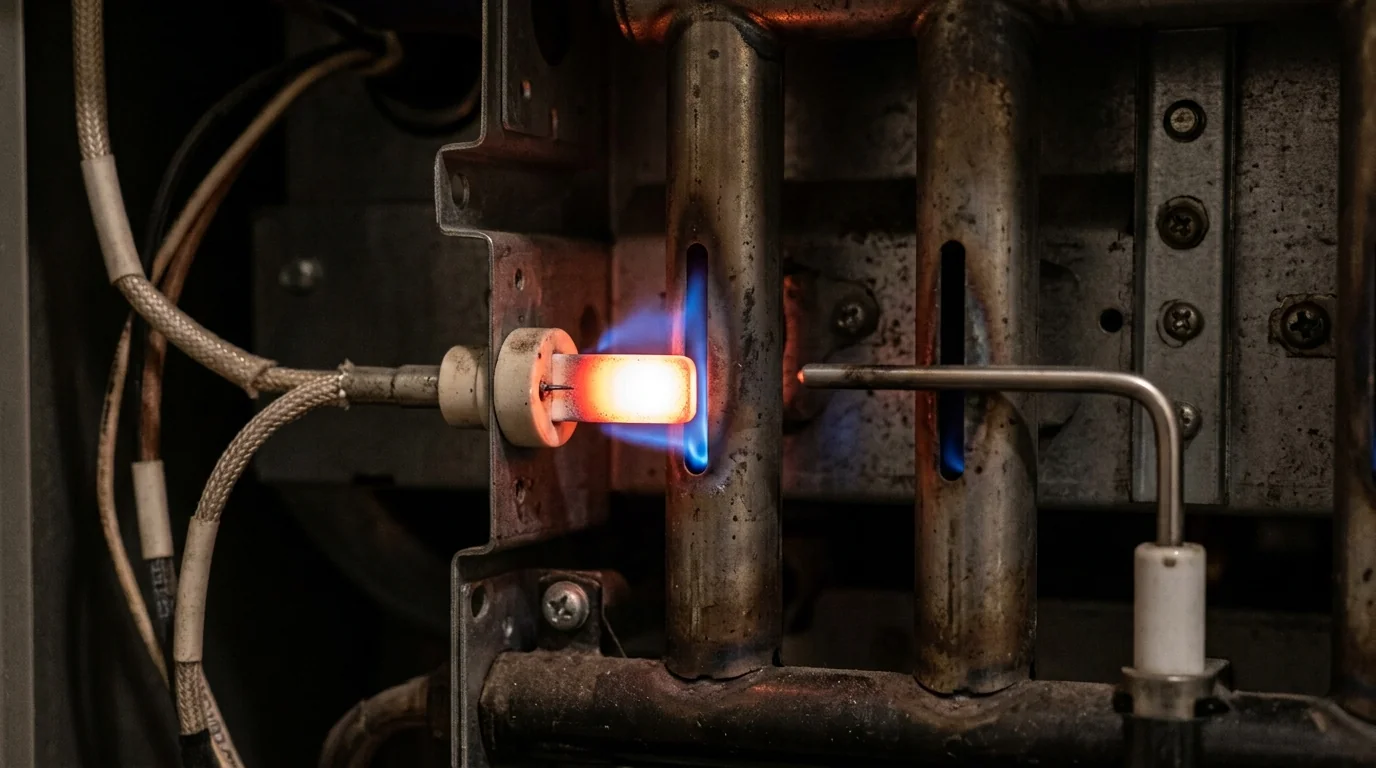
The most common no-heat call is a furnace that tries to light and gives up. A hot-surface ignitor cracks with age and stops glowing, so the gas never lights. A flame sensor coated with residue cannot prove the flame, so the furnace lights for a few seconds and shuts down, then tries again. We test the ignitor's resistance and the sensor's microamp signal. A dirty sensor is cleaned, a cracked ignitor is replaced, and the furnace is run through several cycles before we leave.
Blower Motor and Capacitor Replacement
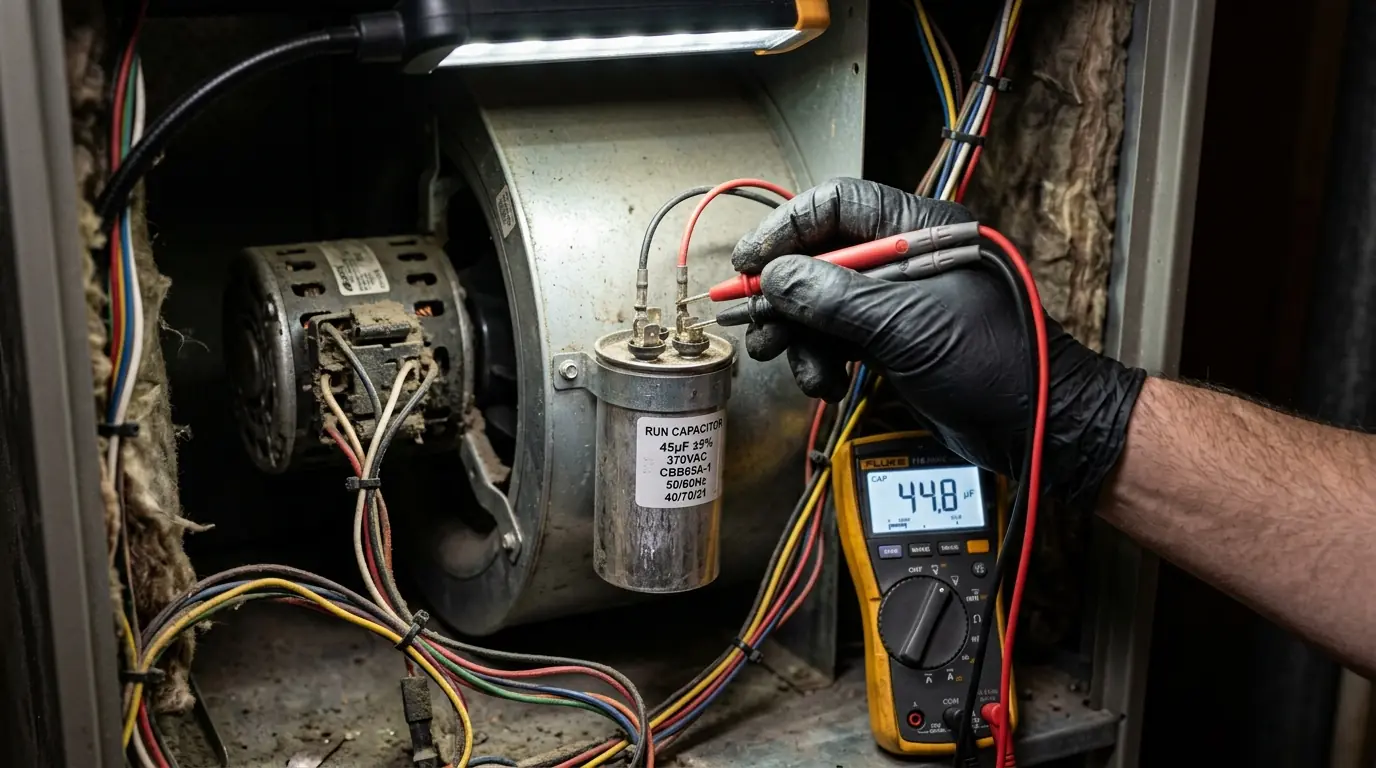
If the furnace heats but no air comes out of the registers, or the blower hums without spinning, the run capacitor or the blower motor has usually failed. A weak capacitor is a quick, inexpensive fix. A failed motor costs more, and on variable-speed furnaces the motor module is a specific part that has to match. We test the capacitor and the motor windings to know which it is, and if the furnace is near the end of its life, we give you that cost next to a replacement quote.
Short Cycling and Limit Switch Trips
A furnace that runs a few minutes, shuts off and restarts is usually overheating and tripping its high-limit switch. The cause is almost always airflow: a clogged filter, closed registers, a failing blower or undersized ducts. Replacing the limit switch without fixing the airflow just means it trips again. We measure the temperature rise across the furnace and the duct static pressure to find the restriction, then fix that first. Often it is as simple as a new filter rack or an extra return, and the furnace stops tripping on its own.
Cracked Heat Exchanger Diagnosis
A cracked heat exchanger can let combustion gases into the airstream, which is why it is taken seriously. It is also sometimes misdiagnosed to sell a furnace. We inspect it with a camera where we can, test for carbon monoxide at the registers and in the flue, and show you what we find. If the exchanger is cracked, the furnace is shut down and tagged, and you get replacement options. If it is not, we say so and look elsewhere.
What we see in Bridgeport homes
With January lows around 27 degrees in Bridgeport, a furnace that fails overnight in winter is a real problem, not an inconvenience. Many forced-air houses here also have older duct systems, and Connecticut homes built before 1975 often have undersized or leaking ducts. That is behind a lot of the short-cycling and limit-switch calls we get in cold snaps, which is why we measure airflow before replacing a switch.
We service and install Carrier, Lennox, Trane, Goodman and more
What to check before you call
Confirm the thermostat is set to heat and above room temperature, the furnace switch is on, and the breaker has not tripped. Pull the filter; a clogged filter causes more limit trips than any failed part. Make sure the furnace door is fully closed, since a safety switch keeps it off otherwise.
Do not repeatedly reset an oil furnace's burner, and never keep resetting any furnace after a carbon monoxide alarm. If you smell gas, leave the house and call from outside.
What changes the cost of a furnace repair
The failed part
A flame sensor cleaning costs far less than a blower motor or control board.
Gas or oil
Oil furnaces add nozzle, filter and pump work.
Variable-speed equipment
Matched motor modules and communicating boards cost more.
After-hours timing
Overnight and holiday calls can carry a different visit rate.
Access
Attic and crawlspace furnaces take longer to work on.
Airflow fixes
Duct restrictions behind limit trips may need their own repair.
Furnace Repair questions from Bridgeport homeowners
Most often a dirty flame sensor or a limit switch tripping from poor airflow. We test both.
A single failed part on a sound furnace usually is. A cracked heat exchanger or repeated failures point to replacement.
Yes, including burners, nozzles, filters, pumps and controls.
Calls are answered 24/7, and no-heat calls in cold weather are dispatched first when the schedule allows.
It tells us which step in the startup sequence failed. We read it on arrival.
Every repair visit includes a carbon monoxide check. If an alarm has gone off, leave the house and call.
Related jobs we handle
AC Repair
Capacitors, contactors, leaks and frozen coils on central air and ductless.
How we handle AC repairBoiler Repair
Cold radiators, leaks, pressure faults and circulators, steam or hot water.
How we handle boiler repairHeat Pump & Mini Split Repair
Icing, drain leaks, error codes and reversing valves.
How we handle heat pump & mini split repairGet the furnace running again
Call any hour and tell us what the furnace is doing, and you get a time on the call and brings the likely parts.