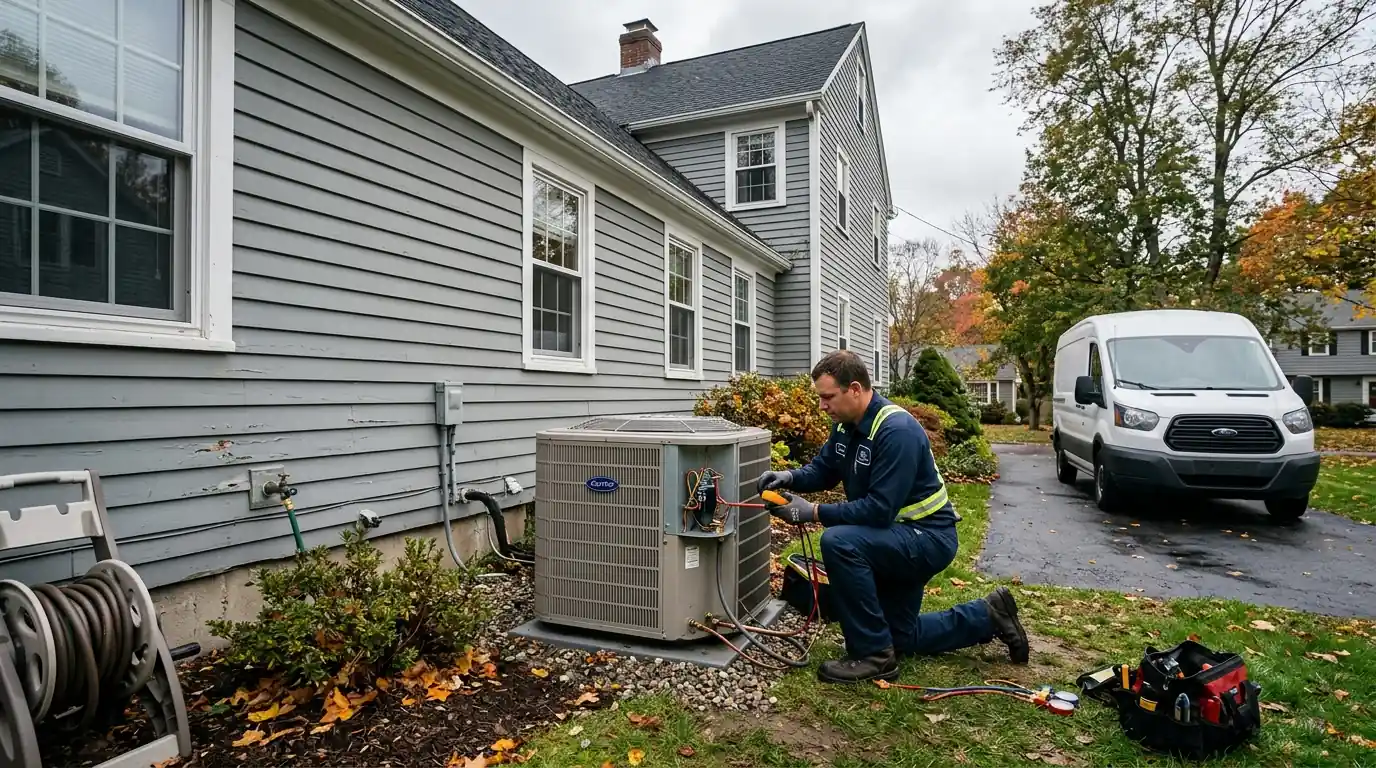
Whole-home humidity control for Bridgeport homes, winter and summer
Humidifiers for the dry heating season and dehumidifiers for humid summers and damp basements, controlled so the house stays comfortable all year.
Whole-home humidity control in Bridgeport means adding moisture in winter, when heating dries the air, and removing it in summer and in damp basements. We install bypass and steam humidifiers on forced-air systems and ducted or standalone whole-home dehumidifiers, with a humidistat that keeps indoor humidity in a comfortable range.
Updated October 2026
Why Bridgeport homes swing from dry to damp
In winter, heated indoor air gets very dry: static shocks, dry skin, gaps opening in wood floors and trim. In summer the opposite happens, especially near the Sound, and basements stay damp enough to smell musty and grow mildew.
One system rarely fixes both. A humidifier works through the furnace in winter; a dehumidifier handles summer and the basement. Controlled together with the right humidistat, they keep the house in a comfortable middle range.
What changes the cost of humidity control
Humidifier type
Bypass humidifiers cost less than steam units.
Dehumidifier capacity
Sized to the area and moisture load.
Ducted or standalone
Ducted units need duct connections.
Water and drain
Water line, drain line or condensate pump.
Electrical
Steam humidifiers and dehumidifiers need power.
Controls
Outdoor-sensing humidistats cost more but work better.
Bypass and Steam Humidifiers for Winter
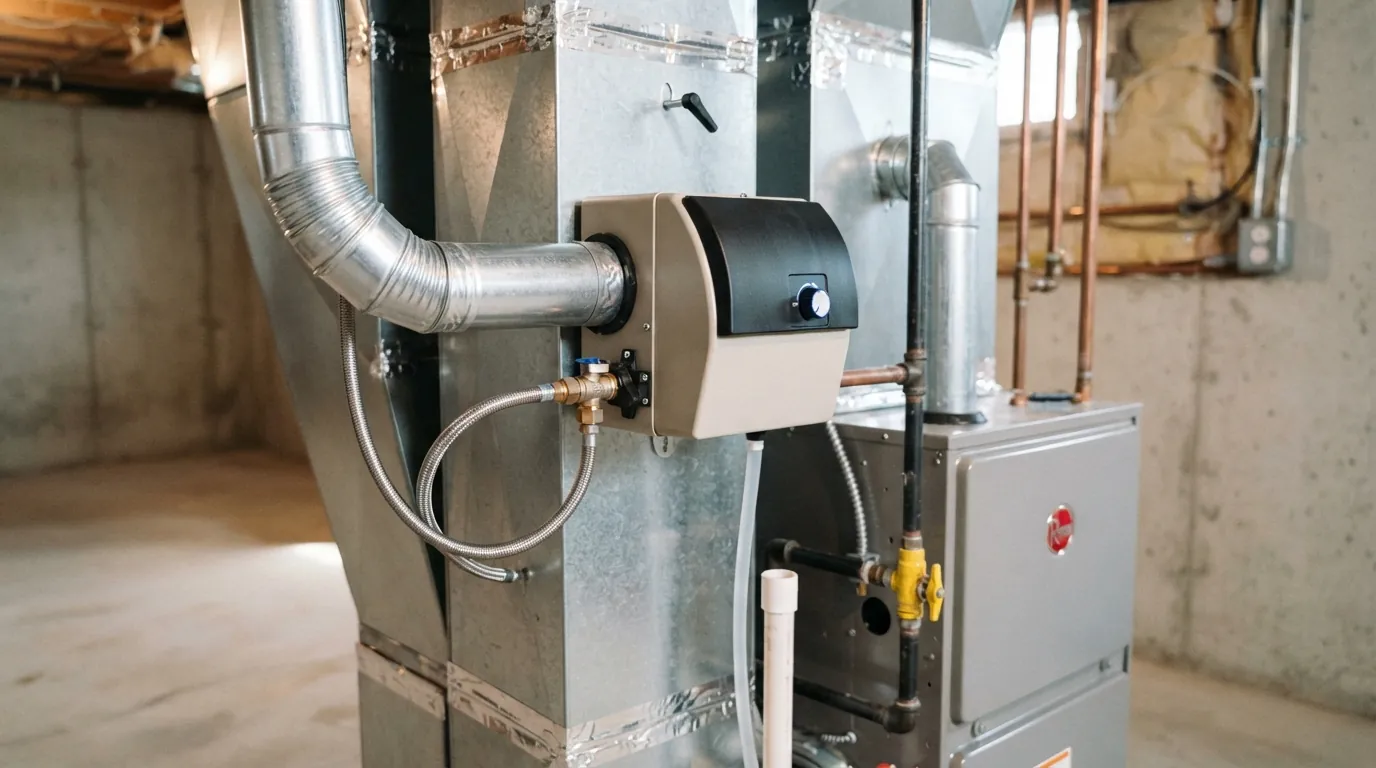
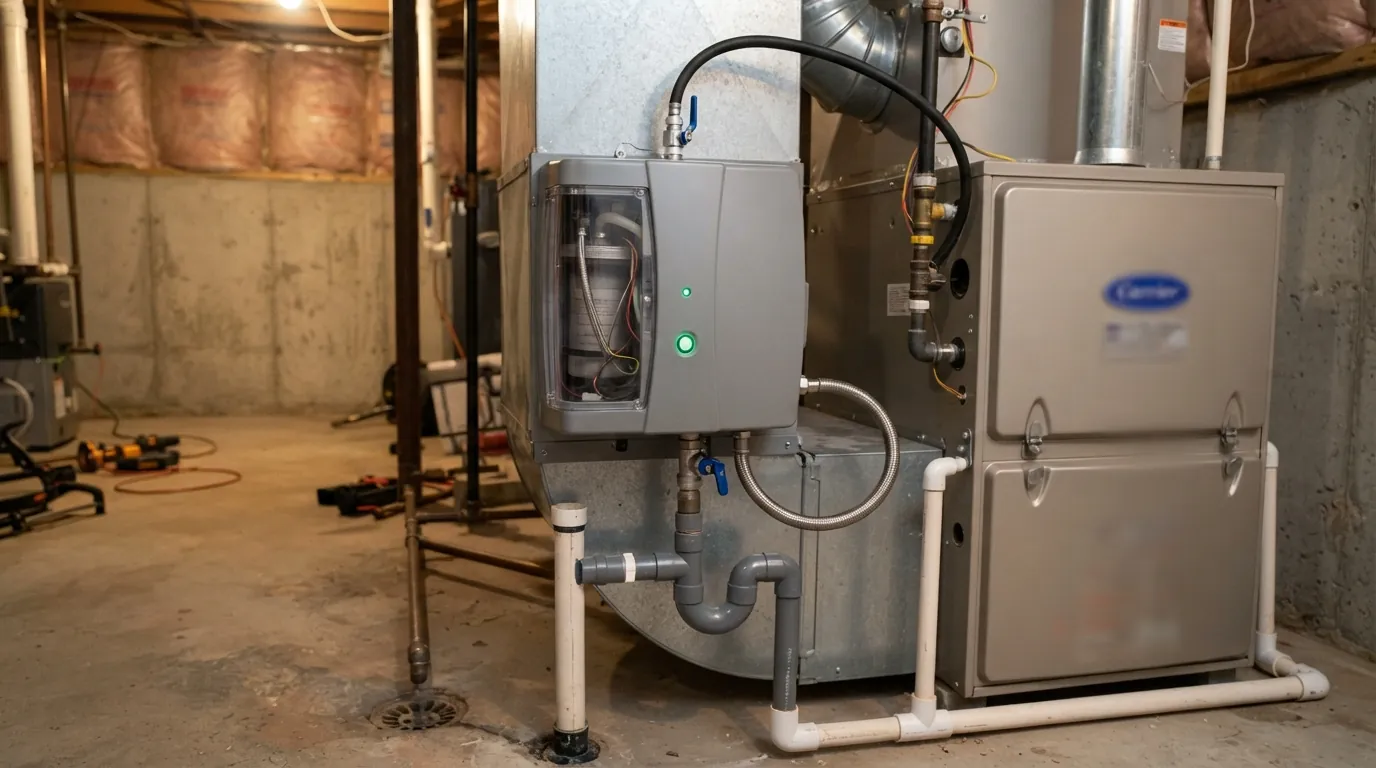
A bypass humidifier mounts on the furnace ductwork and uses the furnace's warm air to evaporate water from a pad, adding moisture whenever the furnace runs. It is simple and inexpensive to run but depends on the furnace running. A steam humidifier boils water to make steam and can add moisture on demand, even when heat is not calling, which suits larger or tighter homes. Both need a water line and a drain, and we size them to the house.
Basement and Whole-Home Dehumidifiers for Summer
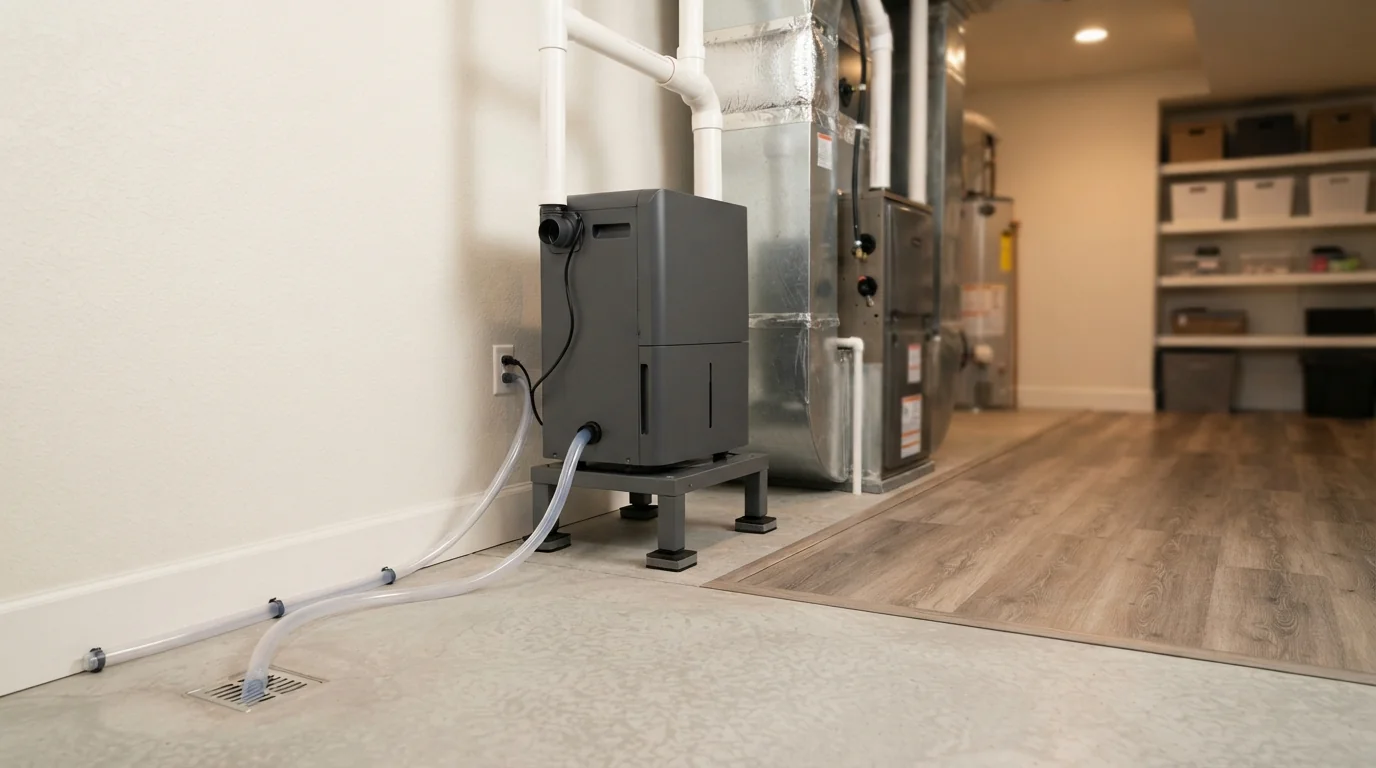
A portable dehumidifier in a damp basement is a start, but it fills up, runs loudly and covers a small area. A whole-home dehumidifier drains continuously and can either sit in the basement or connect to the ductwork to dry the whole house. It removes moisture without overcooling, which matters in humid shoulder-season weather when the air conditioner barely runs. We size it to the space and pipe the drain to a floor drain or pump, so nobody has to empty a bucket.
Humidistat Controls
The humidistat decides how well either system works. For humidifiers, the target should drop as the outdoor temperature drops, or condensation forms on windows in cold snaps; many controls adjust automatically with an outdoor sensor. For dehumidifiers, a setting in a moderate range keeps basements dry without running constantly. We set the controls, explain the settings, and adjust them after the first season if needed. A wall control in the living space is easier to read than one hidden on the equipment, so we mount it where you will actually see it.
How this job plays out in Bridgeport
December is the wettest month in a Bridgeport year that averages about 39 inches of rain, and many older basements here stay damp even in dry spells. A basement dehumidifier is one of the most common add-ons we install. The same houses then dry out sharply once the heat comes on, which is why we often plan winter humidification and summer dehumidification together.
We service and install Carrier, Lennox, Trane, Goodman and more
How a humidity control install runs
- 1
Assess the house
Where it is too dry or too damp, and when.
- 2
Choose equipment
Humidifier, dehumidifier or both, sized to the home.
- 3
Install
Mounted on the ducts or placed in the basement.
- 4
Water and drain
Water line, drain line or pump connected.
- 5
Wire controls
Humidistat and any outdoor sensor installed.
- 6
Set targets
Humidity settings chosen for the season.
- 7
Walk-through
Pad, filter and maintenance explained.
What you can do yourself
An inexpensive hygrometer tells you what the humidity actually is in each part of the house. Run bathroom and kitchen exhaust fans, keep gutters and downspouts directing water away from the foundation, and empty or drain portable dehumidifiers regularly.
Leave water connections, drains into the ductwork and electrical work on steam humidifiers to a technician. A humidifier that leaks into the furnace or a dehumidifier drain that backs up does real damage.
Signs your humidity is off
Static shocks in winter
Air too dry during the heating season.
Condensation on windows
Too much humidity for the outdoor temperature.
Musty basement smell
High humidity and possible mildew.
Gaps in wood floors
Seasonal drying in winter.
Clammy rooms in summer
Air conditioner not removing enough moisture.
Whole-Home Humidifiers & Dehumidifiers questions from Bridgeport homeowners
A moderate range; in cold weather, lower targets prevent window condensation.
Yes, and usually a drain.
Usually, especially a whole-home unit that drains continuously.
Usually not; humidifiers and dehumidifiers are separate units.
Yes; pads or canisters are replaced periodically.
Some, but not always enough in mild, humid weather.
Related jobs we handle
Smart Thermostat Installation
Wired and configured for your furnace, boiler or heat pump.
Smart Thermostat Installation in BridgeportVentilation, ERV & HRV Systems
Balanced fresh air with heat recovery for tight homes.
How we handle ventilation, ERV & HRV systemsGet the humidity right in every season
Call to book a visit. We check where the house is too dry or too damp and size equipment to fix it.