Geothermal heat pump installation for Bridgeport-area homes
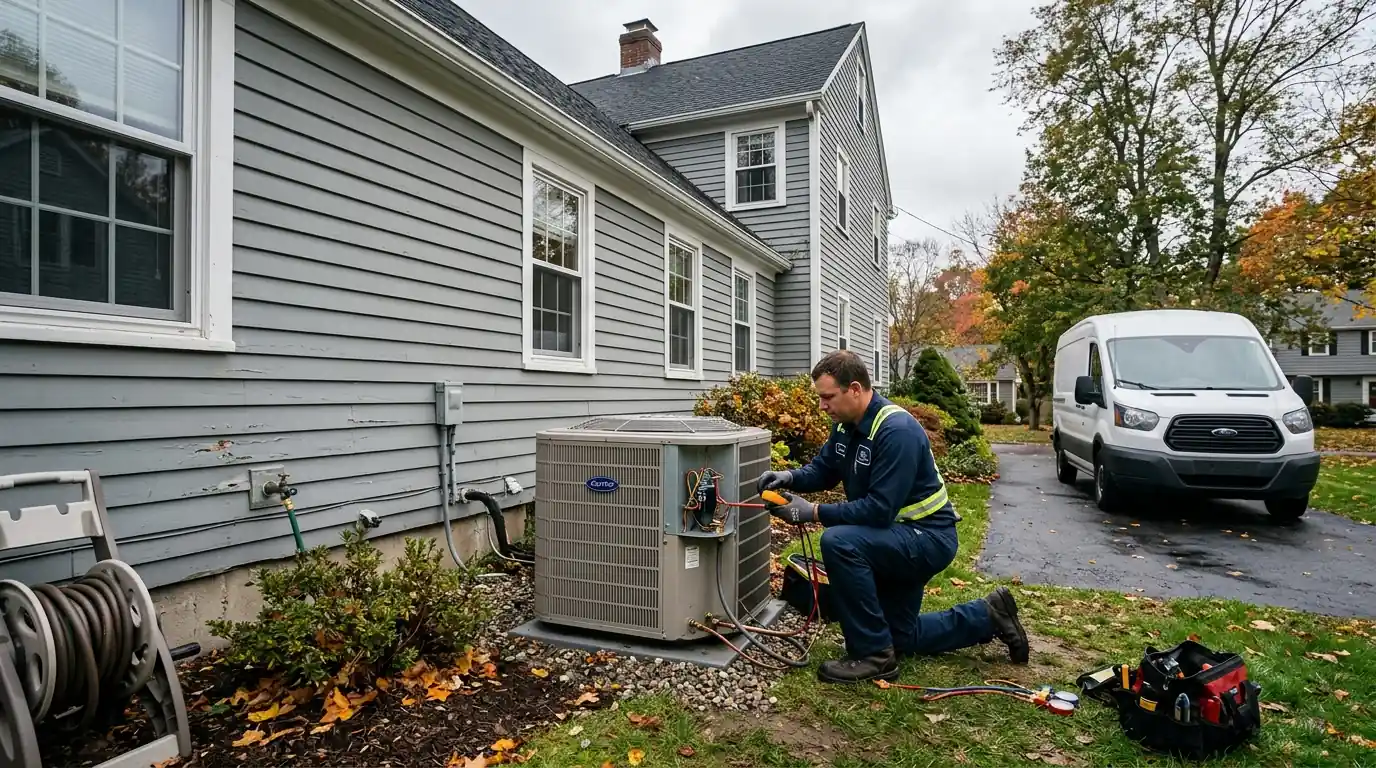
A ground-source heat pump uses the steady temperature underground to heat and cool the house, with a loop field outside and a compact unit indoors.
A geothermal heat pump moves heat between the house and the ground through a buried loop of pipe, heating in winter and cooling in summer at high efficiency. In the Bridgeport area it is most cost-effective replacing oil, propane or electric heat. The loop type depends on the lot: small lots usually need vertical wells, larger lots can use horizontal trenches.
Updated October 2026
Who geothermal suits in Connecticut
Geothermal is the most efficient way to heat and cool a house, because the ground a few feet down stays at a steady temperature all year. It costs more to install than an air-source heat pump because of the loop field. So the payback is strongest in homes that currently heat with expensive fuel and plan to stay for years.
We assess the lot, the house and the current fuel use before recommending it. We price an air-source heat pump alongside it so you can compare the two honestly. For many Bridgeport lots, the loop field is the deciding factor.
What decides the cost of a geothermal system
Loop type
Vertical wells cost more than horizontal trenches; horizontal can save about $4,000 to $8,000 where the lot allows.
System size
Sized to the house's heating and cooling loads.
Distribution
Ducted, radiant or radiator systems need different equipment.
Site access
Drilling or trenching equipment needs room to work.
Oil removal
Old equipment and tank removal.
Incentives
Current Energize CT rebates reduce the net cost.
Geothermal or an air-source heat pump?
| Option | Good fit when | Tradeoff |
|---|---|---|
| Geothermal | Expensive fuel now, long stay, suitable lot | Highest upfront cost; loop field required |
| Air-source heat pump | Most homes switching from oil or adding cooling | Lower cost; somewhat lower efficiency in deep cold |
| Dual fuel | Gas heat stays in place | Keeps a fossil fuel system for the coldest days |
Vertical and Horizontal Ground Loops
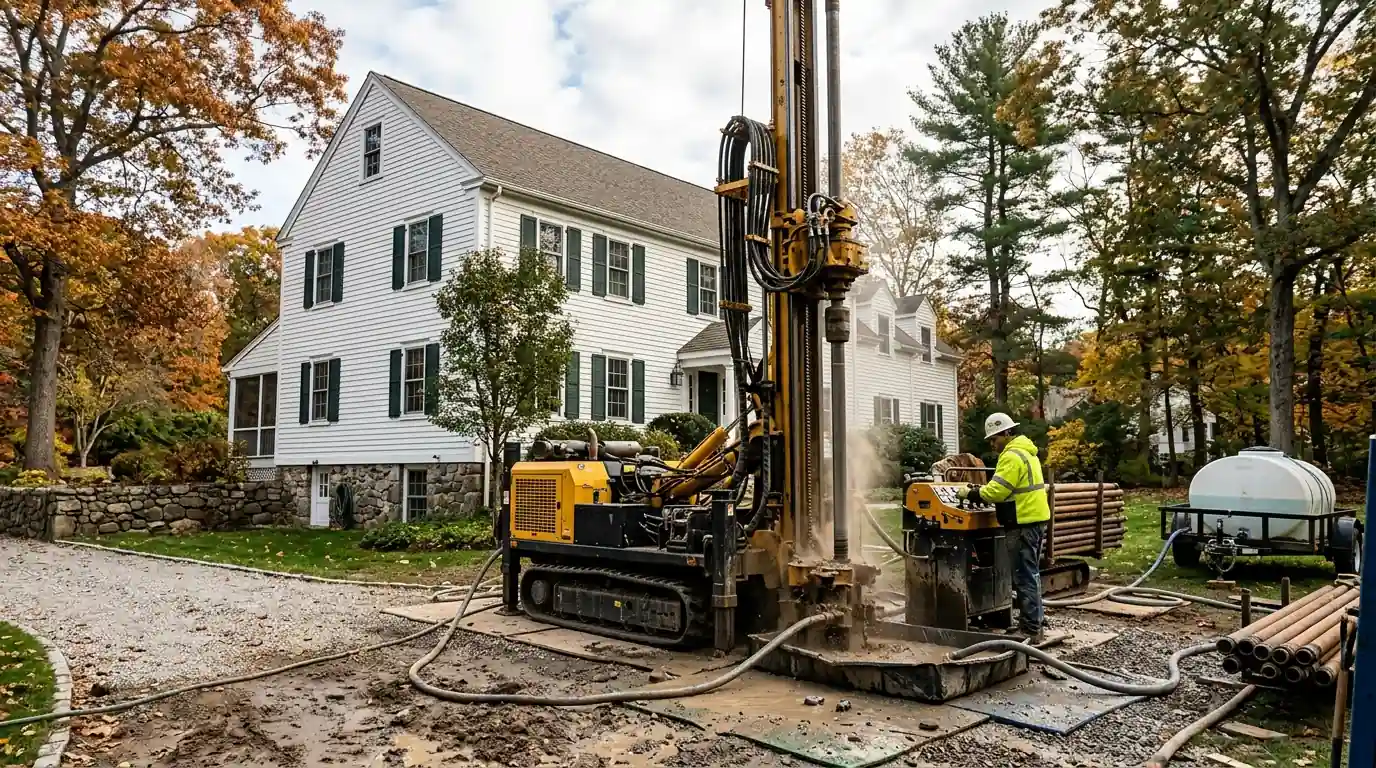
Horizontal loops are laid in trenches a few feet deep and need a fair amount of open land, which is easier on larger lots outside the city. Vertical loops are drilled wells several hundred feet deep and fit on small lots, which is typical for Bridgeport and the nearby shoreline towns, but drilling costs more. Published Connecticut estimates put the savings of horizontal loops over vertical at about $4,000 to $8,000 where the lot allows. We look at lot size, access for equipment and underground utilities before choosing.
Replacing Oil With Geothermal
Oil-heated homes see the biggest drop in heating cost when they switch to geothermal. The oil boiler or furnace can come out entirely, since a properly sized ground-source system carries the full heating load, and the oil tank is removed. Radiator homes need special attention: geothermal systems work best with low-temperature distribution, so radiators may need supplementing or a water-to-water unit designed for hydronic heat. We work out the distribution side before anyone drills, since it decides which heat pump model is right.
Desuperheater Hot Water
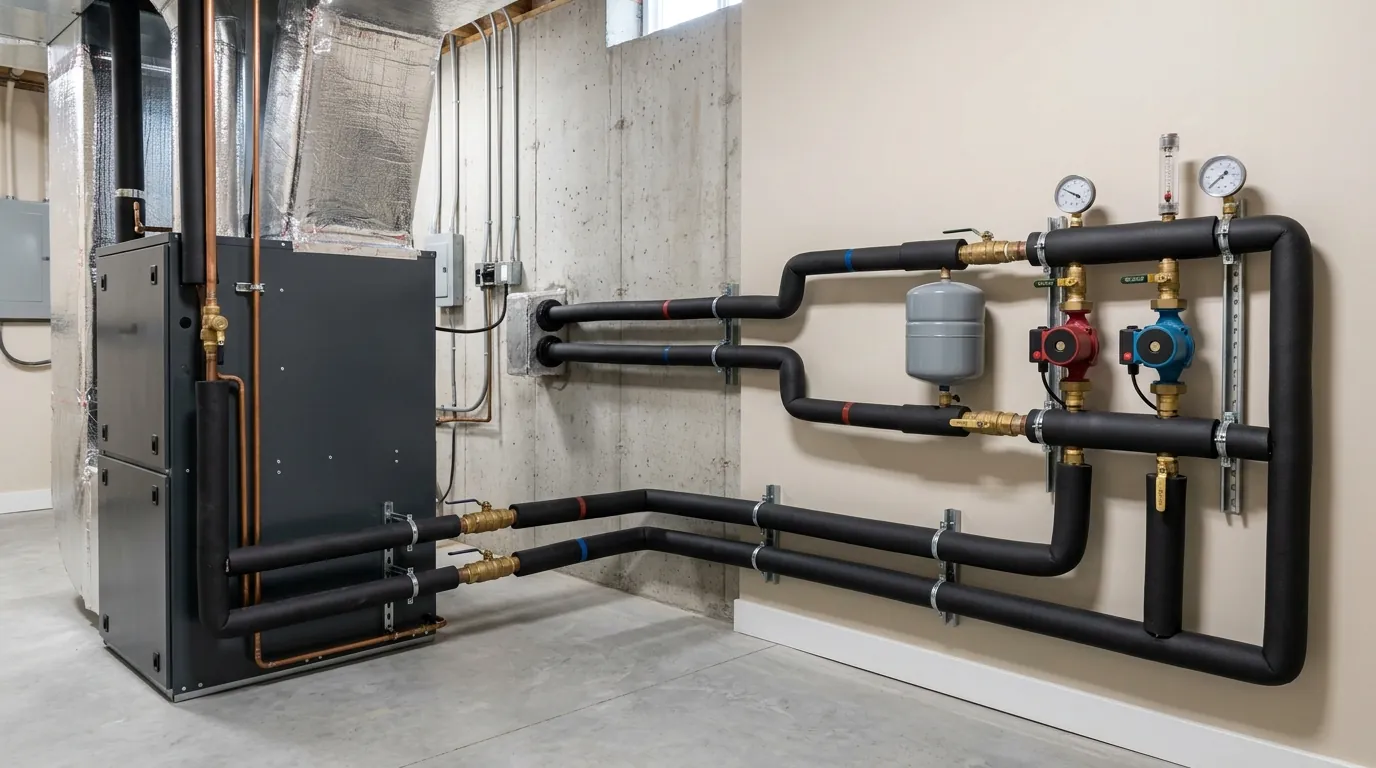
Many geothermal units include a desuperheater, which captures surplus heat, especially in summer when the system is cooling, and uses it to preheat domestic hot water. It connects to the existing water heater or a storage tank ahead of it. In cooling season it can provide a large share of the hot water almost for free, and it contributes in winter too. We include it where the equipment supports it and the water heater setup makes sense, and show you how it ties into the existing tank.
What we see in Bridgeport homes
About 524,000 Connecticut homes heat with a fuel that costs more per unit of heat than a geothermal system can deliver, even at the state's high electric rates. The federal 30 percent geothermal tax credit ended for systems placed in service after December 31, 2025. But Energize CT rebates and the Smart-E Loan remain, so we build the current incentives into any geothermal quote.
We service and install Carrier, Lennox, Trane, Goodman and more
How a geothermal project runs
- 1
Feasibility review
Fuel use, house, lot and distribution assessed.
- 2
Load calculation
Heating and cooling loads calculated.
- 3
Loop design
Vertical or horizontal loop sized to the load and soil.
- 4
Quote with incentives
System, loop and rebates laid out, with an air-source comparison.
- 5
Loop installation
Wells drilled or trenches dug and piped.
- 6
Indoor install
Heat pump, pumps, controls and connections.
- 7
Commission
Loop flow, temperatures and output verified.
How long a geothermal installation takes
The indoor equipment typically takes two to three days. The loop field adds time that depends on drilling or trenching: vertical wells are drilled over a few days, and horizontal trenches depend on soil and yard access. We schedule the loop work first so the existing heating system keeps running until the new one is ready.
Geothermal Heat Pump Installation questions from Bridgeport homeowners
Yes. The ground temperature is steady year round, which is what the system relies on.
Usually with vertical wells, which need little surface area.
The federal credit ended for systems placed in service after December 31, 2025; state rebates remain.
Sometimes, with a water-to-water unit and possibly added radiation.
Buried loops are designed to last for decades.
Yes; we price both so you can see the difference.
Related jobs we handle
Central Air Conditioning Installation
Matched condenser and coil, ducts checked, rebate filed.
More on central air conditioning installationHigh-Velocity AC Systems
Small-duct central air for homes without ductwork.
High-Velocity AC Systems in BridgeportFind out if geothermal fits your home
Call to book a feasibility review. We look at your lot, your fuel use and an air-source comparison before recommending anything.