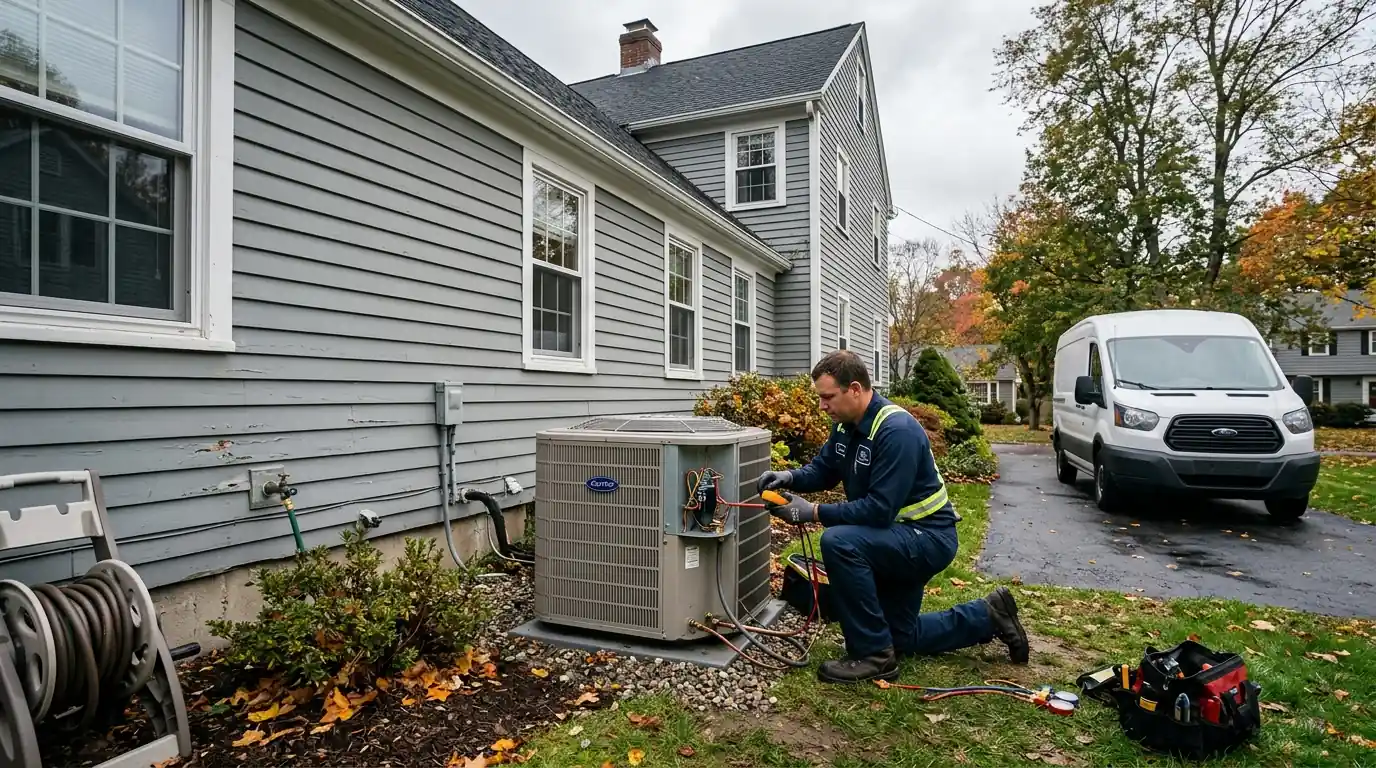
Garage and unit heater installation for Bridgeport homes and workshops
Gas-fired heaters hung from the ceiling to keep a garage, workshop or small warehouse warm, sized to the space and vented the way the manufacturer requires.
Garage and unit heater installation in Bridgeport means mounting a gas-fired heater sized to the space, running a gas line with a shutoff, venting it through the wall or roof as the manufacturer requires, and wiring a thermostat. Separated-combustion models that draw outside air are the usual choice for attached garages and workshops where dust or fumes are present.
Updated October 2026
Heating a space the house system does not reach
Garages, workshops and small commercial spaces usually sit outside the home's heating system, and running ducts or baseboard out to them rarely works well. A dedicated unit heater warms the space directly, runs only when needed, and keeps tools, vehicles and projects out of the cold.
The details matter for safety. Clearances to combustibles and vehicles, the right venting type and a properly sized gas line all count. In attached garages, a sealed-combustion model keeps the heater from pulling air where gasoline fumes may be present.
What changes the cost of a garage or unit heater
Heater capacity
Larger spaces need higher-output units.
Combustion type
Separated-combustion models cost more.
Gas line
Distance from the existing gas supply.
Venting route
Wall or roof venting and its length.
Mounting
Ceiling height and structure.
Permit
Gas and mechanical work is permitted and inspected.
What a garage or unit heater install includes
- Space assessment and heater sizing
- Location plan with clearances
- Heater mounted at the correct height
- Gas line with shutoff and sediment trap
- Vent run to manufacturer specification
- Combustion air arrangement
- Thermostat installation
- Permit and inspection
- Ignition and combustion test
Gas unit heater, electric heater or a mini split?
| Option | Good fit when | Tradeoff |
|---|---|---|
| Gas unit heater | Gas is available and you want fast, strong heat | Needs venting and a gas line |
| Electric garage heater | Small space, occasional use | Expensive to run at Connecticut electric rates |
| Ductless mini split | You also want cooling in the space | Higher cost; less suited to dusty shops |
Gas-Fired Garage Heaters
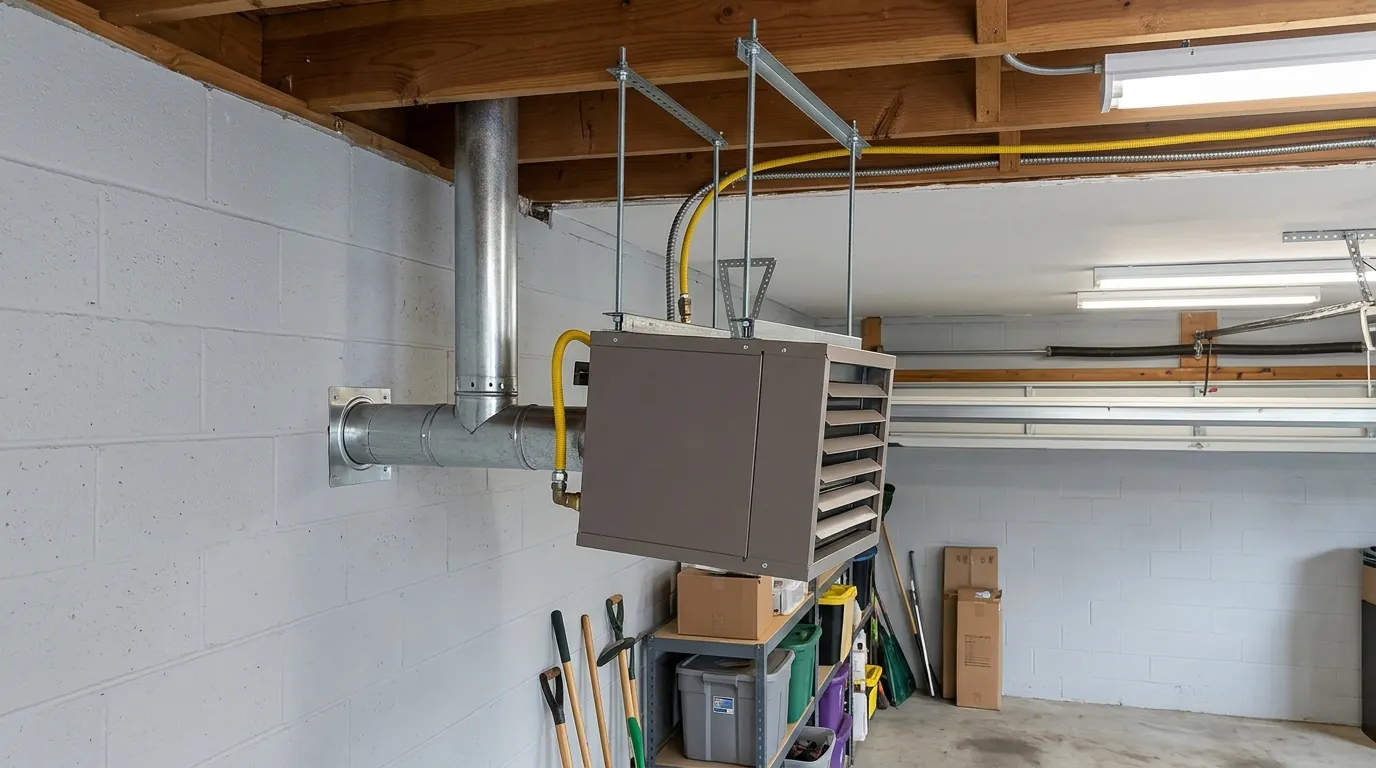
Most residential garage heaters are compact gas units hung from the ceiling in a corner, aimed to blow warm air across the space. We size the heater to the garage's volume, insulation and how warm you want it. A lightly used garage kept just above freezing needs far less than a heated workshop. Attached garages get a sealed-combustion or separated-combustion model that takes combustion air from outside. We run the gas line, install the vent and wire a thermostat placed where it reads the space fairly, not right beside the door.
Unit Heaters for Workshops and Warehouses
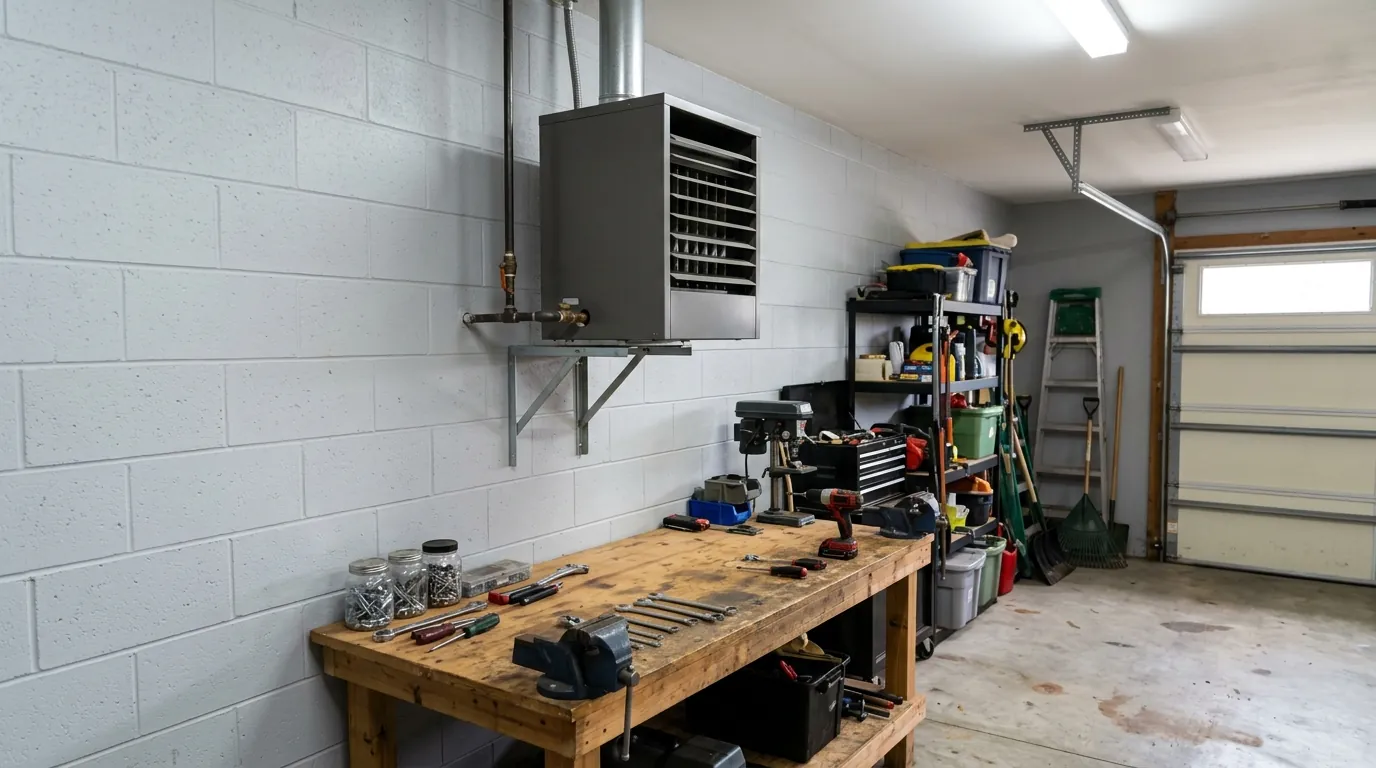
Larger workshops, auto bays and small warehouses use higher-capacity unit heaters, sometimes more than one. They are positioned so warm air reaches the work areas instead of collecting under the roof. In spaces with dust, sawdust or fumes, separated-combustion units keep the burner isolated from the room air. We plan heater locations around doors, racking and equipment, and where ceilings are high, consider ceiling fans or downward-throw models so the heat reaches floor level where people actually work. Separate thermostats let each area run only when it is in use.
Venting and Clearances
Unit heaters must be vented outdoors through the wall or roof with the vent material and length the manufacturer specifies. Terminations stay away from windows, doors and air intakes, and we confirm every clearance before the heater is fired. They also need clearances from combustible materials and, in garages, the correct mounting height so vehicles and stored items cannot contact them. We follow the installation instructions and the mechanical code for each unit, pull the permit, and have the installation inspected before the heater goes into regular use.
The Bridgeport side of this job
Unit heater installations in Connecticut fall under the 2022 Connecticut State Building Code, which took effect October 1, 2022 and adopted the 2021 mechanical and residential codes with state amendments. That is what sets the venting, clearance and gas piping requirements we follow. It is why garage heater installs here are permitted and inspected rather than treated as a plug-in appliance.
We service and install Carrier, Lennox, Trane, Goodman and more
How a heater installation runs
- 1
Assess the space
Size, insulation, use and ceiling height.
- 2
Size the heater
Output matched to the space and target temperature.
- 3
Plan the location
Clearances, throw direction and vent route.
- 4
Permit
Filed with the town.
- 5
Install
Heater mounted, gas piped, vent run.
- 6
Wire the thermostat
Placed where it reads the space fairly.
- 7
Test
Ignition, combustion and venting verified.
Garage & Unit Heater Installation questions from Bridgeport homeowners
It depends on the volume, insulation and how warm you want it; we size it on site.
Yes, with the right combustion type, venting and clearances.
Gas unit heaters must be vented outdoors per the manufacturer.
Cheaper to buy, but usually much more expensive to run here.
Yes, including multiple units for larger spaces.
Yes; gas and mechanical work is permitted and inspected.
Related jobs we handle
HVAC for Additions & Finished Basements
Heating and cooling for additions and finished basements.
More on HVAC for additions & finished basementsGas Fireplace Installation & Repair
Gas fireplaces and inserts installed and repaired.
Gas Fireplace Installation & Repair in BridgeportWarm up the garage or shop
Call to book a site visit. We size the heater and plan the vent and gas line before quoting.