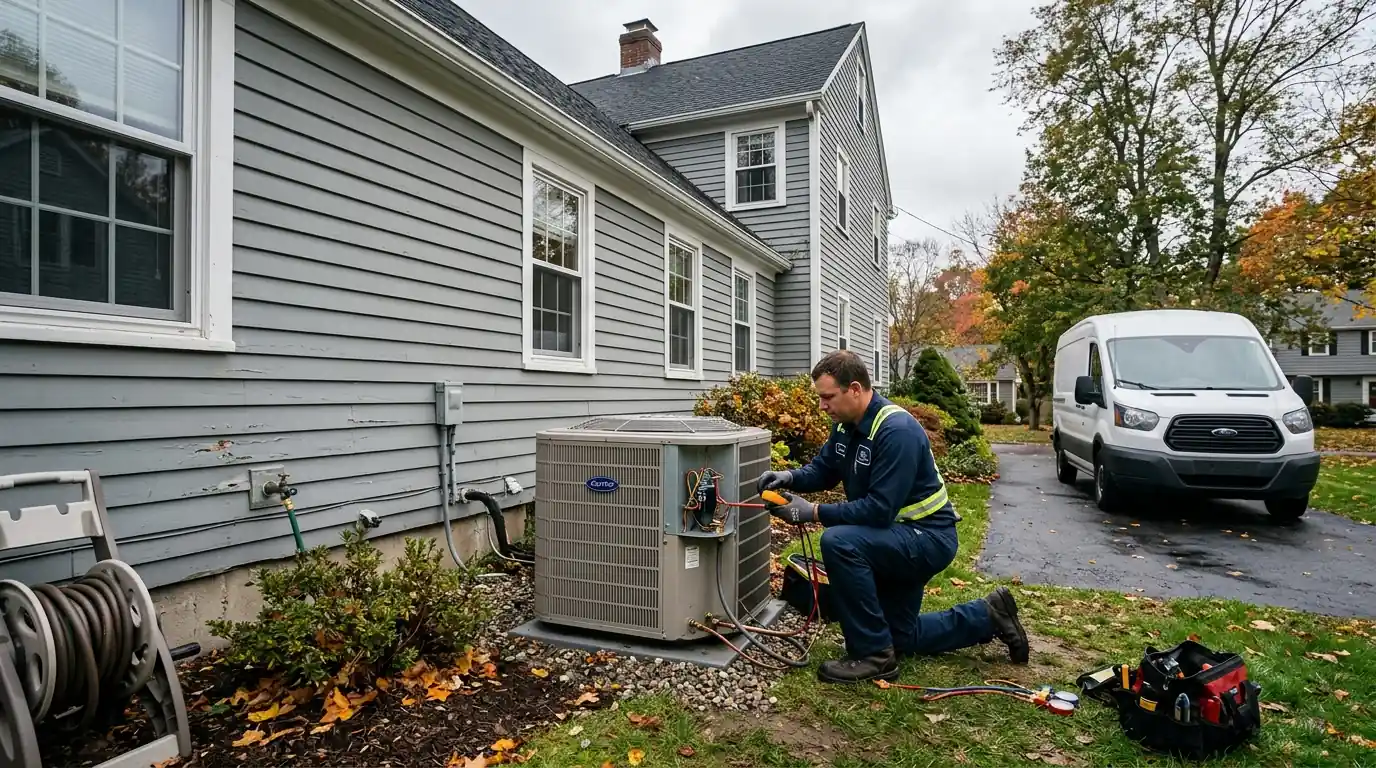
Dual fuel heating in Bridgeport: a heat pump backed by gas or oil
A heat pump carries the load most of the year and a gas furnace, or an oil boiler, takes over on the coldest days, switching automatically by outdoor temperature or cost.
A dual fuel system pairs a heat pump with a gas furnace or oil boiler and switches between them automatically. In Bridgeport, the heat pump handles mild and moderate weather and the fossil fuel system covers the coldest days. Published ranges put hybrid heat pump systems at about $2,500 to $10,000, depending on what is added to the existing equipment.
Updated October 2026
Why dual fuel fits Connecticut
Connecticut electricity is expensive, and natural gas is comparatively cheap. That makes an all-electric heat pump a hard sell in a gas-heated house. But it also makes a heat pump that shares the job with the furnace attractive: electric heat when it is cheapest, gas when it is not.
For oil-heated houses, dual fuel lets the heat pump displace most of the oil while the boiler stays as backup for the deepest cold, without committing to a fully electric system on day one.
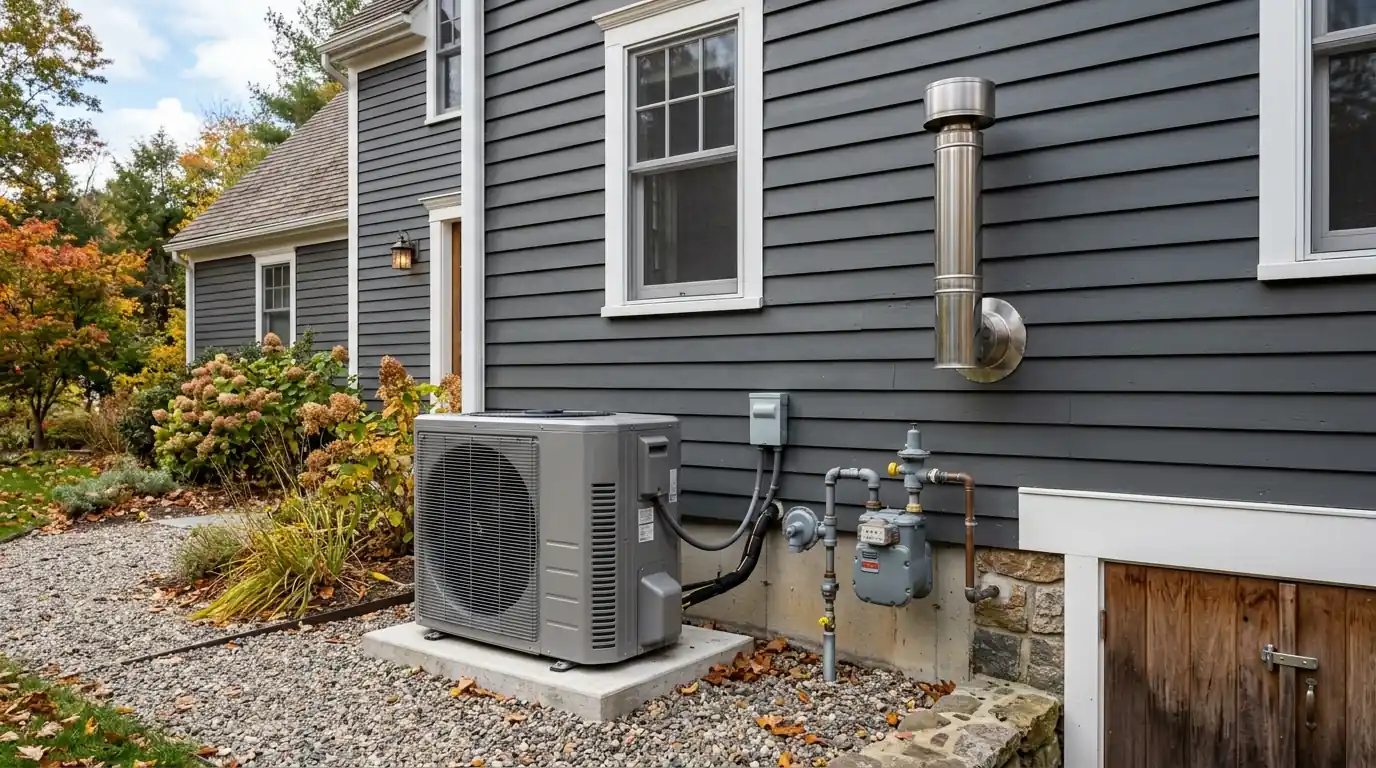
What decides the cost of a dual fuel system
Published ranges put hybrid heat pump systems at about $2,500 to $10,000, depending largely on whether the furnace or boiler is kept, replaced or added.
Keep or replace the furnace
Reusing a sound furnace keeps the cost down.
Heat pump capacity
Sized to carry the load down to the switchover point.
Ducted or ductless
Existing ducts versus new mini split heads.
Controls
Dual fuel thermostat or outdoor sensor lockout.
Electrical
A circuit for the outdoor unit if not already present.
Rebates
Qualifying heat pumps may earn Energize CT rebates.
What a dual fuel installation includes
- Heat loss and balance point calculation
- Heat pump sized to the switchover temperature
- Matched indoor coil or mini split heads
- Line set and outdoor pad or bracket
- Dual fuel thermostat or outdoor sensor
- Furnace or boiler control integration
- Electrical connection for the outdoor unit
- Both modes tested and switchover verified
- Rebate paperwork for qualifying equipment
Dual fuel against the alternatives
| Option | Good fit when | Tradeoff |
|---|---|---|
| Gas furnace only | Gas heat and no need for cooling efficiency | No heat pump savings in mild weather |
| Heat pump only | Oil, propane or electric baseboard today | Needs sizing for coldest days; electric backup costs |
| Dual fuel | Gas or oil heat and you want cooling plus savings | Two systems to maintain |
Heat Pump Paired With a Gas Furnace
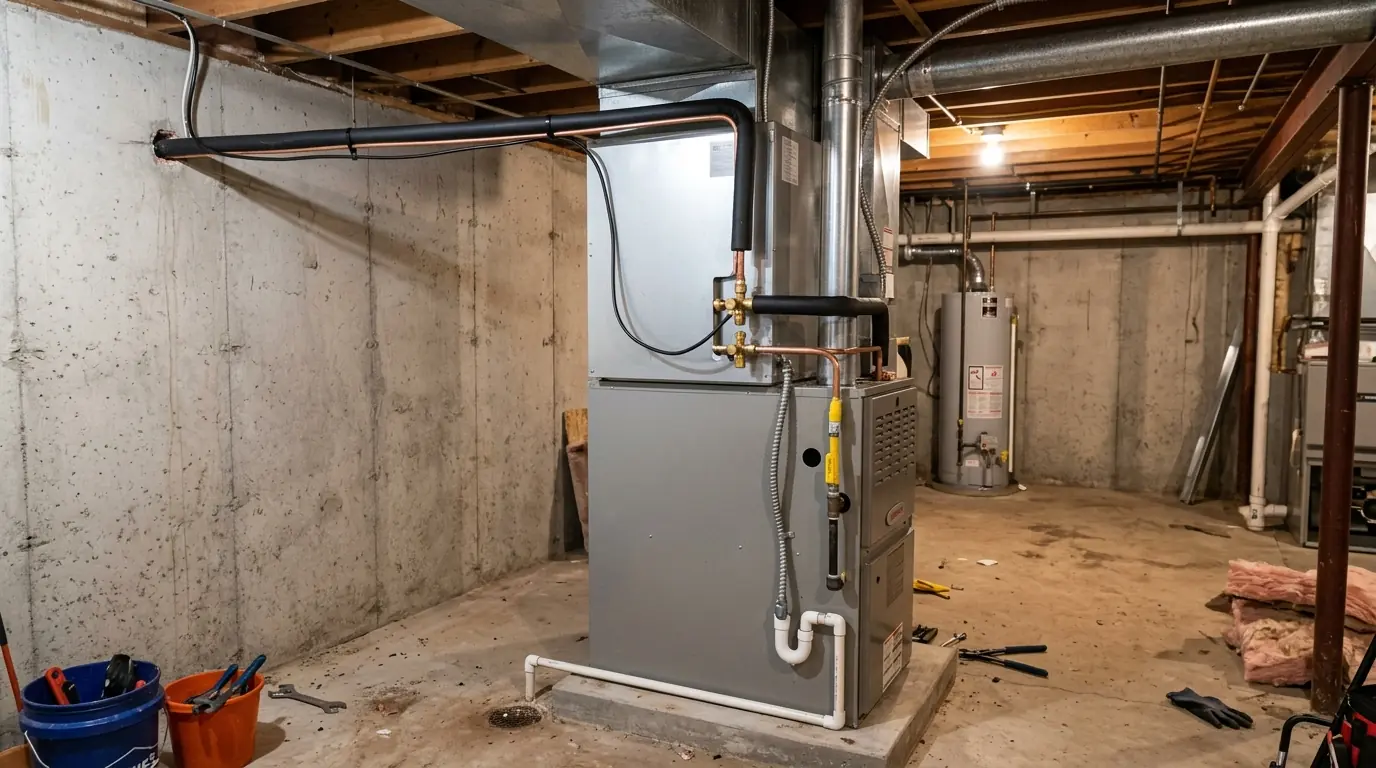
In a gas-heated house with ducts, the heat pump replaces the air conditioner outdoors and its coil sits on the existing or a new gas furnace. In heating mode, the heat pump runs until the outdoor temperature drops below a set point, then the furnace takes over. The furnace blower moves the air in both modes. Because the heat pump also cools, the house gets air conditioning and efficient shoulder-season heat from the same outdoor unit. The furnace stays in place as the backup for the coldest weeks.
Heat Pump Paired With an Oil Boiler
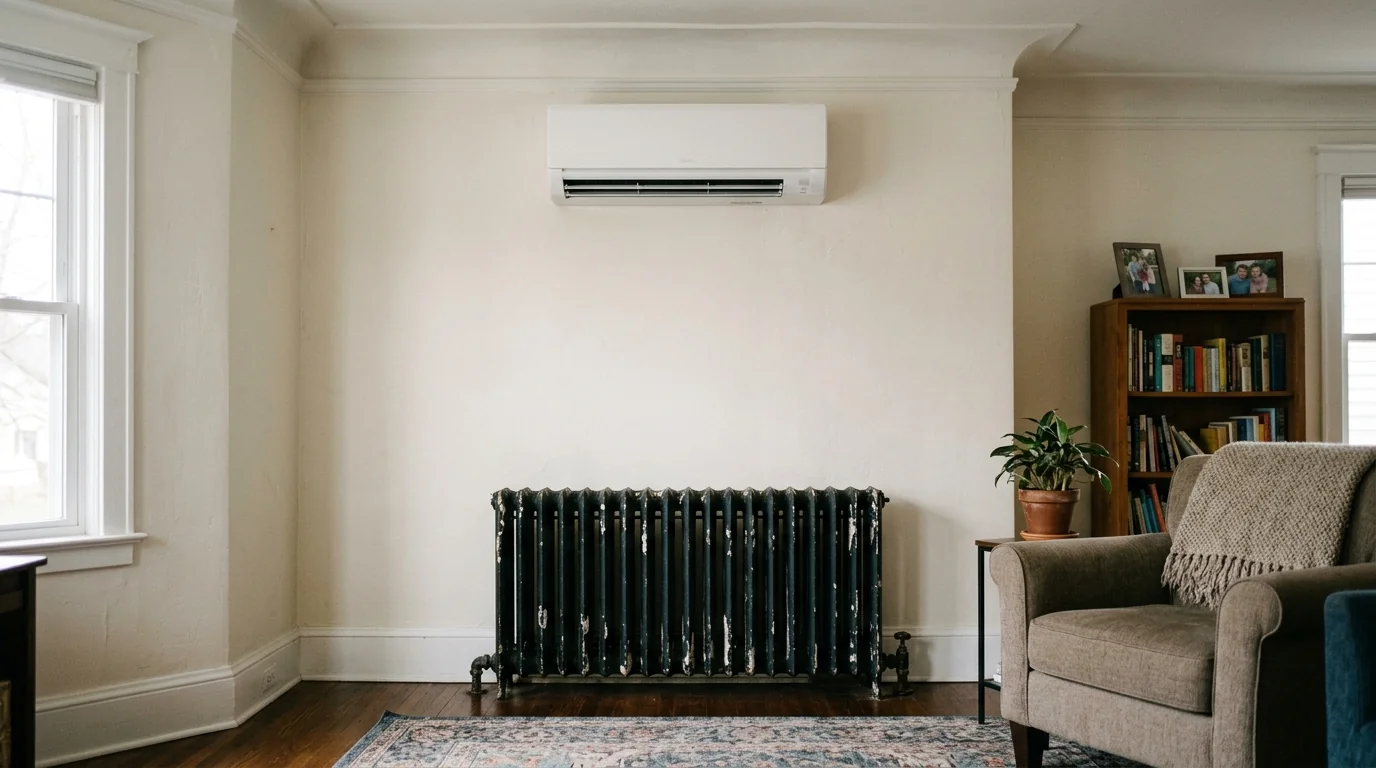
Oil-heated radiator homes can run dual fuel too, usually with ductless mini splits or a ducted heat pump handling most of the heating while the boiler covers the coldest nights and the radiators keep their role. The controls can be as simple as setting the mini splits as the primary heat and the boiler thermostat a few degrees lower, or as integrated as an outdoor sensor that locks out the boiler above a set temperature. We set it up to match how you want the house to run.
Switchover Temperature Settings
The switchover point decides how much the heat pump saves. Set too high, the furnace runs when the heat pump would have been cheaper. Set too low, the heat pump struggles on cold nights. We set the balance point using your fuel prices and the heat pump's rated capacity at low temperatures. We can revisit it once you have seen a winter of bills. Some thermostats can also switch on cost, using the fuel prices you enter. See how we install heat pumps for sizing.
What we see in Bridgeport homes
A national lab study found that 74 percent of Northeast homes on oil or propane would save enough with a heat pump to cover its cost. But only 5 percent of homes on natural gas would. With Connecticut gas around $1.96 per therm and electricity near 30 cents per kWh. A winter design temperature of 5 to 10 degrees, dual fuel is often the practical middle ground for gas-heated Bridgeport houses.
We service and install Carrier, Lennox, Trane, Goodman and more
How a dual fuel install runs
- 1
Review current system
Furnace or boiler condition and fuel type.
- 2
Load and balance point
Heat pump sized and switchover temperature calculated.
- 3
Written quote
Heat pump, coil, controls and any furnace work listed.
- 4
Install
Outdoor unit, coil or heads, line set and electrical.
- 5
Controls setup
Dual fuel thermostat or outdoor lockout configured.
- 6
Commission
Both heat sources tested and switchover verified.
- 7
Rebate filing
Energize CT paperwork for qualifying equipment.
Dual Fuel & Hybrid Heating questions from Bridgeport homeowners
A heat pump paired with a gas furnace or oil boiler that switches automatically.
Often, especially if you also need new air conditioning.
Yes, if it is in good condition and compatible.
A balance point set from your fuel prices and the heat pump's capacity.
Yes, typically with mini splits plus the boiler as backup.
Qualifying heat pumps may earn Energize CT rebates.
Related jobs we handle
Heat Pump & Mini Split Maintenance
Coils, blower wheels, drains and defrost checked.
How we handle heat pump & mini split maintenanceHeat Pump Water Heater Installation
Electric tanks replaced with heat pump water heaters.
How we handle heat pump water heater installationAir Handler Replacement
Matched air handlers with heat strips and drain safety.
Air Handler Replacement in BridgeportGet the savings of a heat pump without giving up your furnace
Call to book an estimate. We size the heat pump and set the switchover point for your fuel prices.