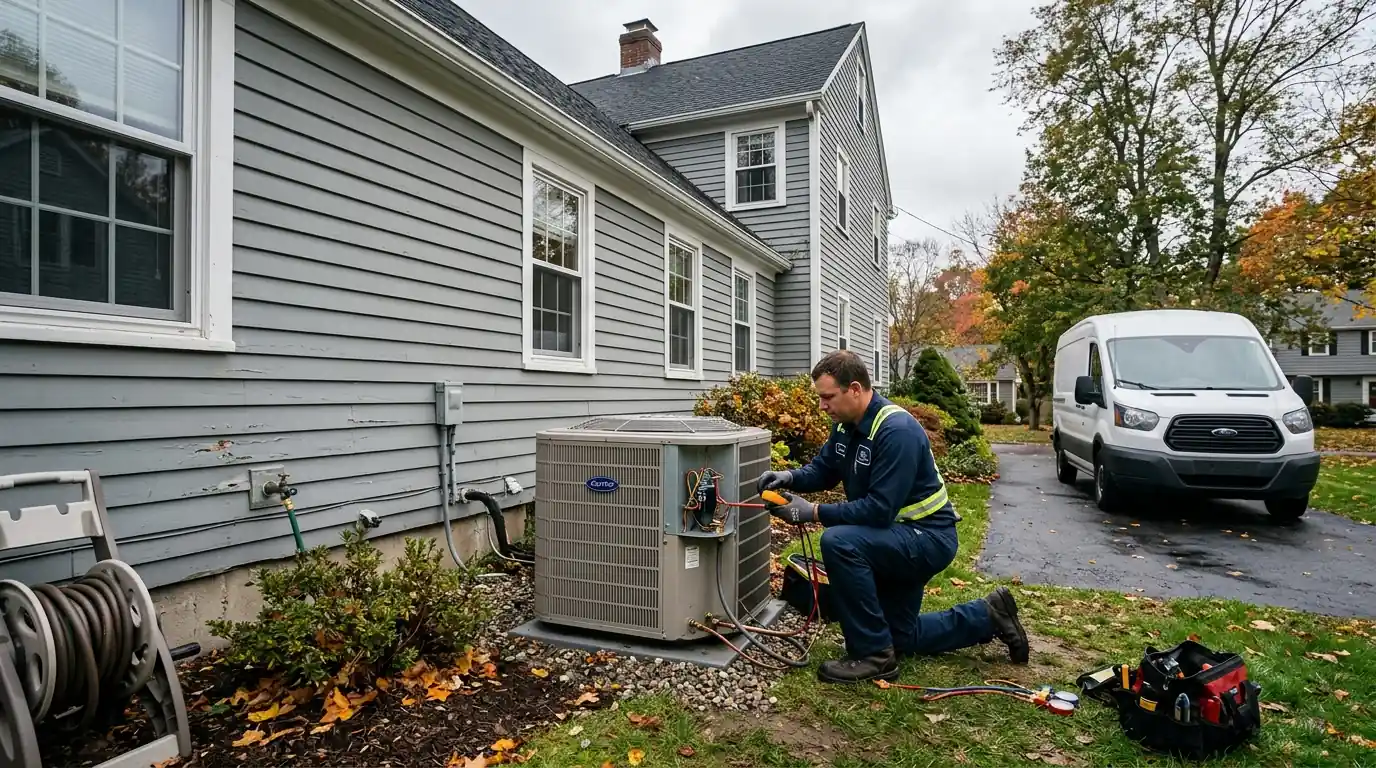
Commercial HVAC maintenance for Bridgeport businesses and landlords
Scheduled filter changes, coil cleaning, belt and boiler checks for commercial buildings, with a written report after every visit and repairs quoted before work.
Commercial HVAC maintenance in Bridgeport is scheduled service for rooftop units, split systems and boilers: filter changes, coil cleaning, belt and motor checks, refrigerant readings, boiler combustion and safety tests. A written report after each visit. Intervals are set by the equipment and how hard it runs, often quarterly for filters and twice yearly for full service.
Updated October 2026
What scheduled maintenance protects
Commercial equipment runs longer hours than residential systems and often serves spaces where downtime costs money: a restaurant in July, an office on a Monday, an apartment building in January. Most breakdowns start as something visible on a maintenance visit: a frayed belt, a clogged filter, a weak capacitor, a dirty coil.
A maintenance agreement puts those checks on a calendar, keeps records for each piece of equipment, and turns emergency repairs into planned ones. Repairs found during a visit are always quoted in writing before any work.
What scheduled commercial maintenance covers
- Equipment survey and records
- Filter replacement on schedule
- Belt, pulley and bearing inspection
- Condenser coil cleaning
- Condensate drain clearing
- Refrigerant pressure and temperature logs
- Gas heat section and burner checks
- Boiler combustion and safety control tests
- Written report after every visit
The Bridgeport side of this job
Most Bridgeport households rent, so many of the commercial buildings we maintain here are apartment buildings where one boiler or a set of rooftop units serves many tenants. For those owners, scheduled maintenance is less about efficiency than about avoiding the mid-winter no-heat call from every unit at once. The visit reports double as records for the building. Visits can be grouped by street for owners with several buildings.
Quarterly Filter and Belt Service
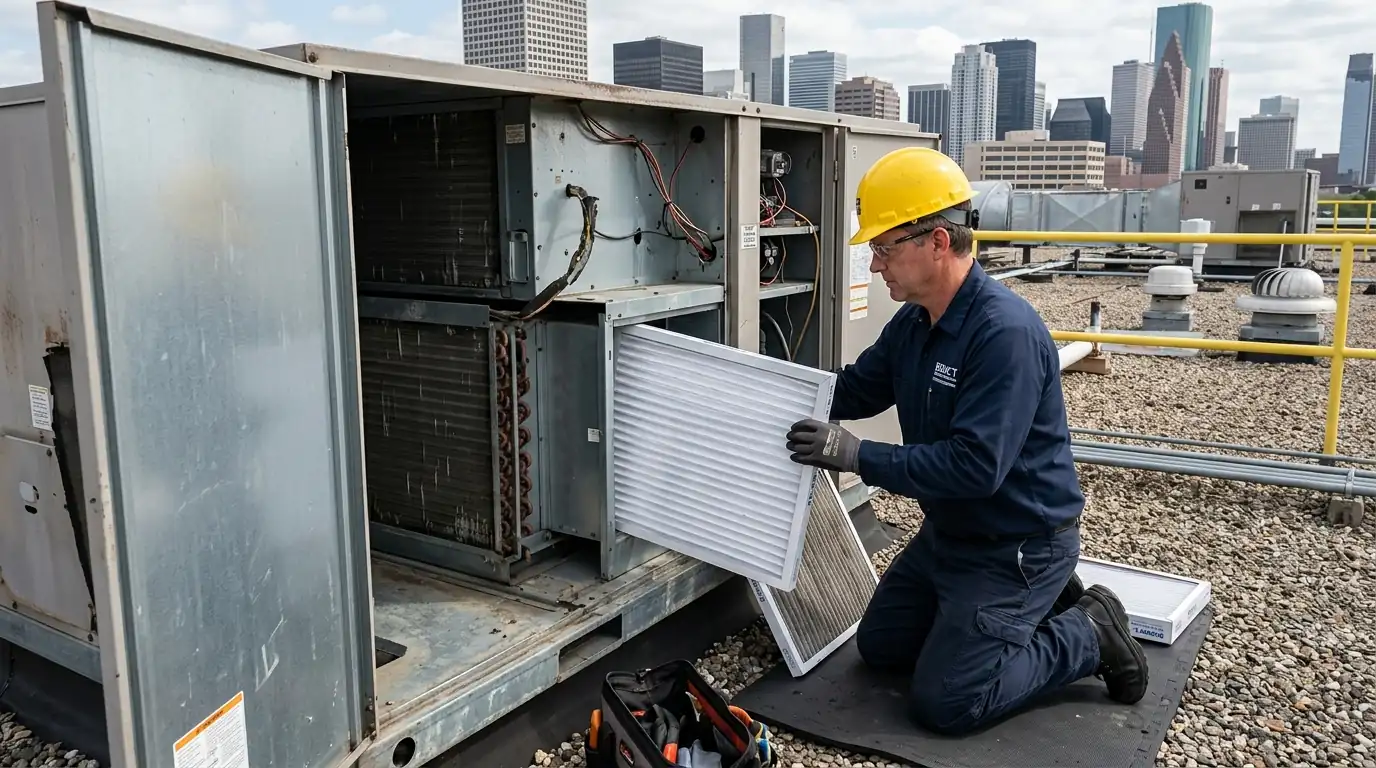
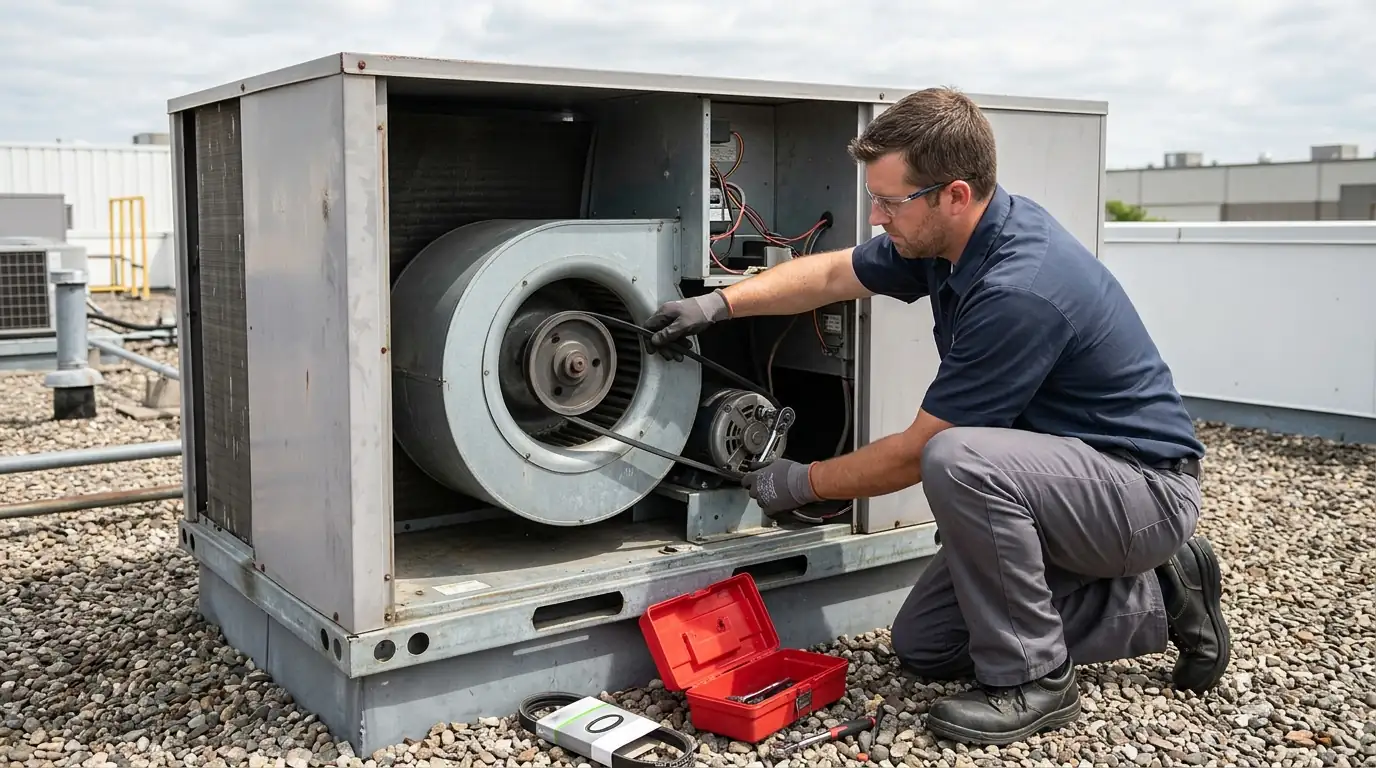
Filters in commercial systems load quickly, especially in restaurants, retail with heavy foot traffic and buildings near busy roads. Clogged filters cut airflow, raise energy use and can freeze coils. Quarterly visits replace filters, inspect and adjust or replace belts, check pulleys and bearings, and look over the unit for anything developing. For owners who want fewer visits, we can set a schedule matched to how fast your filters actually load, based on what we find at the first few visits.
Coil Cleaning and Refrigerant Logs
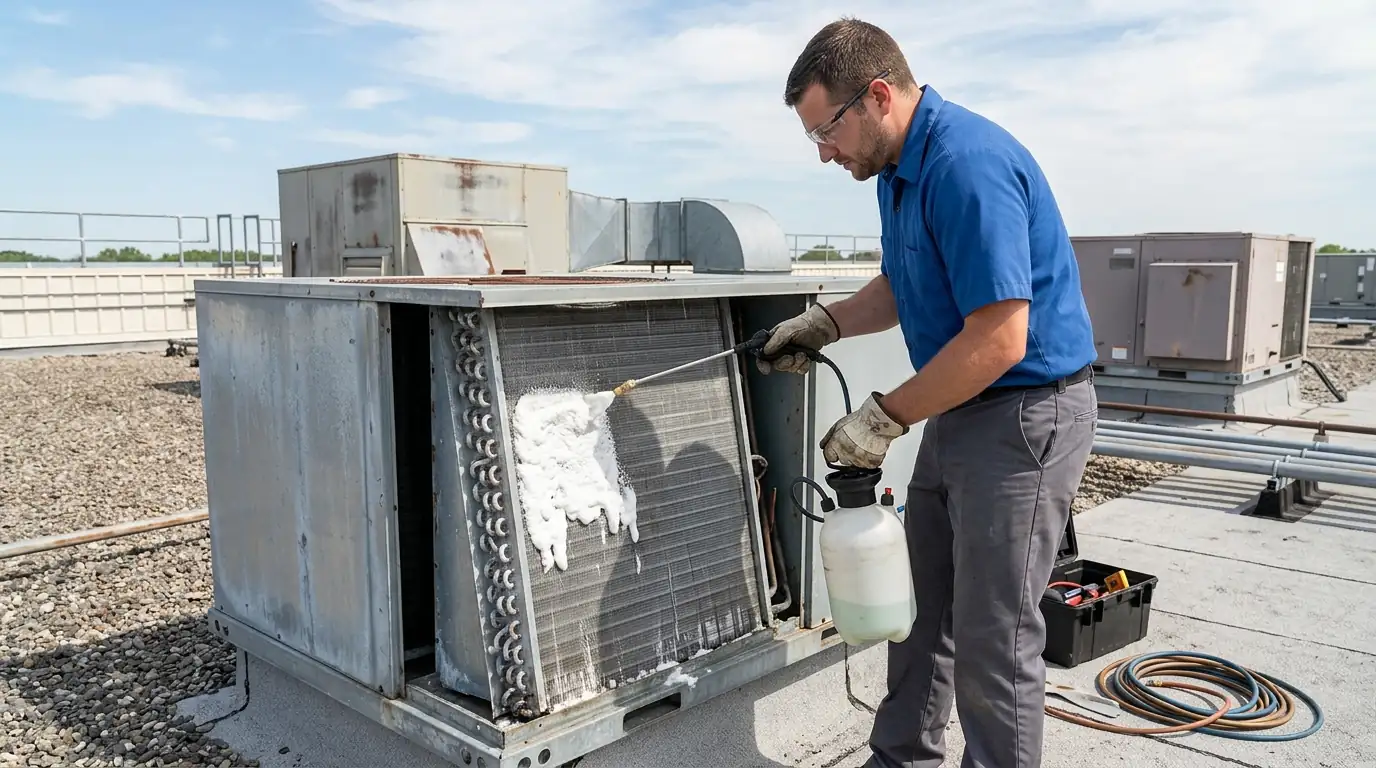
Condenser coils on rooftops collect dirt, pollen and, near kitchens, grease. Dirty coils make compressors run hotter and longer. We clean condenser and, where accessible, evaporator coils, clear condensate drains, and record refrigerant pressures and temperatures at each visit. Keeping those readings in a log shows slow leaks early, before the unit loses enough charge to stop cooling, and gives any technician who works on the equipment later a history to compare against. Grease-coated kitchen coils get a degreasing cleaner rather than plain water.
Boiler and Rooftop Inspection Schedules
Buildings with boilers get a pre-season inspection covering combustion, safety controls, low-water cutoffs, pressure and relief valves, circulators and zone valves. Rooftop units get a spring cooling check and a fall heating check on their gas sections. We set the schedule so heating equipment is ready before October and cooling equipment before May. Every visit ends with a written report that the owner or property manager can keep with the building's records. Visits are booked a season ahead so the schedule does not slip.
How a commercial maintenance agreement runs
- 1
Equipment survey
Every unit listed with model, age and condition.
- 2
Set the schedule
Visit intervals matched to the equipment and use.
- 3
Scheduled visits
Filters, coils, belts and safety checks.
- 4
Record readings
Refrigerant, combustion and electrical logged.
- 5
Report
Findings and recommendations sent after each visit.
- 6
Quote repairs
Written quotes before any repair work.
- 7
Review yearly
Schedule adjusted based on what the visits find.
Signs your equipment is overdue for maintenance
Rising energy bills
Dirty coils and clogged filters make equipment work harder.
Squealing on startup
Worn or loose belts.
Uneven temperatures between rooms
Restricted airflow or damper problems.
Frequent tenant complaints
Equipment struggling to keep up.
Water leaks below units
Clogged condensate drains.
What changes the cost of a maintenance agreement
Number of units
Each rooftop unit, split system or boiler adds time.
Visit frequency
Quarterly filter visits versus semiannual full service.
Equipment type
Boilers, rooftop units and splits need different checks.
Kitchen or dusty environments
More frequent filter and coil cleaning.
Roof access
Ladder, hatch or lift access.
Repairs found
Quoted separately and done only with approval.
Commercial HVAC Maintenance questions from Bridgeport homeowners
Filters often quarterly; full service at least twice a year.
Yes; reports and quotes go to whoever manages the building.
No. Repairs are quoted separately and done only with approval.
Yes, on one schedule with one point of contact.
Yes, including multifamily steam and hot-water systems.
A written report after every visit with readings and findings.
Related jobs we handle
PTAC & Through-Wall Unit Service
PTAC and through-wall units repaired and replaced.
How we handle PTAC & through-wall unit serviceMulti-Family & Landlord HVAC
How we handle it in Bridgeport.
Multi-Family & Landlord HVAC in BridgeportPut your equipment on a schedule
Call to set up an equipment survey, and we will propose a maintenance schedule for your building.