Oil tank replacement and removal for Bridgeport homes
A new basement or outdoor oil tank, new lines and filter, and the old tank pumped, removed and hauled away, with the burner restarted and tested.
An oil tank should be replaced when it shows rust, weeping seams, wet spots at the bottom, a failed inspection or significant age. In Bridgeport most replacements are basement tanks. We pump the remaining oil into the new tank, remove the old one, install new fill, vent and supply lines where needed, and restart the burner.
Updated October 2026
Why oil tanks fail from the inside
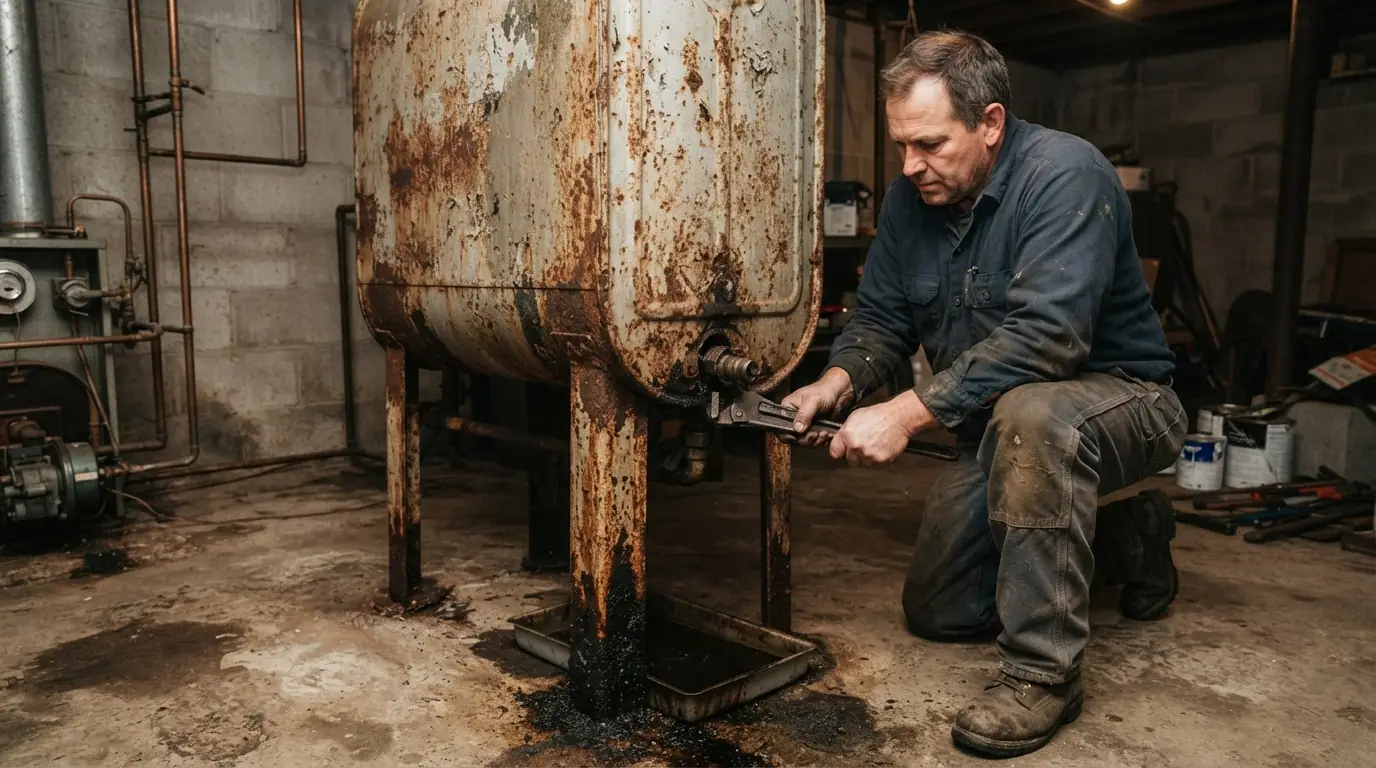
Steel oil tanks usually fail from the inside out. Water condenses in the tank and settles at the bottom under the oil, where it corrodes the steel slowly and out of sight. By the time a weep appears on the outside, the bottom may already be thin.
Replacing a tank before it leaks is far cheaper and simpler than cleaning up after one. We look at the tank, the legs, the fill and vent pipes and the oil line together, because a new tank connected to old, corroded fittings leaves the weak point in place.
What changes the cost of an oil tank replacement
Tank type
Single-wall steel, double-wall or corrosion-resistant tanks.
Location
Basement access or outdoor pad work.
Lines and fittings
New fill, vent and supply lines as needed.
Oil transfer
Moving usable oil to the new tank.
Disposal
Removal and disposal of the old tank.
Remediation
Anything beyond surface staining is a separate job.
What an oil tank replacement includes
- Inspection of tank, legs and lines
- Transfer of usable oil
- Removal and disposal of the old tank
- New tank set on a stable base
- New fill and vent pipes as needed
- Vent alarm
- Protected oil supply line
- New oil filter
- Burner bled, restarted and leak-checked
Basement Tank Replacement
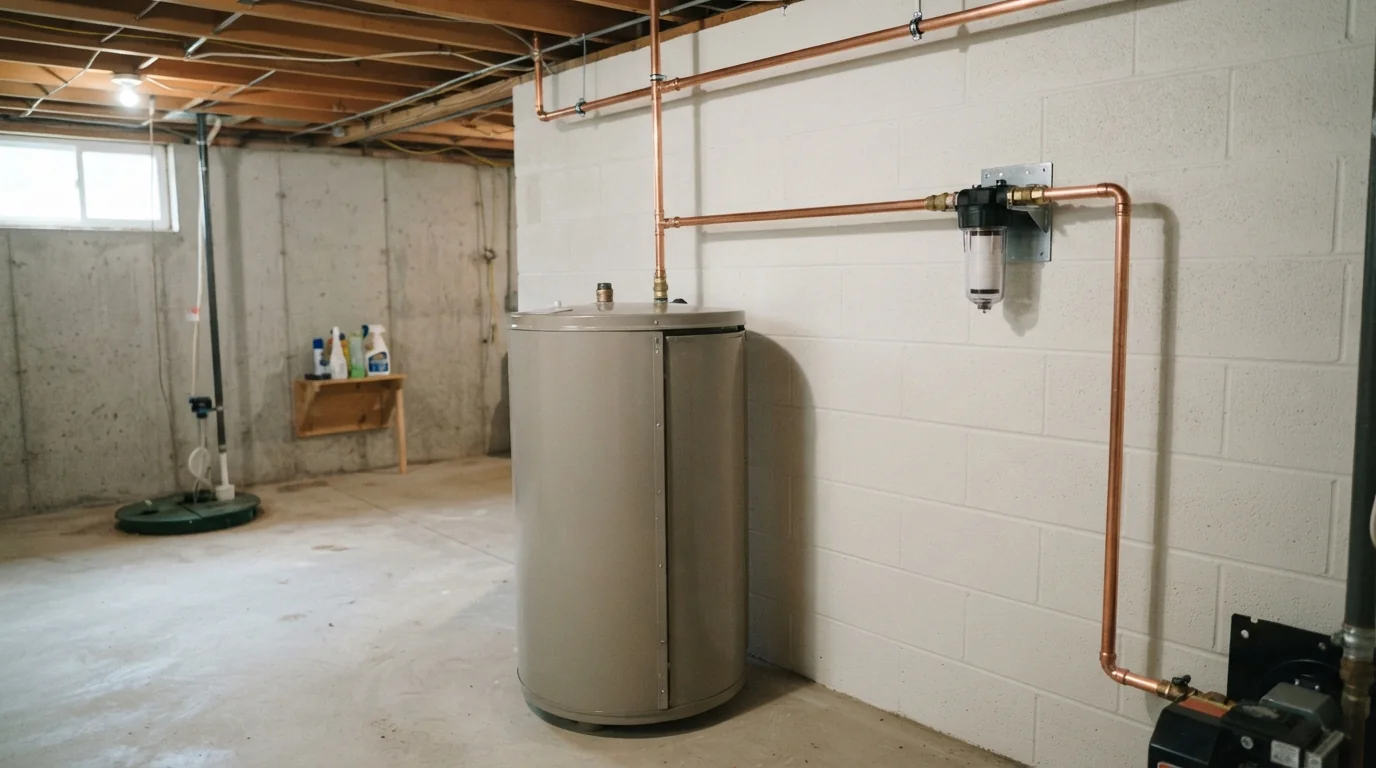
Most tanks in Bridgeport-area homes sit in the basement. We transfer the usable oil to the new tank or a holding tank, disconnect and remove the old tank, set the new one on a stable base, and connect new fill and vent pipes with a vent alarm. The oil supply line to the burner is replaced with a protected line and a new filter. Many owners choose a double-wall or corrosion-resistant tank, which costs more but stands up far better to internal corrosion.
Aboveground Outdoor Tanks
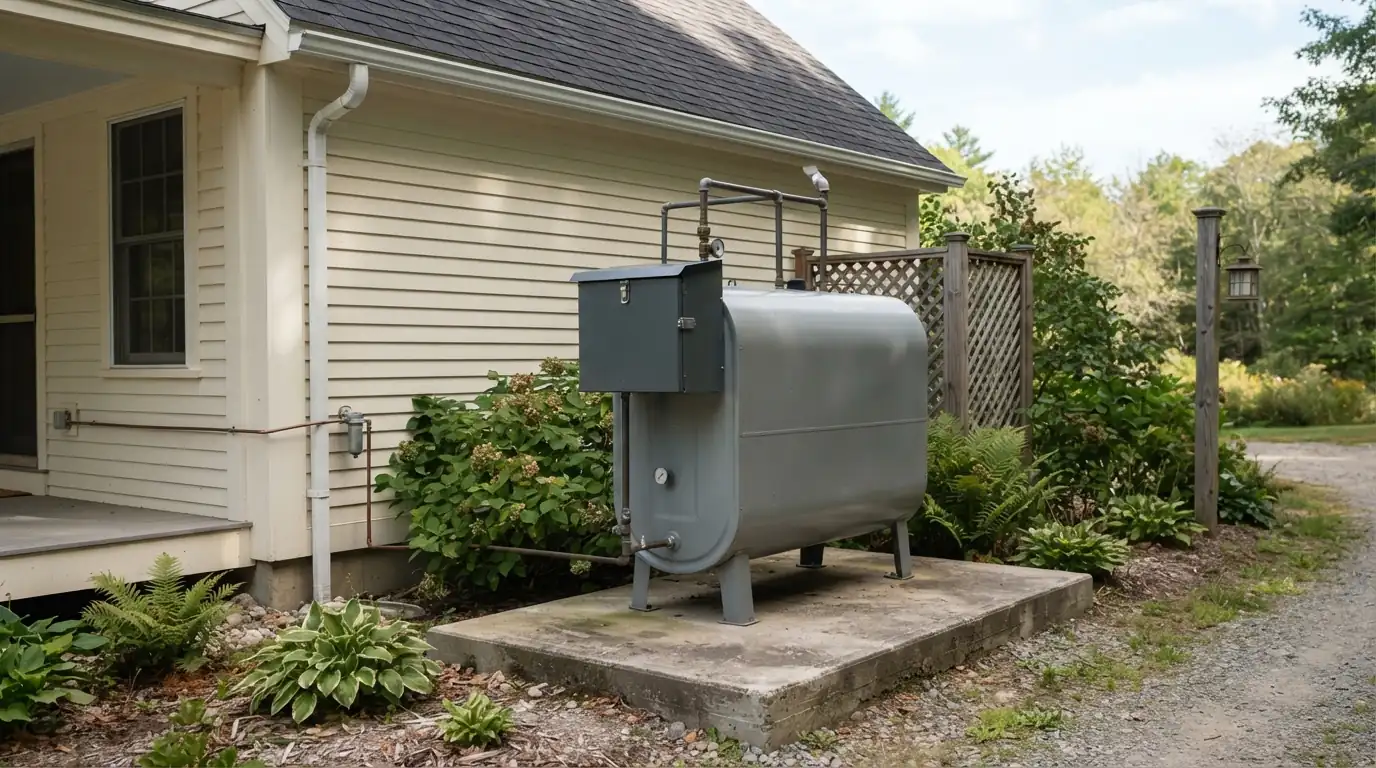
Outdoor tanks sit on a pad beside the house, where they face weather, snow load and, near the coast, salt air. They need a stable concrete pad, protection for the fill and line from impact, and a supply line protected where it enters the house. We inspect the legs, the pad and the line entry, and for a replacement we set the new tank on a sound base with the line routed to avoid freezing and physical damage. A cover over the filter keeps it out of the weather.
Removal of a Leaking or Corroded Tank
A tank that is actively weeping needs attention quickly. We transfer the oil out, contain any drips, and remove the tank. Small stains on the floor are cleaned up during removal. Anything more than surface staining, such as oil that has reached soil or a floor drain, is a remediation job and should be handled through your insurer and the proper environmental channels, and we tell you plainly if it looks that way. If you are switching fuels, see converting from oil to gas.
How this job plays out in Bridgeport
Oil use in Connecticut runs from around 7 percent of households in gas-served cities such as New Haven to far higher shares in towns without gas mains, so tank work is still routine across the area we cover. Before replacing a tank, it is worth knowing that a national lab study found 74 percent of Northeast oil-heated homes would save with a heat pump, which may change whether a new tank is the right long-term buy.
We service and install Carrier, Lennox, Trane, Goodman and more
How an oil tank replacement runs
- 1
Inspect
Tank, legs, fill, vent and supply line checked.
- 2
Quote
Tank type and line work priced in writing.
- 3
Transfer oil
Usable oil pumped to the new or holding tank.
- 4
Remove the old tank
Disconnected, cut if needed and carried out.
- 5
Install the new tank
Set on a stable base with new fittings.
- 6
Connect lines
Fill, vent with alarm, supply line and filter.
- 7
Restart and test
Burner bled, restarted and checked for leaks.
Signs your oil tank needs replacing
Rust or blistering
Especially along the bottom and seams.
Wet spots or weeps
Oil seeping through thinned steel.
Oil smell in the basement
A leak at the tank, filter or line.
Unstable legs
Rusted or leaning supports.
Failed inspection
A home sale or insurer inspection flagged it.
Oil Tank Replacement questions from Bridgeport homeowners
Rust, weeps, wet spots, an oil smell or a failed inspection.
Usable oil is usually transferred to the new tank.
Double-wall or corrosion-resistant tanks resist internal corrosion best.
We remove it promptly; larger spills are a remediation job through proper channels.
Usually a day.
If gas is available or a heat pump fits, it may be worth pricing those first.
Related jobs we handle
Radiator & Baseboard Repair
Cold radiators, baseboard leaks and cracked cast iron.
Radiator & Baseboard Repair in BridgeportWater Heater Installation
Gas, oil-fired, indirect and tankless water heaters.
Water Heater Installation in BridgeportReplace the oil tank before it leaks
Call to book an inspection. We check the tank and lines and quote the replacement in writing.