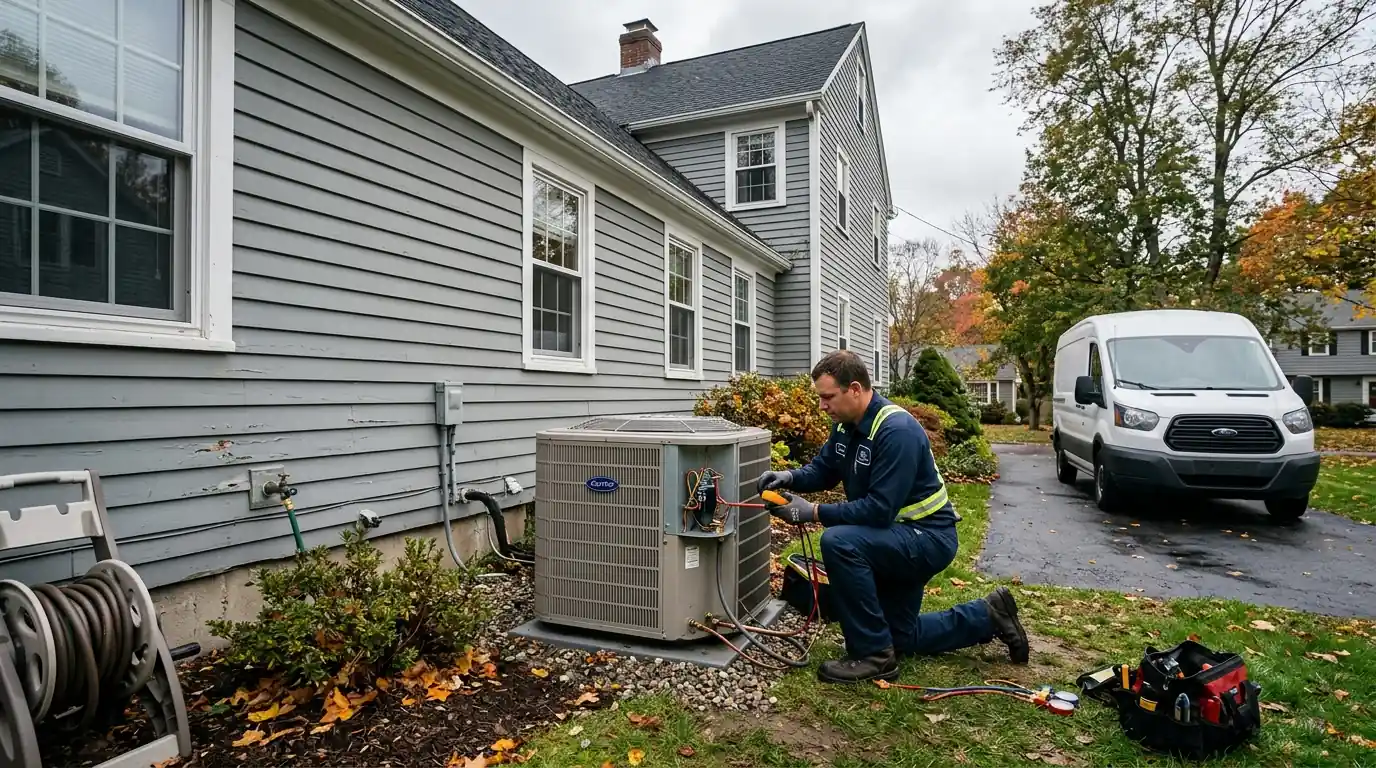
Evaporator coil replacement in Bridgeport for leaking or failed AC coils
When the indoor coil leaks or corrodes through, we replace it with a coil matched to your condenser, then evacuate, charge and test the whole circuit.
An evaporator coil needs replacing when it leaks refrigerant through corroded tubing or joints, which shows up as an air conditioner that keeps losing charge, freezes up or stops cooling. We confirm the leak is in the coil, replace it with one matched to your condenser, then pressure test, evacuate and recharge the system.
Updated October 2026
How we know it is the coil
A system low on refrigerant is leaking somewhere, and the indoor evaporator coil is one of the most common places. Pinhole leaks form in the copper or at brazed joints over time, especially on older coils. Topping off the charge buys weeks, not seasons.
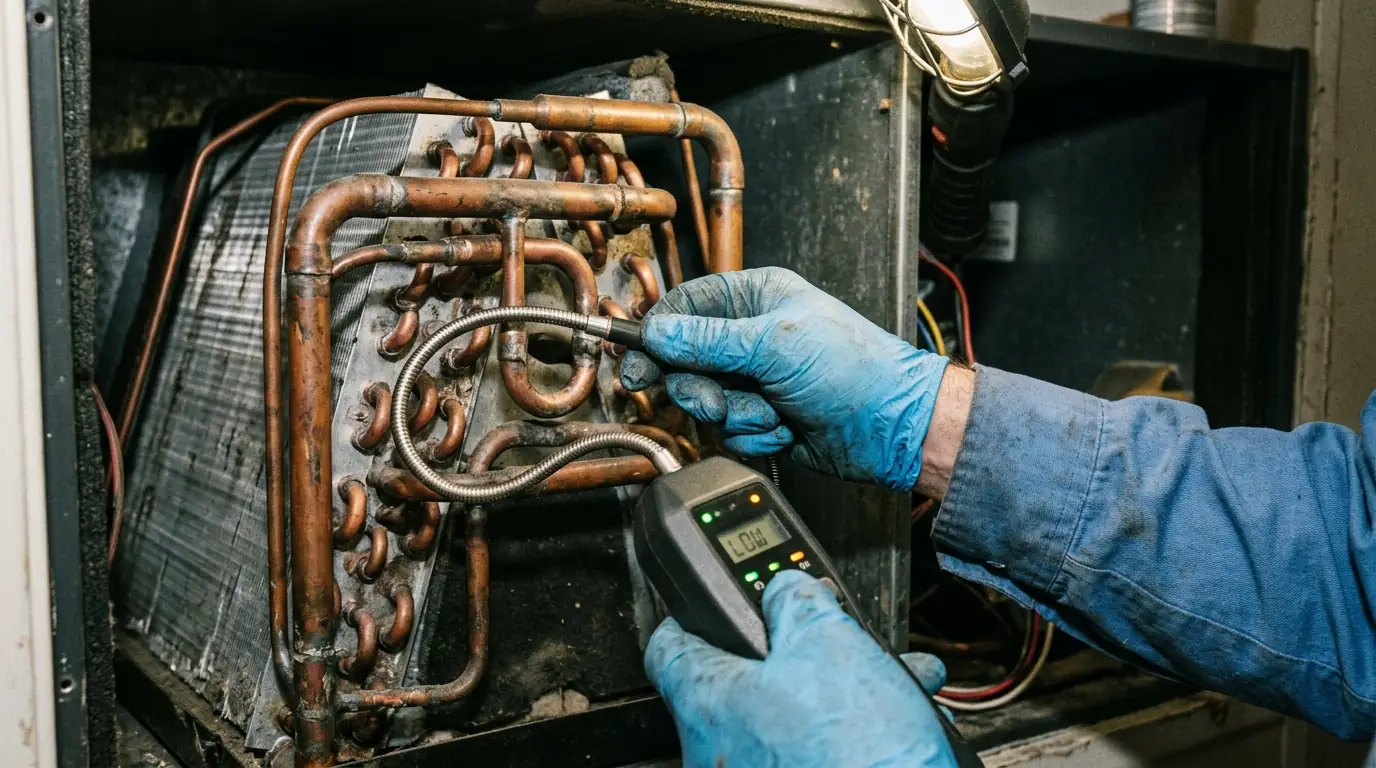
We confirm the leak location with an electronic detector and pressure testing before recommending a coil. If the leak is at an accessible fitting or valve, that is a repair, not a replacement.
What changes the cost of a coil replacement
Coil size and type
Cased, uncased and slab coils differ in cost.
Refrigerant
The type and amount of refrigerant needed to recharge.
Plenum and fit
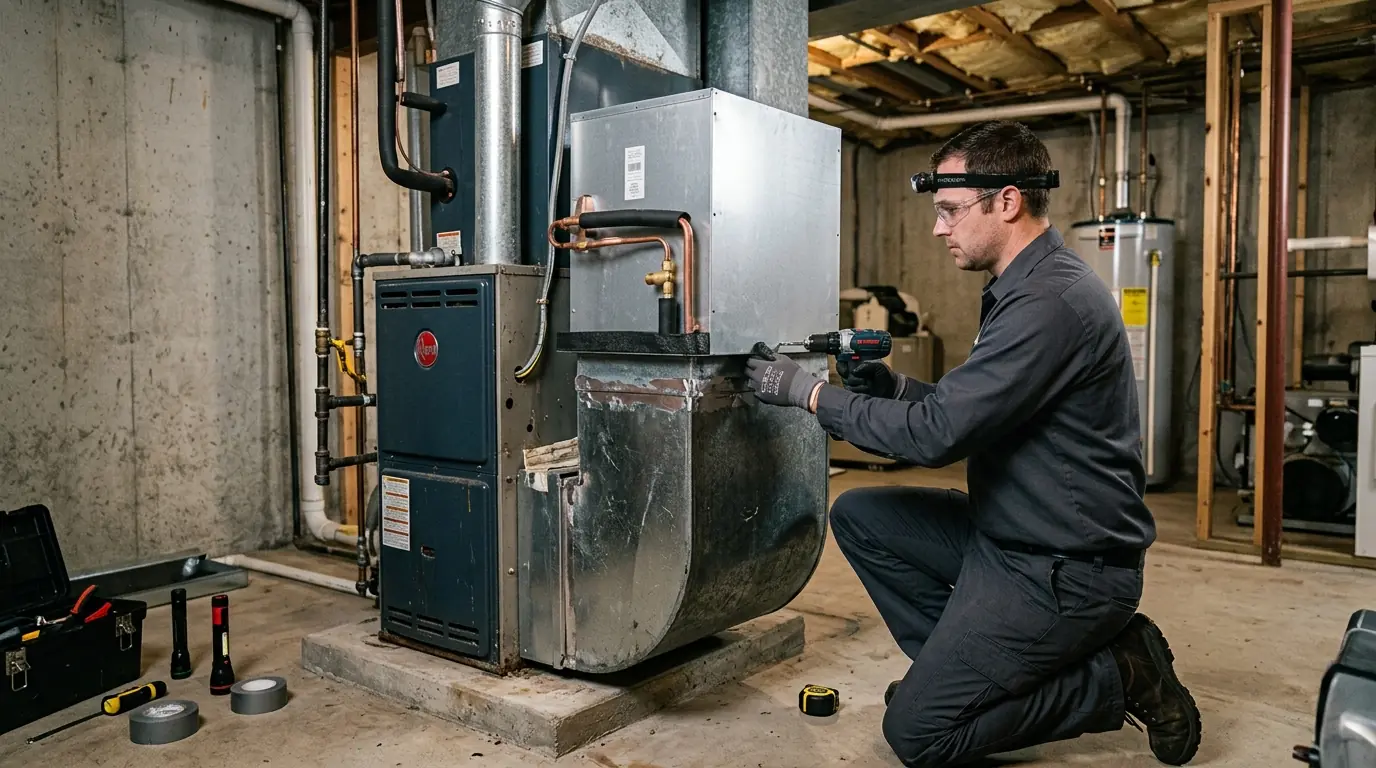
Custom sheet metal to fit a new coil to the cabinet.
Access
Attic air handlers take longer than basement furnaces.
Line set work
Brazing, flushing or replacing connections.
Condenser age
An old condenser may make full replacement the better value.
Repair, replace the coil, or replace the system?
| Situation | Usually | Why |
|---|---|---|
| Leak at a fitting or valve | Repair | Accessible and repairable |
| Coil tubing leak, newer system | Replace coil | Restores a sealed, matched system |
| Coil leak on R-22 system | Replace coil and condenser | Old refrigerant and mismatch make coil-only a poor value |
| Old condenser and failing coil | Replace system or consider heat pump | Both components are near end of life |
Leaking Coils on R-410A Systems
Many coils in service today run on R-410A, and pinhole leaks in their tubing are a common failure after years of use. Once a coil is leaking through its tubing, repair usually does not hold; the metal around the leak is typically thin as well. Replacing the coil restores a sealed system. Because the refrigerant charge is lost during the repair, we recover what remains, replace the coil, and weigh in a fresh charge rather than guessing by pressure alone.
Coil and Condenser Matching
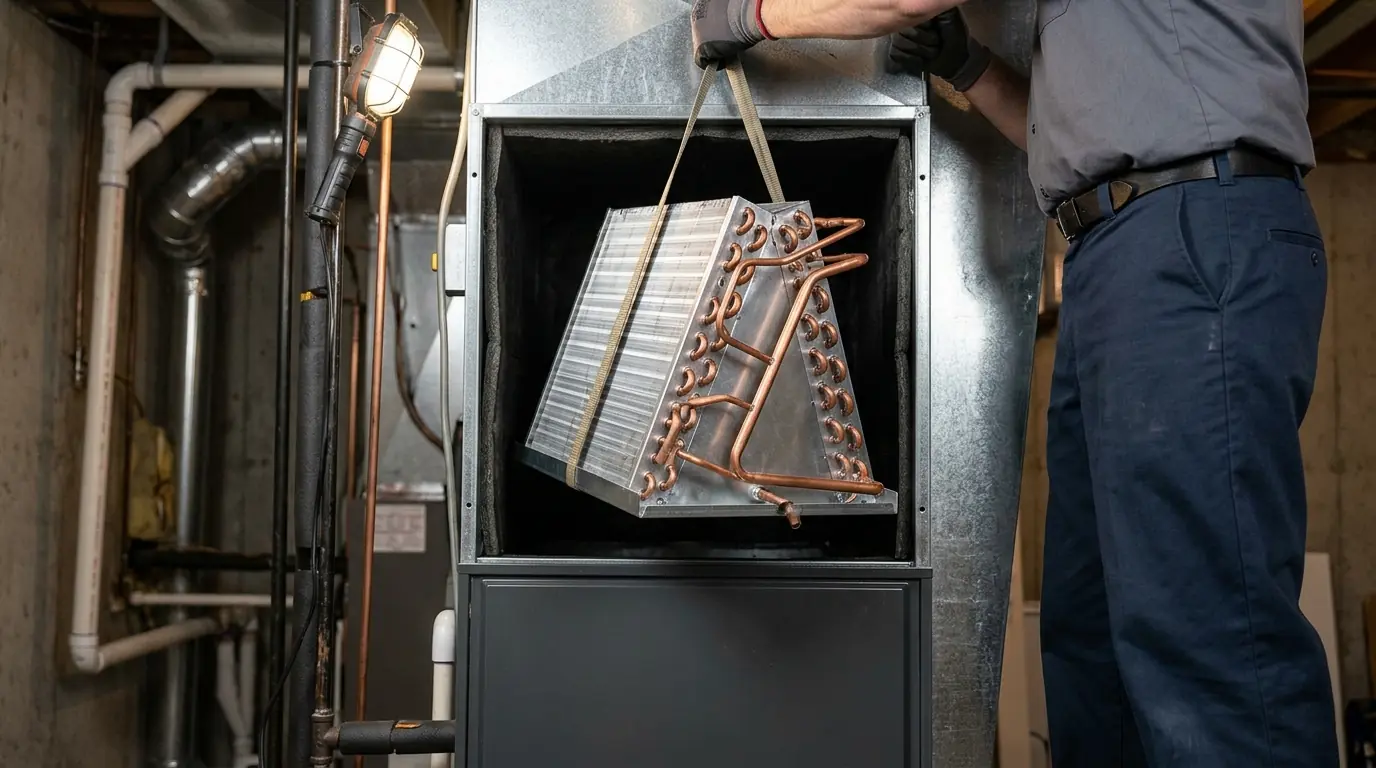
A coil is rated to work with a specific condenser, and an unmatched pair loses efficiency and can shorten the compressor's life. We choose a replacement coil listed as a match for your outdoor unit, sized to the airflow your furnace or air handler delivers, and fitted to the cabinet so there are no gaps for air to bypass the coil. If the condenser is also near the end of its life, we give you the price of replacing both so the decision is informed.
Refrigerant Change-Out Considerations
Older systems on R-22, a refrigerant no longer produced, face a harder choice when the coil fails. A new R-22 coil is hard to justify, and a coil for a newer refrigerant cannot simply be dropped onto an old R-22 condenser. In that case replacing the coil and condenser together, or moving to a heat pump, usually makes more sense than repairing. We tell you which refrigerant your system uses before quoting, so the options are clear from the start.
What we see in Bridgeport homes
With Connecticut electricity running about 30 cents per kWh this year, a mismatched or leaking coil that makes the air conditioner run longer shows up quickly on the summer bill. HVAC work here also runs about 1.2 times the national average on published regional cost indexes. So confirm the leak is actually in the coil before paying to replace it.
We service and install Carrier, Lennox, Trane, Goodman and more
How a coil replacement runs
- 1
Confirm the leak
Electronic detection and pressure testing locate it.
- 2
Recommend options
Coil only, or coil and condenser, priced side by side.
- 3
Recover refrigerant
Remaining refrigerant is recovered properly.
- 4
Replace the coil
Old coil removed, matched coil fitted and brazed.
- 5
Pressure test
The circuit is pressurized and held to prove it tight.
- 6
Evacuate and charge
Deep vacuum, then refrigerant weighed in.
- 7
Verify cooling
Superheat, subcooling and temperature drop checked.
Signs your evaporator coil may be leaking
Recharged, then low again
A leak somewhere in the system, often the coil.
Ice on the refrigerant line
Low charge causing the coil to freeze.
Warm air on hot days
The system cannot remove heat without full charge.
Hissing near the air handler
Refrigerant escaping from a coil leak.
Oily residue on the coil
Oil travels with escaping refrigerant.
Evaporator Coil Replacement questions from Bridgeport homeowners
Repeated low charge, icing and warm air are the signs; a leak test confirms it.
Tubing leaks rarely hold; accessible fitting leaks can be repaired.
Yes. Mismatched coils cost efficiency and can shorten compressor life.
Replacing the coil and condenser together usually makes more sense.
Usually a day, including evacuation and charging.
Only if it makes sense; we price both options.
Related jobs we handle
Heat Pump Installation
Cold-climate heat pumps, often replacing oil, with rebate filing.
How we handle heat pump installationDuctless Mini Split Installation
Single and multi-zone systems for homes without ducts.
Ductless Mini Split Installation in BridgeportDual Fuel & Hybrid Heating
Heat pump paired with a gas furnace or oil boiler.
More on dual fuel & hybrid heatingStop recharging a leaking system
Call to book a leak test. We confirm where the leak is before recommending a coil.