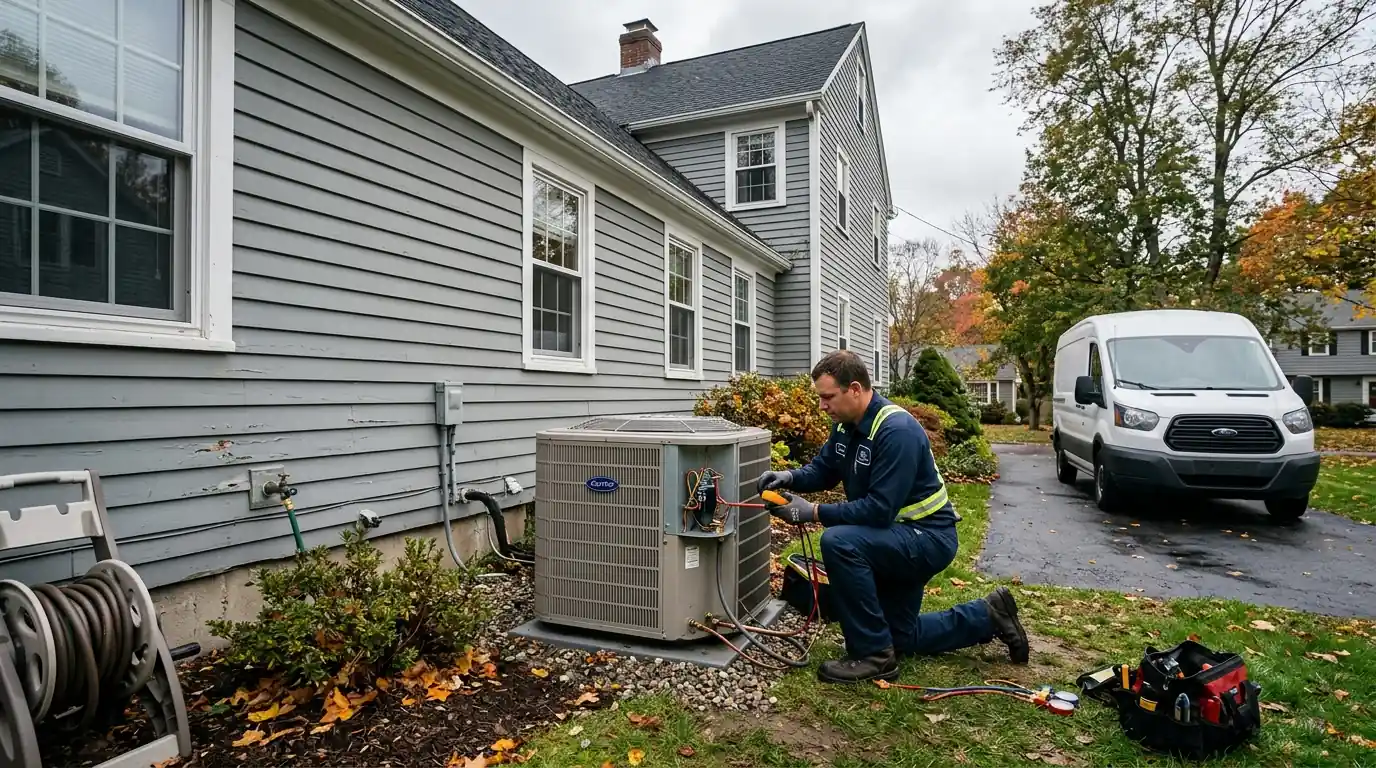
Stainless chimney liners for Bridgeport furnaces, boilers and water heaters
A correctly sized stainless liner so your heating equipment and water heater vent safely, including the common case where a furnace swap leaves the water heater alone in the chimney.
A chimney liner is a stainless steel pipe run down an existing masonry chimney so gas or oil appliances vent safely. In Bridgeport it is most often needed when a new furnace or boiler moves to sidewall venting and leaves a water heater in an oversized flue, or when an old unlined chimney fails a draft test.
Updated October 2026
Why so many chimneys need a liner
Old masonry chimneys were built for coal or large oil burners that sent hot exhaust straight up. Modern gas appliances run cooler, and their exhaust can condense inside an oversized, unlined chimney, which damages the mortar and can cause poor draft or backdrafting into the house.
A stainless liner sized to the appliance gives the exhaust a smooth, correctly sized path to the top. It is a small part of many heating installs and the whole job on some calls.
What changes the cost of a chimney liner
Chimney height
Taller chimneys need longer liners.
Liner type and size
Oil and gas liners differ; larger appliances need larger liners.
Roof access
Steep or high roofs take more time and safety equipment.
Chimney condition
Obstructions or damaged flue tile can complicate the run.
Number of appliances
Two appliances may need two liners or a combined design.
Permit
The liner is usually inspected with the appliance permit.
What a chimney liner installation includes
- Chimney inspection from top and bottom
- Liner sized to the appliance and chimney
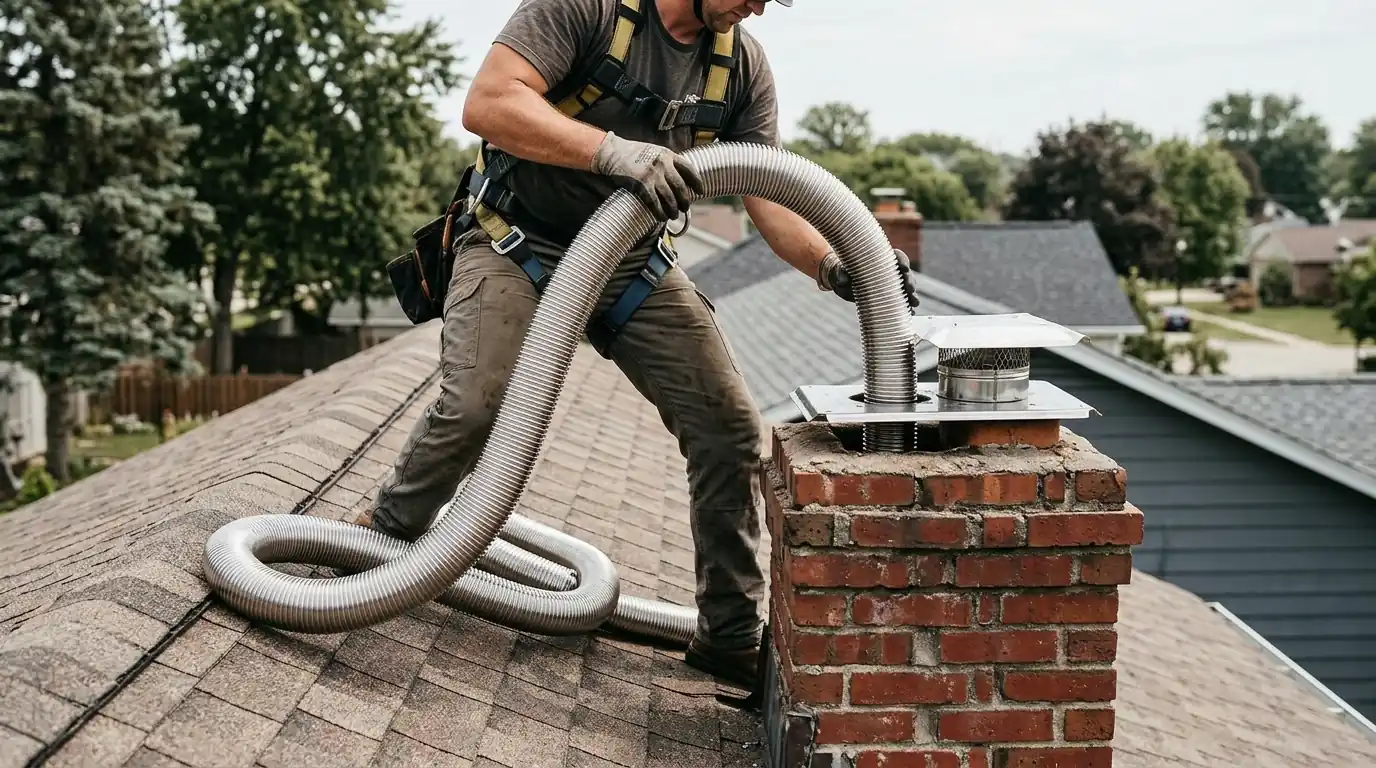
- Stainless liner run from roof to appliance
- Bottom tee with cleanout
- Top plate and rain cap
- Flue pipe connection with sealed joints
- Draft test under worst-case conditions
- Spillage and carbon monoxide check
- Inspection with the appliance permit
Stainless Liners for Oil and Gas Appliances
Oil and gas appliances need different liner types and sizes. Oil liners handle higher temperatures and soot, while gas liners are sized for cooler exhaust that must reach the top before it condenses. We size the liner from the appliance input and chimney height, lower it from the roof, connect it to the appliance at the bottom with a tee and cleanout, and cap it at the top. The installation is inspected as part of the appliance permit, and the liner size is recorded for future service.
Orphaned Water Heater Venting After a Furnace Swap
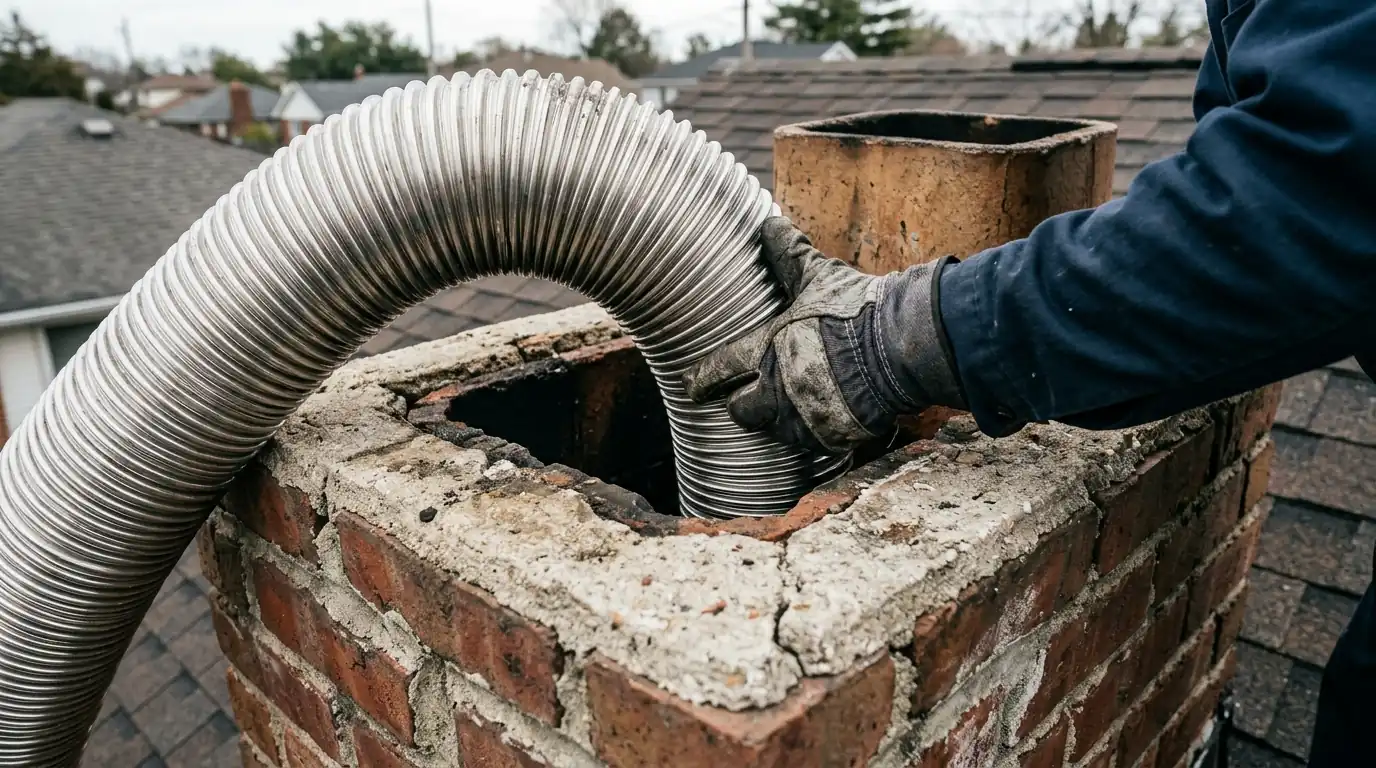
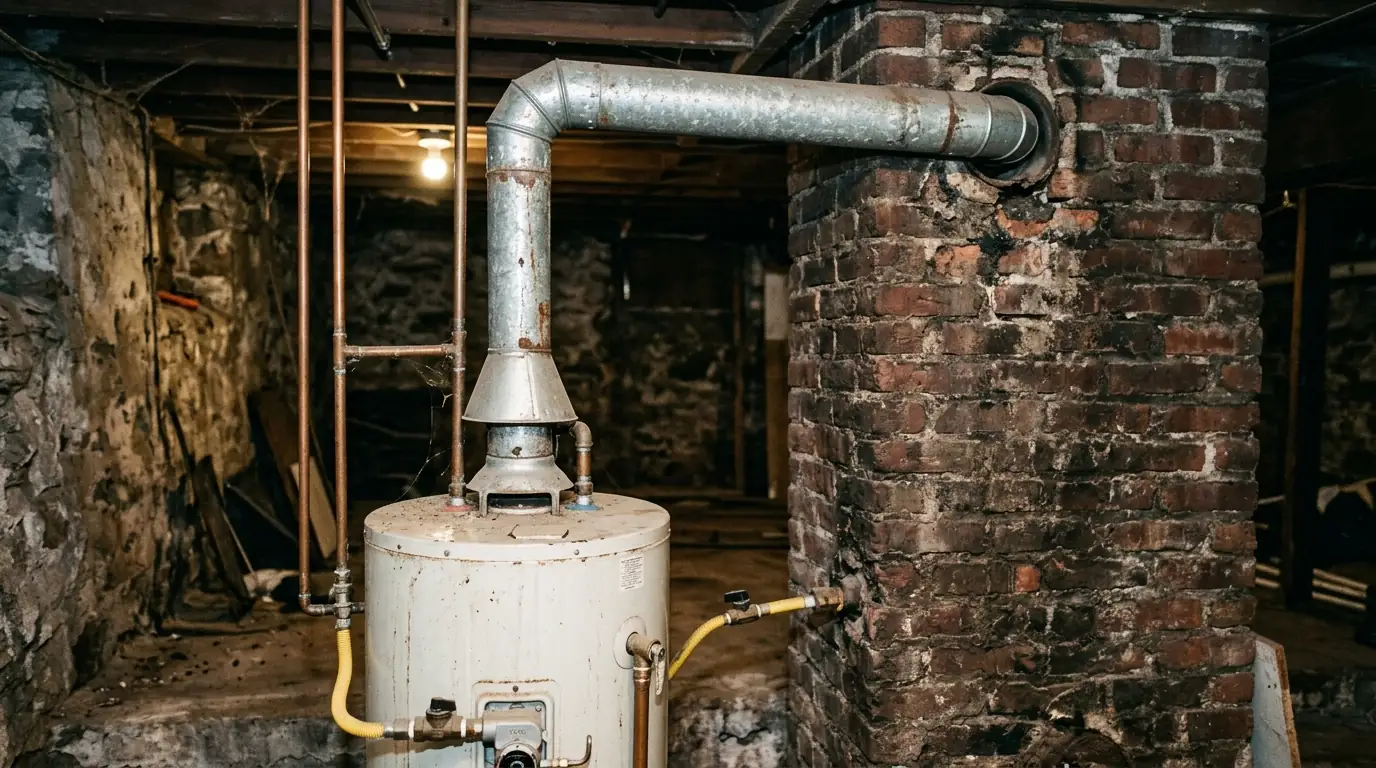
The most common liner job we see follows a furnace or boiler upgrade. When the heating appliance moves to sidewall PVC venting, the water heater is left alone in a chimney sized for two appliances, which it cannot heat enough to draft reliably. The fix is a small liner sized just for the water heater, or replacing the water heater with a sidewall-vented model. We check this at the heating quote so it is part of the plan, not a surprise at inspection.
Draft and Spillage Testing
A liner is only proven by testing. With the appliance running, we measure draft in the flue pipe and check for exhaust spilling out at the draft hood, first with the house closed up and exhaust fans running, which is the worst case. We also test for carbon monoxide near the appliance. If an existing chimney fails those tests, the appliance should not be used until the venting is corrected. See water heater installation for the sidewall option, which avoids the chimney altogether.
Why Bridgeport houses change the approach
More Bridgeport homes date from 1939 or earlier than from any later period, and utility gas is now the city's most common heating fuel. That combination means a lot of gas appliances venting into masonry chimneys that were built for coal. Those are exactly the flues that need liners when the heating equipment changes, and we find many of them on routine furnace and boiler replacements.
How a liner installation runs
- 1
Inspect the chimney
Flue size, condition and obstructions are checked.
- 2
Size the liner
Based on appliance input and chimney height.
- 3
Roof access
Ladders and roof protection set up.
- 4
Lower the liner
The liner is fed down and connected at the bottom.
- 5
Cap the top
A rain cap and top plate seal the chimney.
- 6
Connect the appliance
Tee, cleanout and flue pipe connected.
- 7
Test draft
Draft, spillage and carbon monoxide are measured.
Signs your chimney venting needs attention
Water heater draft hood spills
Exhaust rolling out at the hood means poor draft.
Crumbling mortar in the basement
Condensation damage inside an unlined flue.
Water stains near the chimney
Condensate or rain entering the flue.
CO alarm near appliances
Stop using the appliance and call.
New furnace just installed
The water heater may be left in an oversized flue.
Chimney Liner & Heating Vent Installation questions from Bridgeport homeowners
The chimney is now too large for the water heater alone to draft properly.
Not all, but many unlined masonry chimneys serving gas appliances do.
A sidewall-vented water heater avoids the chimney altogether.
Usually a few hours to a day, depending on roof access.
Often, especially in older or oversized chimneys.
A draft and spillage test with the appliance running tells you.
Related jobs we handle
Gas Line Installation for HVAC Equipment
Gas piping sized for furnaces, boilers and water heaters.
How we handle gas line installation for HVAC equipmentGarage & Unit Heater Installation
Gas heaters for garages, workshops and warehouses.
How we handle garage & unit heater installationHVAC for Additions & Finished Basements
Heating and cooling for additions and finished basements.
HVAC for Additions & Finished Basements in BridgeportMake sure your appliances vent safely
Call to book a venting inspection. We test draft and spillage and recommend a liner only if the chimney needs one.