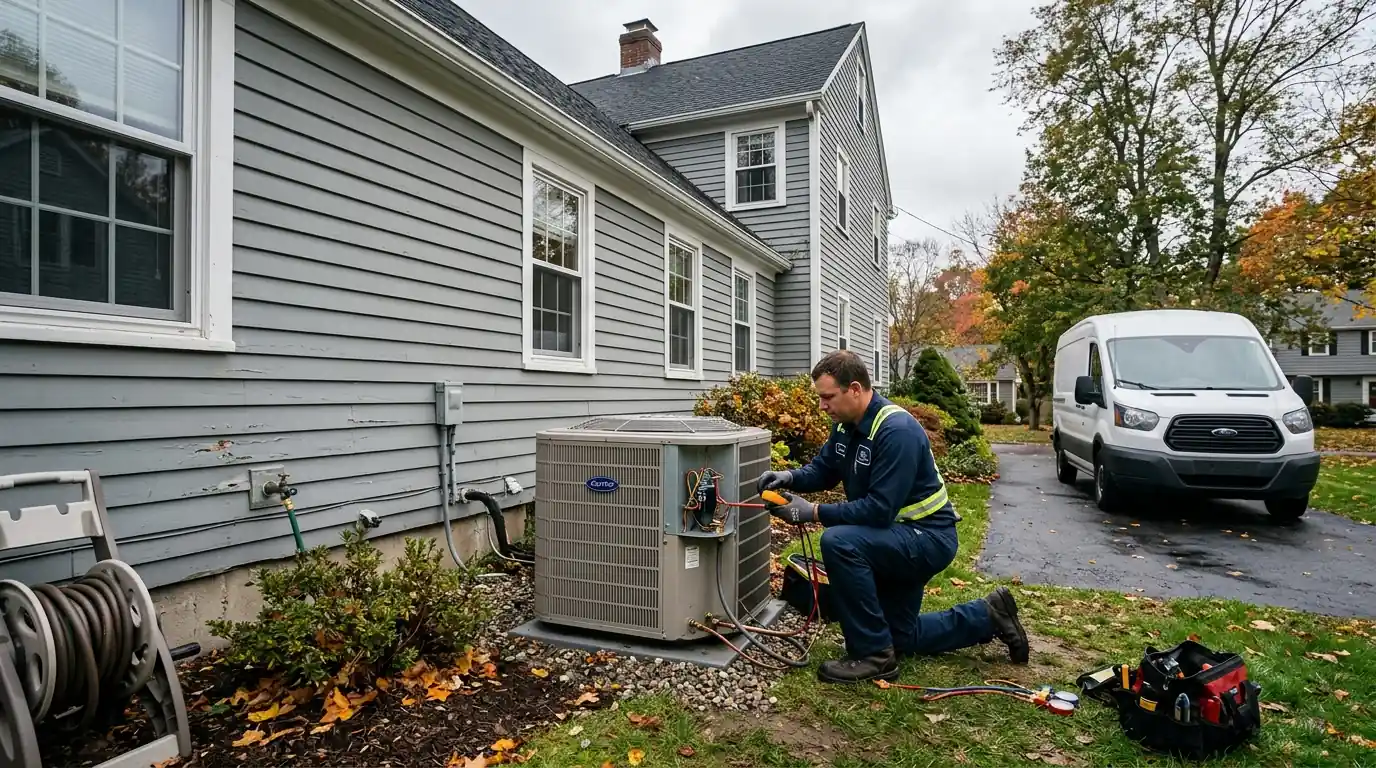
Furnace tune-ups in Bridgeport before the first cold night
A fall visit that cleans, tests and measures the furnace, with a carbon monoxide check and a written report of what we found.
A furnace tune-up in Bridgeport is a fall visit that cleans the burner, tests combustion and carbon monoxide, checks the ignitor, flame sensor, heat exchanger and safeties, and services the blower and filter. Oil furnaces also get a new nozzle and filter. It takes about an hour, and you get the readings in writing.
Updated October 2026
What a tune-up catches before it fails
The parts that fail on the first cold night are usually visibly worn weeks earlier: an ignitor with hairline cracks, a flame sensor coated with residue, a capacitor reading low, a filter packed solid. A tune-up finds them while replacing them is a planned ten-minute job.
It is also the one time each year someone measures what the furnace is putting into the house. Combustion and carbon monoxide readings are a safety check, not an upsell, and they are part of every visit.
What every furnace tune-up covers
- Burner cleaning and flame check
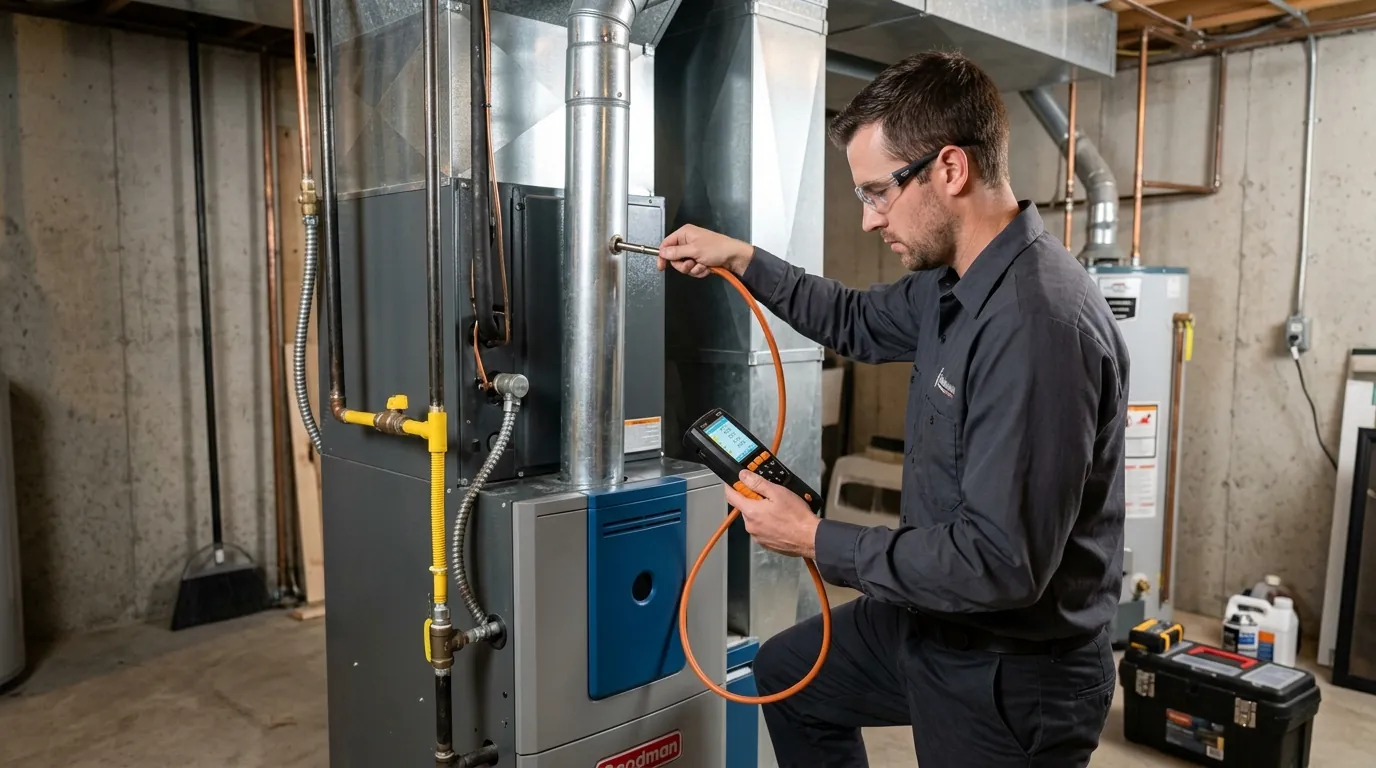
- Combustion analysis in the flue
- Carbon monoxide test at registers and appliance
- Ignitor and flame sensor inspection
- Heat exchanger visual inspection
- Blower wheel, motor and capacitor check
- Temperature rise measurement
- Filter replacement or inspection
- Written report of readings and findings
Why Bridgeport houses change the approach
Oil still heats roughly a third of Connecticut homes, so in Bridgeport we tune up plenty of oil furnaces alongside gas ones. On oil equipment the fall visit is not optional: a worn nozzle and a clogged filter are the top reasons an oil furnace quits in the first cold week. Labor in Fairfield County also runs above the state average, which makes a planned visit a far better use of money than an overnight emergency call.
Combustion Analysis and CO Check
We insert a combustion analyzer into the flue while the furnace runs and read oxygen, carbon monoxide, flue temperature and efficiency. Those numbers tell us whether the burner is getting the right mix of fuel and air, and whether exhaust is leaving the house the way it should. We also check for carbon monoxide at the supply registers and near the furnace. High readings mean an adjustment, a cleaning or a closer look at the heat exchanger, and we tell you which before the visit ends.
Burner and Heat Exchanger Inspection
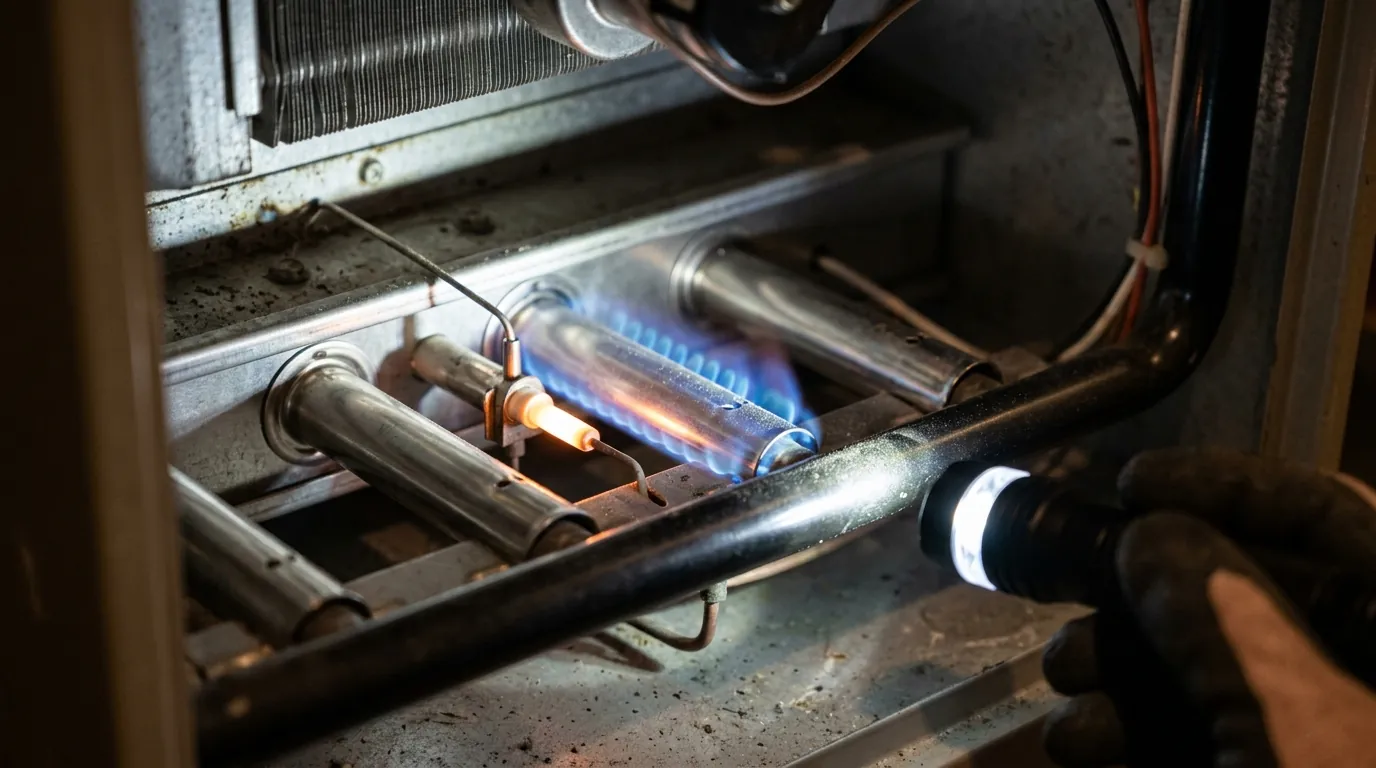
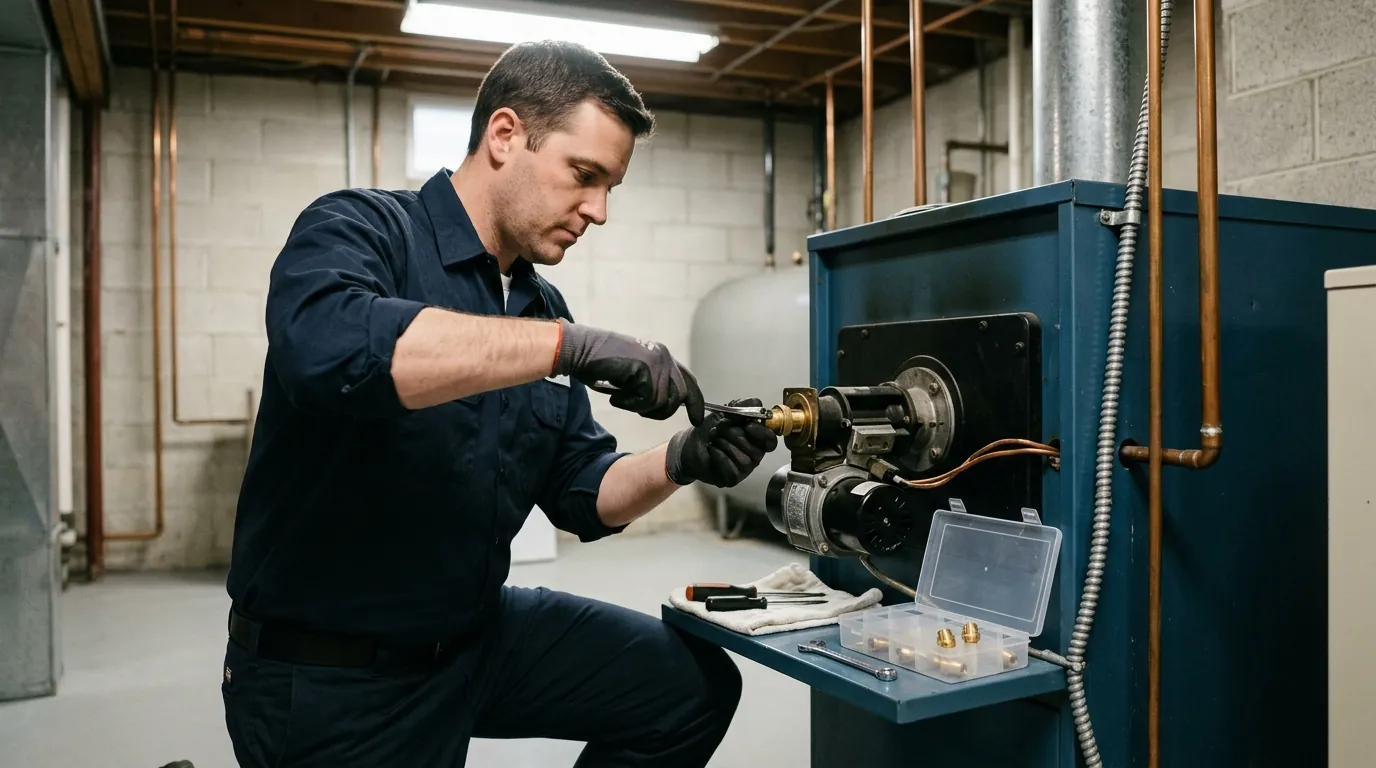
The burners are cleaned of rust flakes and dust so the flame lights evenly. The ignitor is inspected for cracks, and the flame sensor is cleaned and its signal measured. The heat exchanger is inspected with a light and, where the design allows, a camera, looking for cracks and rust-through. On oil furnaces the nozzle, oil filter and pump strainer are replaced and the electrodes adjusted, which is the single most useful thing an oil furnace gets each year. Soot left in the chamber is brushed out at the same time.
Filter, Blower and Belt Service
Airflow problems cause more furnace trouble than burner problems. We replace or check the filter, inspect the blower wheel for dust buildup, test the capacitor and motor amp draw, and on older belt-drive blowers check the belt tension and bearings. We also measure the temperature rise across the furnace. A rise outside the manufacturer's range points to airflow or firing rate trouble that would otherwise show up later as a tripped limit switch in January. If the ducts are the cause, we note it rather than guess.
How a tune-up visit runs
- 1
Book before the cold
We schedule fall visits ahead of the first freeze.
- 2
Safety first
Gas connections and venting are checked before firing.
- 3
Clean
Burners, flame sensor and blower are cleaned as needed.
- 4
Measure
Combustion, carbon monoxide, temperature rise and amp draw are recorded.
- 5
Service oil parts
Nozzle, filter and strainer are changed on oil furnaces.
- 6
Report
Readings and any worn parts are written up and ranked.
- 7
Your call
Repairs are priced and done only if you approve.
What you should do between tune-ups
Change or check the filter every one to three months during the heating season, and keep the area around the furnace clear of storage. Keep supply registers and return grilles open and unblocked, and test the carbon monoxide alarms when the clocks change.
Leave the burner, gas valve, ignitor and oil burner adjustments to a technician. Cleaning a flame sensor with the wrong material or resetting an oil burner repeatedly creates the problems a tune-up is meant to prevent.
What changes the cost of a tune-up
Gas or oil
Oil furnaces add a nozzle, filter and strainer change.
Filter type
Media filters cost more than standard one-inch filters.
Blower condition
A heavily caked blower wheel may need removal and cleaning.
Access
Attic and crawlspace furnaces take longer to service.
Parts found worn
Worn parts are quoted separately and replaced only with approval.
Plan or one-time
Plan visits are scheduled together with cooling service.
Furnace Tune-Up questions from Bridgeport homeowners
Once a year, ideally in early fall before regular use. Oil furnaces especially should not skip a year.
Yes. Manufacturers generally expect annual maintenance, and it catches installation or airflow problems early.
About an hour for a gas furnace, somewhat longer for oil.
No. You get the readings and any worn parts; replacement only comes up if the furnace is unsafe or failing.
Yes, including nozzle, filter, strainer and electrode service.
It is written up with a price. Nothing is repaired without your approval.
Related jobs we handle
Radiant Floor Heating
Hydronic radiant zones for baths, additions and basements.
More on radiant floor heatingChimney Liner & Heating Vent Installation
Stainless liners for gas and oil appliances and water heaters.
More on chimney liner & heating vent installationGas Line Installation for HVAC Equipment
Gas piping sized for furnaces, boilers and water heaters.
More on gas line installation for HVAC equipmentBook the fall visit before the rush
Call to schedule a tune-up now, before the first cold snap fills the calendar.