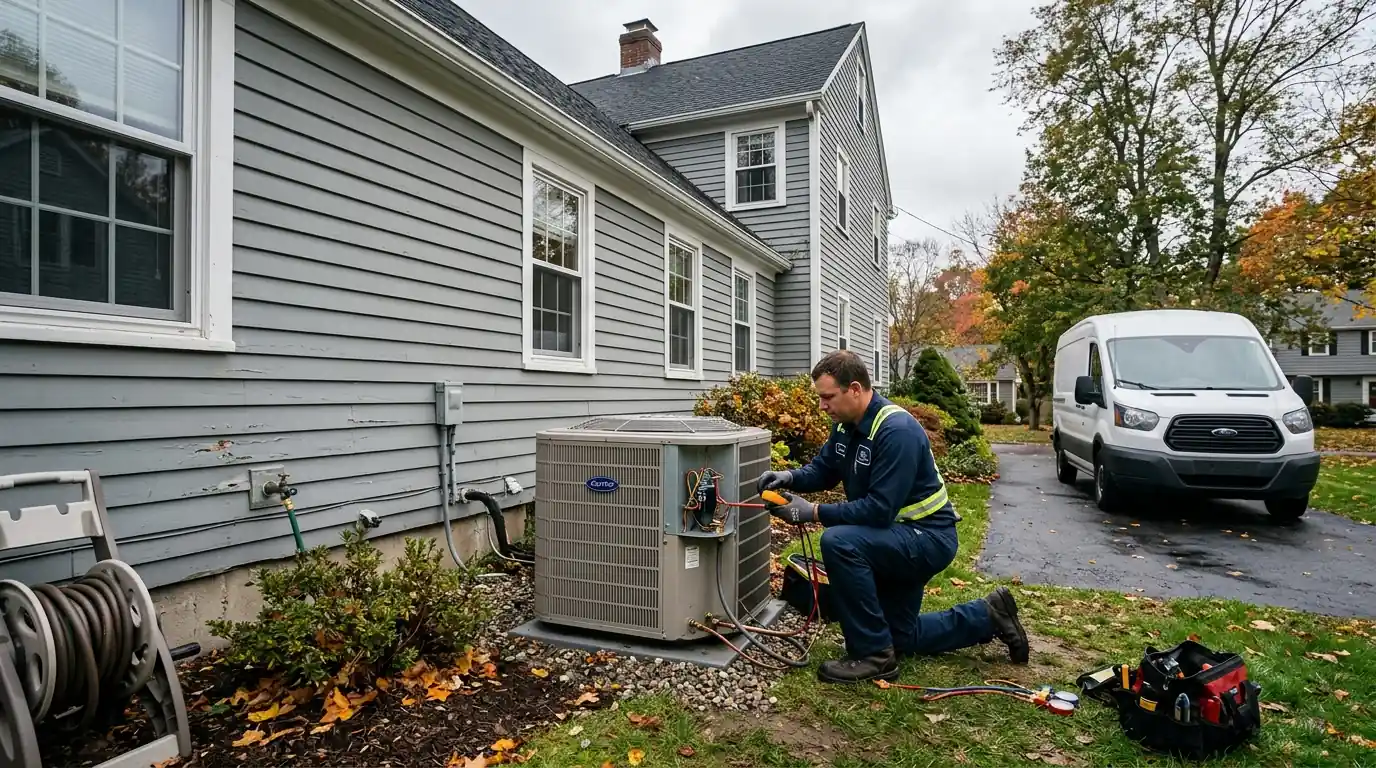
Heat pump water heater installs for Bridgeport homes on electric tanks
A heat pump water heater pulls heat from the surrounding air instead of heating water with an element alone, and it fits where most electric tanks already sit.
A heat pump water heater uses a small heat pump on top of the tank to move heat from the room air into the water, using much less electricity than a standard electric tank. In Bridgeport it is usually a straight replacement for an electric water heater in a basement, with a condensate drain added. We size it and confirm the space suits it.
Updated October 2026
Who benefits most from a heat pump water heater
Heat pump water heaters make the most sense in homes that heat water with electricity now. A standard electric tank turns electricity directly into heat; a heat pump model moves heat from the air instead, which uses far less power for the same hot water. At Connecticut electric rates, that difference adds up every month.
They need the right location: enough room air around the unit, a space that stays above freezing, and a place to drain condensate. Most basements qualify. A tight closet usually does not without venting.
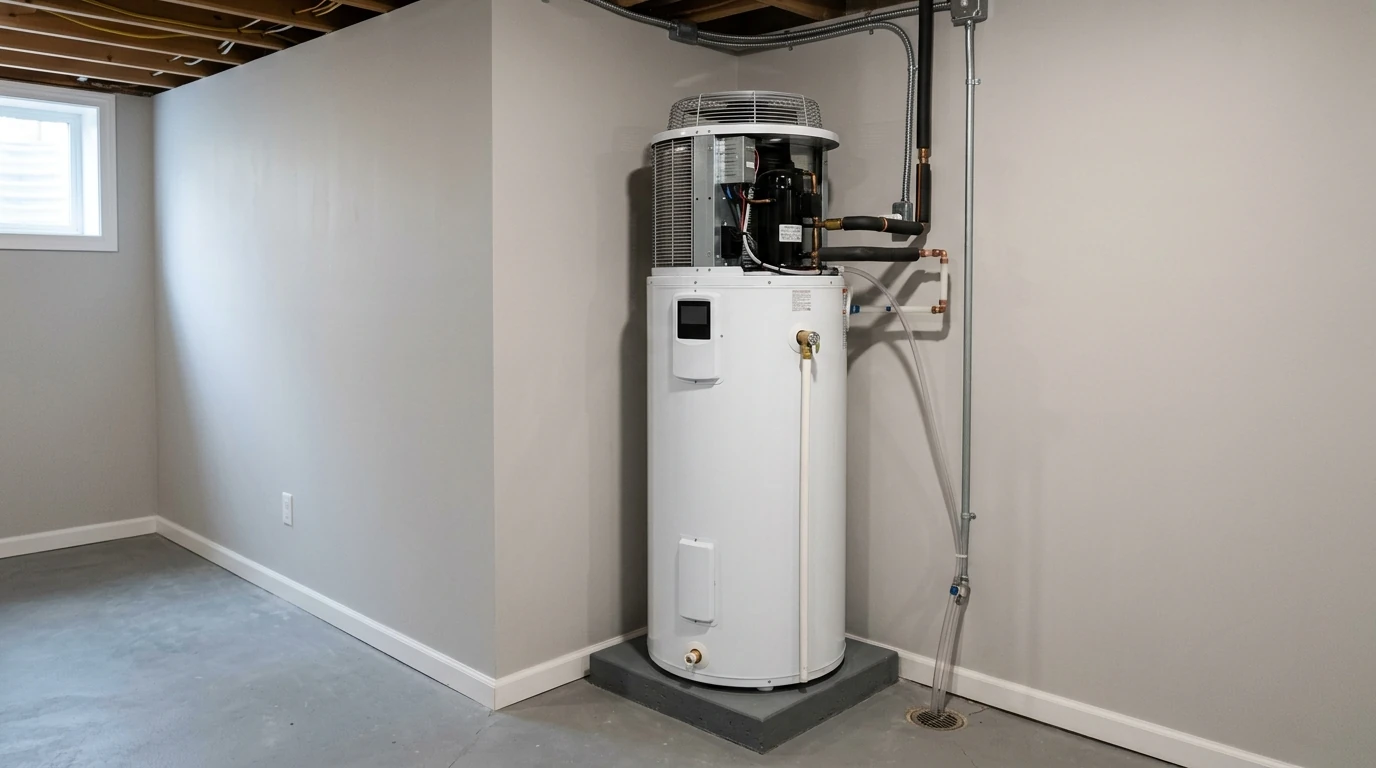
What changes the cost of a heat pump water heater
Tank size
Larger tanks cost more but suit bigger households.
Electrical
Some models need a different breaker or circuit.
Condensate drain
Gravity drain or a condensate pump.
Placement
Room volume and temperature may require ducting in small spaces.
Code upgrades
Expansion tank, shutoffs and drain pan as required.
Incentives
Qualifying models may earn a state incentive.
What a heat pump water heater install includes
- Space, temperature and ceiling height check
- Electrical circuit verified for the model
- Removal and disposal of the old tank
- New heat pump water heater set and leveled
- Water connections with new shutoffs
- Thermal expansion tank where required
- Condensate drain or pump
- Temperature and relief valve with discharge pipe
- Operating mode set and explained
Heat pump water heater, electric tank or gas?
| Option | Good fit when | Tradeoff |
|---|---|---|
| Heat pump water heater | You have an electric tank and a roomy basement | Taller unit; needs air volume and a drain |
| Standard electric tank | Tight space or very low hot water use | Highest running cost at Connecticut electric rates |
| Gas tank or tankless | Gas service is available | Needs venting and a gas line |
Replacing an Electric Tank
Replacing an electric water heater is the simplest heat pump water heater job. The new unit typically connects to the same water lines and electrical circuit, though some models need a different breaker size, which we check before ordering. It is taller than a standard tank because the heat pump sits on top, so we measure the ceiling height. We also add a thermal expansion tank where required, a new shutoff and a condensate drain, then set the operating mode for your household.
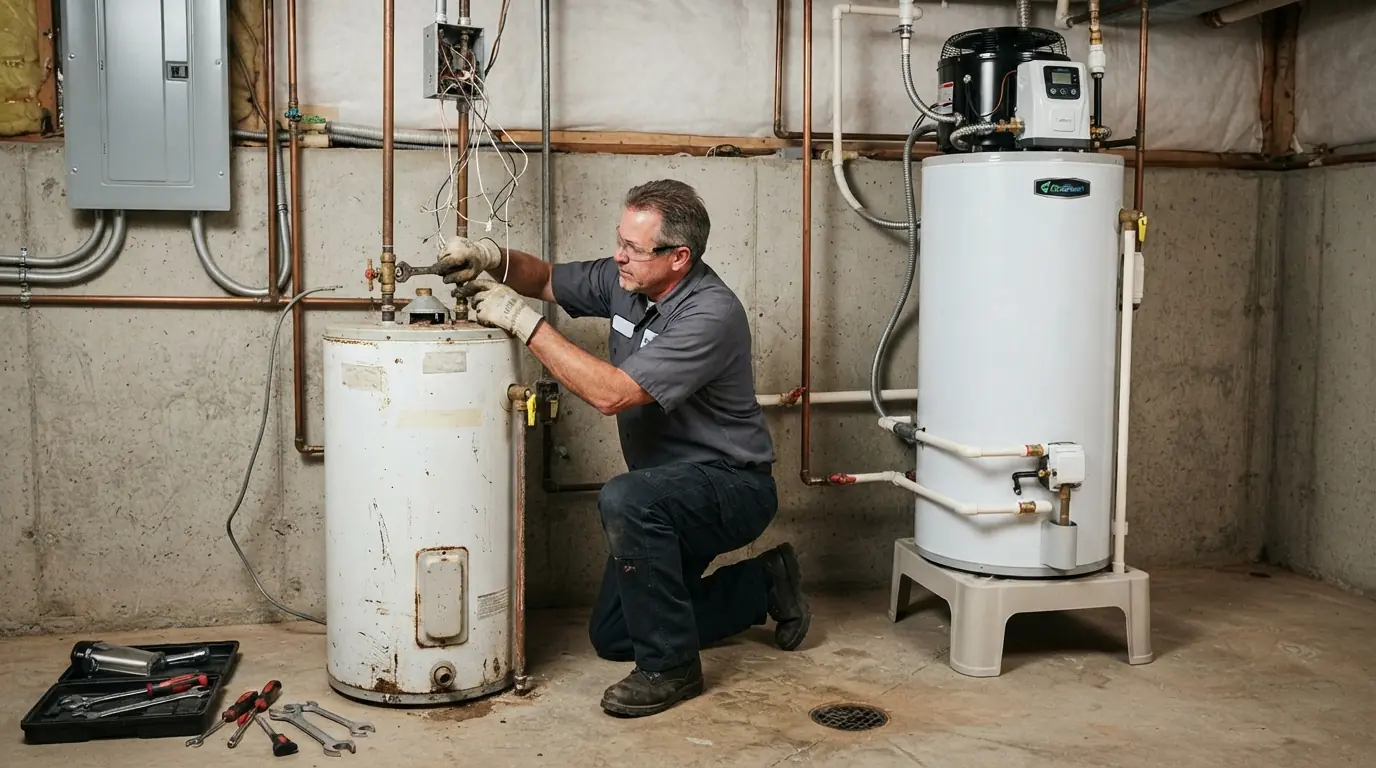
Basement Placement and Drain Needs
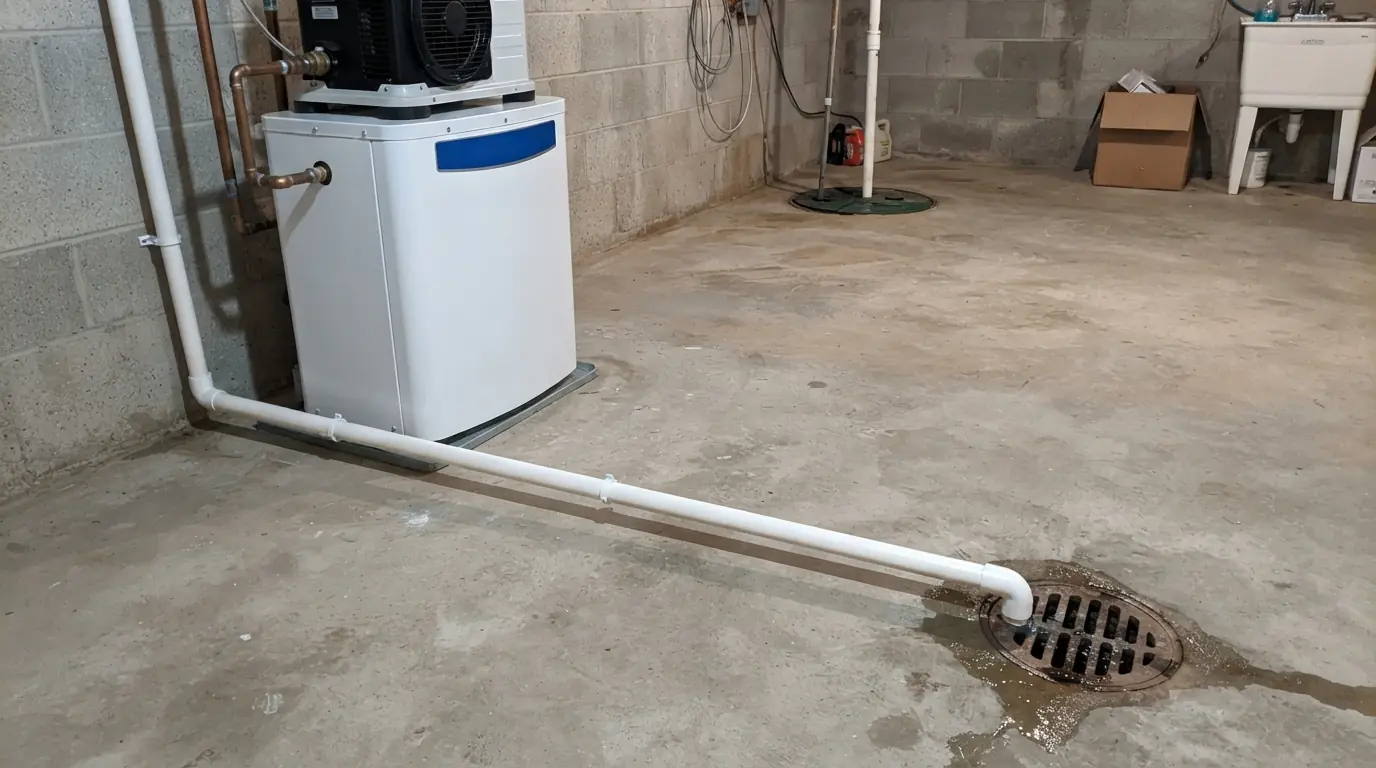
A heat pump water heater cools and dries the air around it while it runs, which is a benefit in a damp basement in summer and a consideration in winter. It needs a minimum volume of surrounding air, a space that stays within its operating temperature range, and a way to drain the condensate it produces, either by gravity to a floor drain or with a small pump. We check all three before recommending it, because a unit squeezed into the wrong space runs on its backup element and loses its savings.
Rebate Eligibility
Heat pump water heaters may qualify for state incentives in Connecticut, and program rules and amounts change over time. We confirm the current incentive and which models qualify at quote time, before ordering, and keep the model and installation details together for the paperwork. The federal 25C tax credit that once covered these units ended on December 31, 2025, so the state program is the one to check. Your utility bill history also helps estimate the savings. See water heater installation for gas and tankless options.
How this job plays out in Bridgeport
About 20 percent of Connecticut homes heat primarily with electricity, well below the national share, and many of those homes also heat their water with an electric tank. Those are the houses where a heat pump water heater pays back fastest. With the federal 25C credit gone as of December 31, 2025, the state incentive program is now the main one to check before buying.
We service and install Carrier, Lennox, Trane, Goodman and more
How a heat pump water heater install runs
- 1
Check the space
Room size, temperature and ceiling height measured.
- 2
Check the electrical
Breaker and wire size confirmed for the model.
- 3
Size the tank
Matched to the household's hot water use.
- 4
Remove the old tank
Drained, disconnected and carried out.
- 5
Install and connect
Water, electrical, expansion tank and drain.
- 6
Set the mode
Heat pump, hybrid or high-demand mode configured.
- 7
Walk-through
Filter cleaning and settings explained.
Heat Pump Water Heater Installation questions from Bridgeport homeowners
Usually, if there is enough room air and the space stays within its temperature range.
It makes a low fan hum, similar to a dehumidifier.
Yes, for condensate, by gravity or a small pump.
It can, but it is most cost-effective replacing an electric tank.
Some models may qualify for state incentives; we check at quote time.
Usually half a day to a day.
Related jobs we handle
Air Handler Replacement
Matched air handlers with heat strips and drain safety.
More on air handler replacementGeothermal Heat Pump Installation
Ground-source heat pumps with vertical or horizontal loops.
How we handle geothermal heat pump installationCentral Air Conditioning Installation
Matched condenser and coil, ducts checked, rebate filed.
How we handle central air conditioning installationCut the cost of electric hot water
Call to book a quote. We check the space, the electrical and the drain before recommending a model.