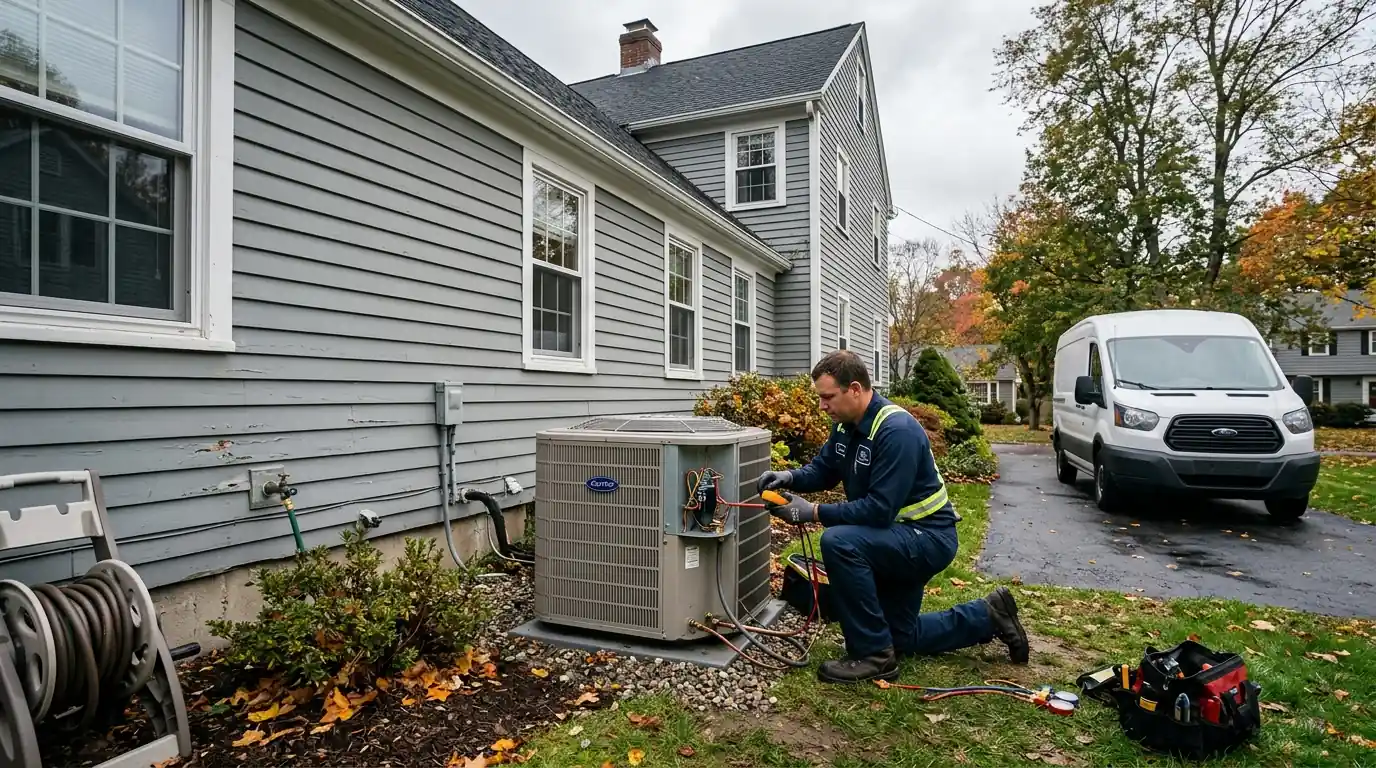
Ductwork installation and replacement in Bridgeport homes
New or replacement ducts sized to the equipment and the rooms, with the returns a house actually needs, so heating and cooling reach every room quietly.
Ductwork installation in Bridgeport means designing and building new supply and return ducts, or replacing undersized, crushed or leaking runs. So the furnace or air handler can move the air it was designed for. We size ducts from a load calculation and measure static pressure, then install sealed, insulated runs where needed.
Updated October 2026
Why ducts decide how a system performs
A furnace or air conditioner can only deliver comfort through its ducts. Undersized returns, crushed flex duct, disconnected runs and leaking joints make a new system loud, weak and expensive to run. They are also behind many of the rooms that never quite heat or cool.
We start with measurements: static pressure across the system and airflow at the registers. That shows whether the ducts are the problem and which parts need work, so you pay to fix what matters rather than replacing everything.
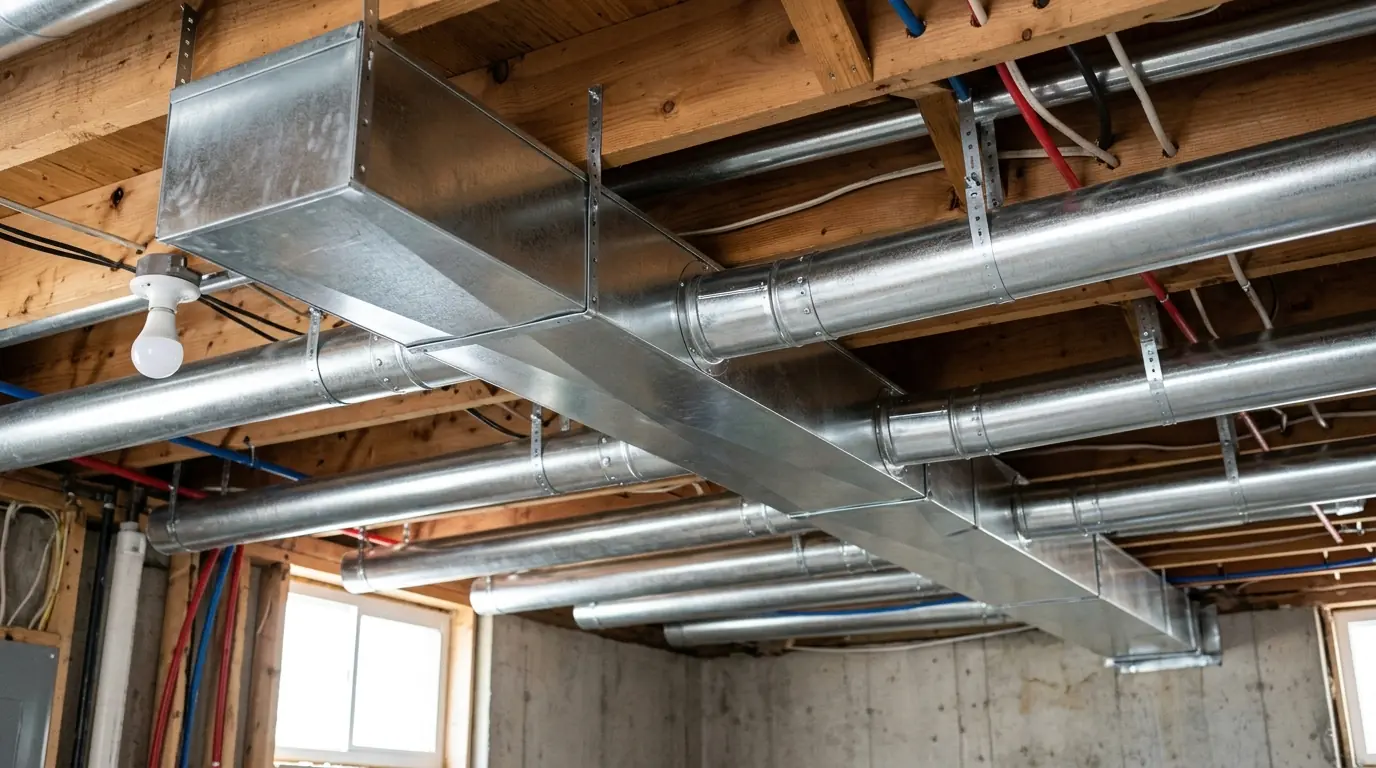
What changes the cost of ductwork
New system or repair
A complete new duct system costs more than targeted repairs.
Materials
Rigid sheet metal versus flex, and insulation where needed.
Access
Finished ceilings and tight attics take longer.
Returns
Adding return paths often means new openings.
Sealing
Mastic sealing every joint adds labor but saves energy.
Equipment changes
A new furnace or air handler may change duct sizes.
What a ductwork installation includes
- Static pressure and airflow measurement
- Room-by-room load calculation
- Duct design with sized trunks, branches and returns
- Rigid metal ducts with short flex connections
- Proper hangers and supports
- Mastic sealing at every joint
- Insulation on runs in unconditioned space
- Registers and grilles set and balanced
- Final static pressure and airflow check
Repair the ducts, replace them, or go ductless?
| Option | Good fit when | Tradeoff |
|---|---|---|
| Targeted repairs | Most ducts are sound; a few runs or returns are the problem | Needs measurement to find the right fixes |
| Full replacement | Ducts are undersized throughout or badly damaged | Higher cost and more disruption |
| Ductless or high-velocity | There is no practical room for ducts | Different equipment; visible heads or small outlets |
New Ducts for a First Central-Air System
Adding central air to a house that has never had ducts, or had only a gravity furnace, means designing a new duct system: a trunk, branch runs to each room, and returns sized for cooling airflow. We lay out routes through basements, attics and closets, choose rigid metal where it fits and flex only for short final connections, and place supply registers where they will mix air well. Where ducts cannot fit, we say so and look at high-velocity or ductless options.
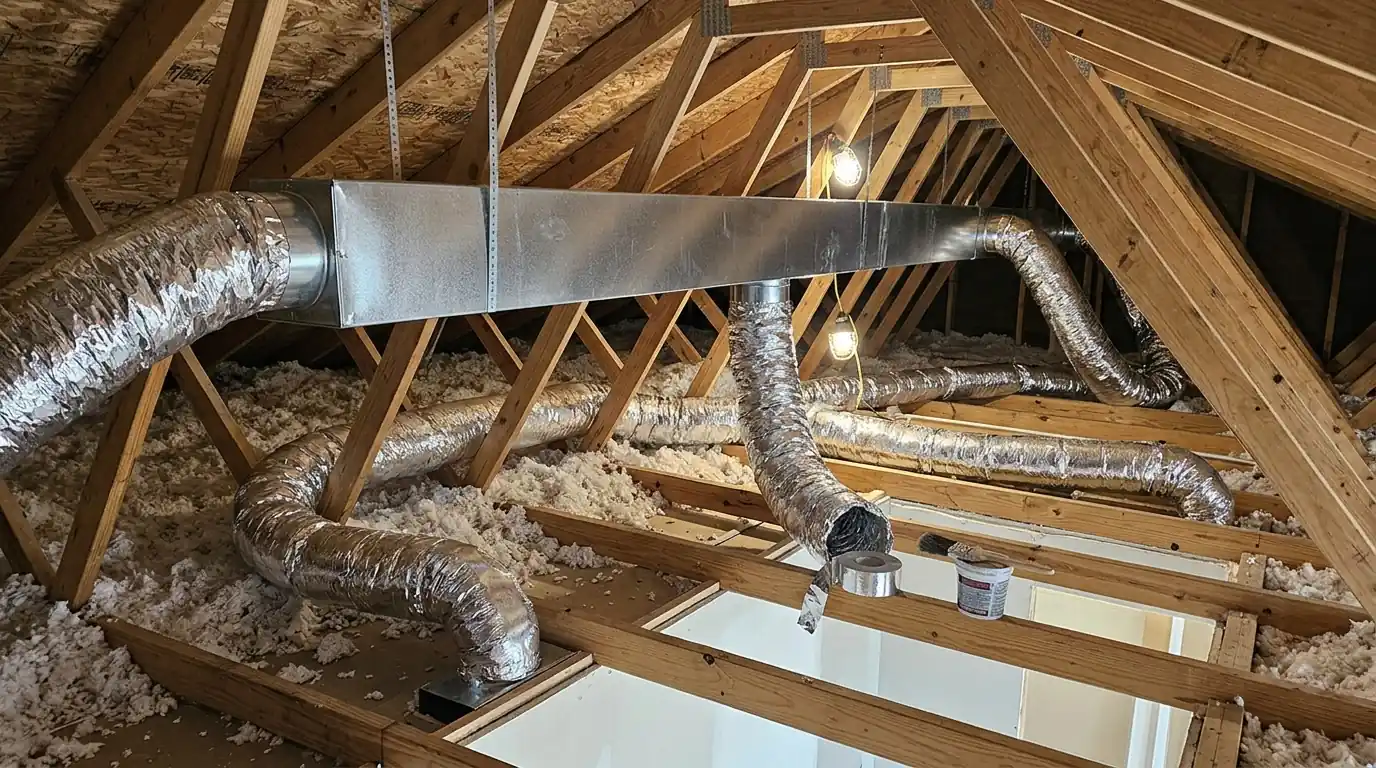
Replacing Undersized or Crushed Ducts
Many older duct systems were sized for heating alone, with returns too small for air conditioning or a modern variable-speed blower. Flex duct in attics and crawlspaces gets crushed, kinked or torn over time. We replace the sections that restrict airflow, add returns where the system is starved for air, and resize trunks where needed, then measure static pressure again to confirm the change made the difference. The goal is quiet registers and even airflow, not new metal for its own sake.
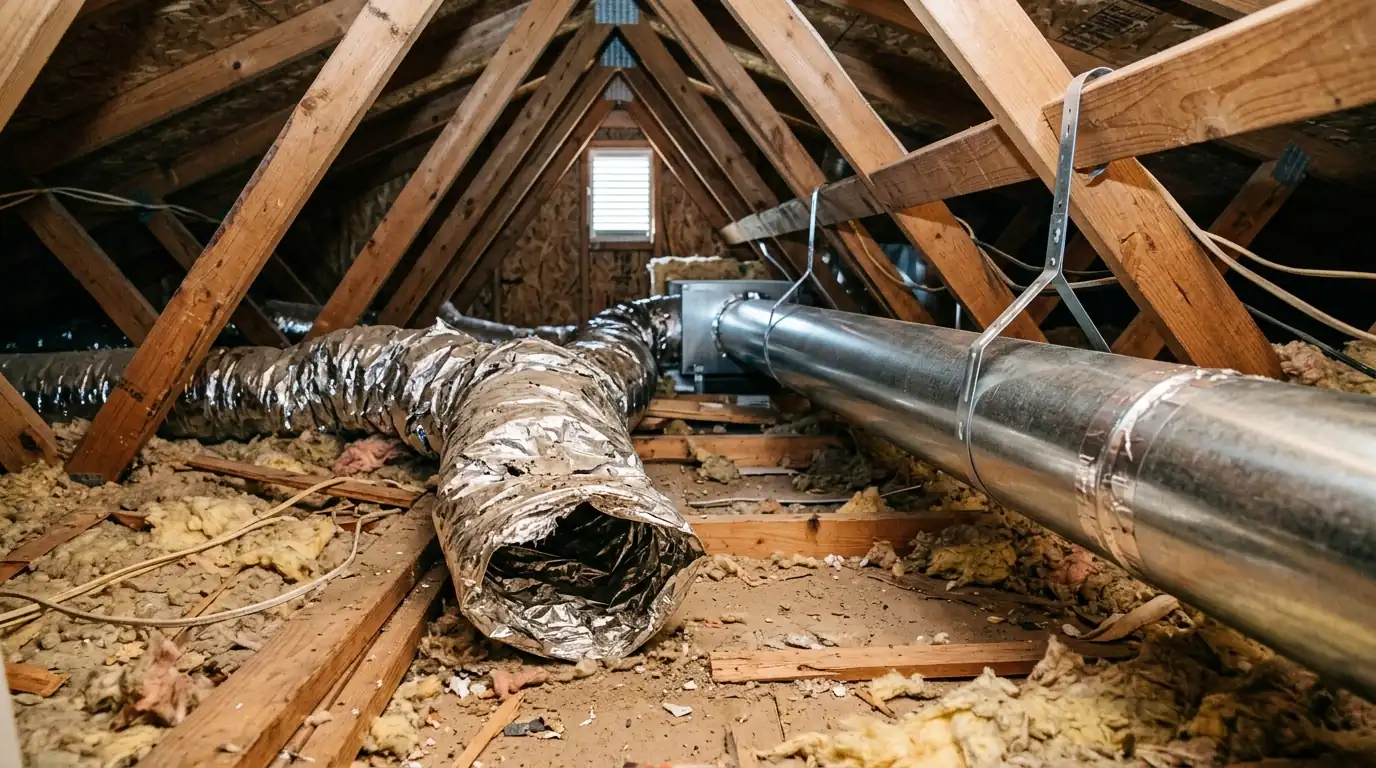
Insulated Attic and Basement Runs
Ducts running through unconditioned attics and crawlspaces lose heat in winter and gain it in summer, and in humid weather uninsulated cooling ducts can sweat and drip. We insulate supply ducts in those spaces and seal every joint with mastic before insulating, since insulation over leaking joints still wastes air. In basements that are part of the living space, insulation is usually less critical, but sealing still matters. Sealed, insulated ducts also keep the system from pulling dusty attic or crawlspace air into the house, which many homeowners notice right away.
How this job plays out in Bridgeport
Bridgeport city planners have noted that about 40 percent of the city's housing, built before 1940, would benefit from energy-saving upgrades, and duct systems added to those houses decades after they were built are often a big part of that. Regional cost indexes in published guides put Connecticut HVAC work at about 1.2 times the national average. That is one more reason to fix the ducts that matter and not the ones that do not.
How a ductwork project runs
- 1
Measure
Static pressure and register airflow recorded.
- 2
Load calculation
Room-by-room airflow needs set.
- 3
Design
Trunk, branches and returns sized and routed.
- 4
Written quote
Scope listed section by section.
- 5
Install
Ducts built, connected and supported.
- 6
Seal and insulate
Joints sealed with mastic, runs insulated where needed.
- 7
Measure again
Static pressure and airflow verified.
Rooms that never feel right?
We measure the ducts first, then fix what actually restricts the air.
(203) 568-0715Ductwork Installation questions from Bridgeport homeowners
A static pressure test and airflow check at the registers tell us.
Not always; many existing duct systems work with some fixes.
For short final connections, yes; long flex runs restrict airflow.
Yes, and sealed first so the insulation is not covering leaks.
Often, through basements, attics and closets; if not, ductless is an option.
Targeted repairs take a day; a full system can take several.
Related jobs we handle
Duct Sealing & Repair
Leaking and disconnected ducts sealed with mastic.
Duct Sealing & Repair in BridgeportIndoor Air Quality Systems
Media filters, UV lights and fresh-air intakes.
More on indoor air quality systemsWhole-Home Humidifiers & Dehumidifiers
Winter humidifiers and summer and basement dehumidifiers.
Whole-Home Humidifiers & Dehumidifiers in BridgeportGet air to every room
Call to book a duct evaluation. We measure first and quote only the work that will make a difference.