HVAC inspections for Bridgeport home buyers before closing
A focused look at the heating and cooling system, venting and oil tank of a house you are buying, with a written report you can use in negotiations.
A home buyer HVAC inspection in Bridgeport checks the furnace or boiler, air conditioning, heat pump, venting, oil tank if there is one, and carbon monoxide safety, then gives you a written report of condition, approximate age and likely near-term repairs. It goes deeper than a general home inspection, which usually only confirms the system turns on.
Updated October 2026
Why a separate HVAC inspection is worth it
A general home inspector checks many systems in a few hours, and for heating and cooling that often means confirming the equipment runs. A cracked heat exchanger, a failing oil tank, a chimney that does not draft, or an air conditioner on a phased-out refrigerant can all pass that test and still cost thousands soon after closing.
Our inspection focuses only on the mechanical systems. We run the equipment, test combustion and venting, and look at age and condition. Then we write up what we find in plain language, including what is likely to need attention soon.
What a home buyer HVAC inspection covers
- Furnace or boiler operation and controls
- Combustion test and carbon monoxide check
- Heat exchanger visual inspection
- Boiler pressure, relief valve and expansion tank
- Air conditioning or heat pump operation
- Refrigerant type identification
- Oil tank condition, fill and vent pipes
- Chimney and flue draft check
- Written report with approximate equipment ages
Why Bridgeport houses change the approach
Many Bridgeport-area houses still heat with oil, and a national lab study found that 74 percent of Northeast homes on oil or propane would save enough with a heat pump to cover its cost. For buyers, that makes the age of the oil boiler and tank a real planning question. Our report notes their condition and approximate age so you can budget for a repair, a replacement or a switch.
Heating System Inspection
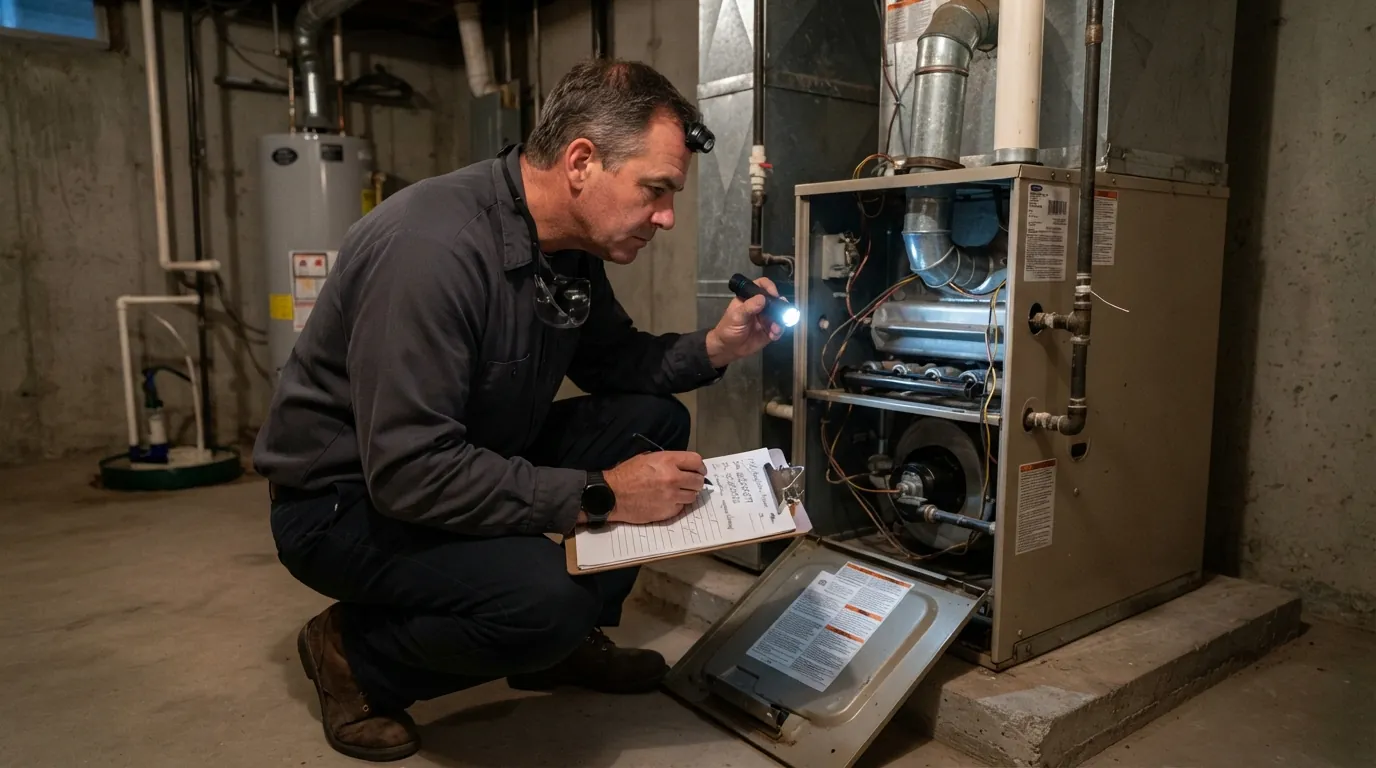
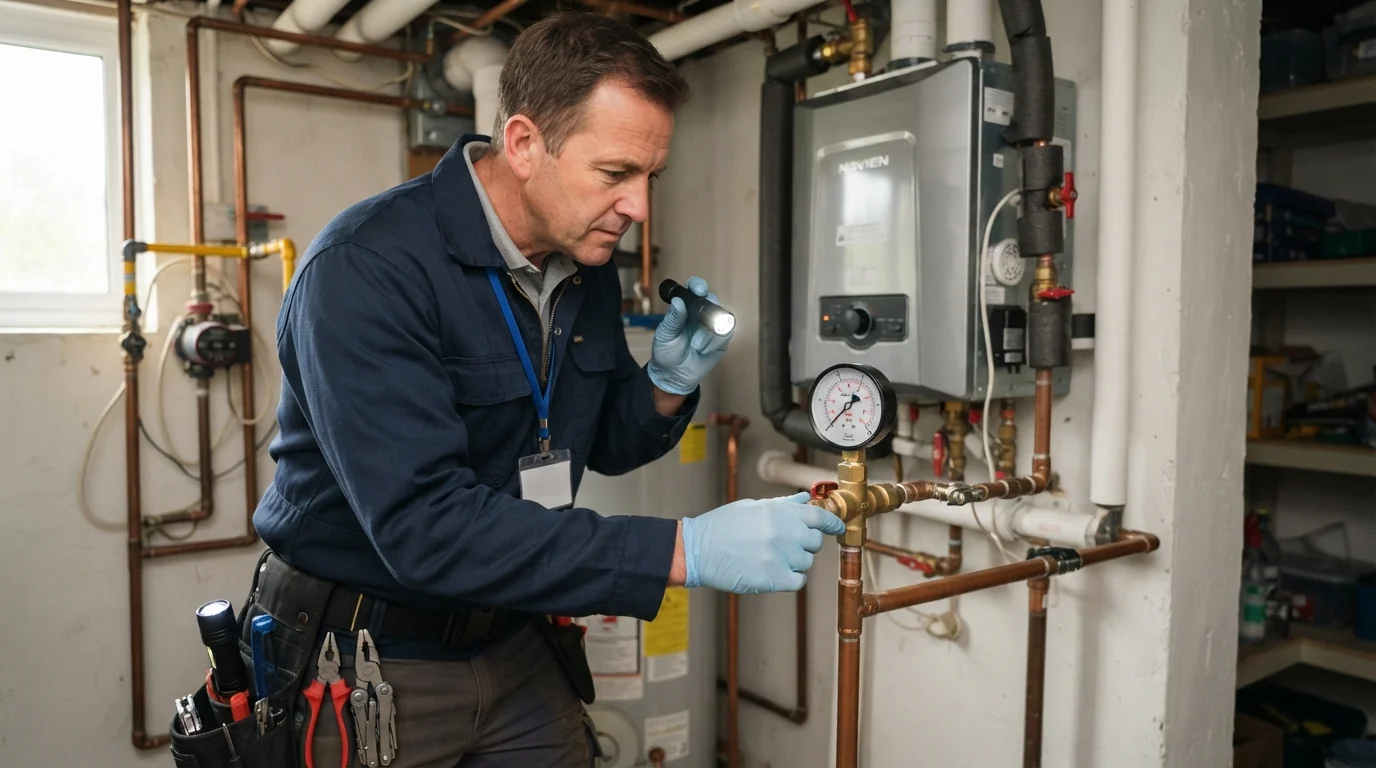
For furnaces we check ignition, burners, the heat exchanger as far as it can be seen, blower, filter, controls and the temperature rise. For boilers we check the burner, pressure, relief valve, expansion tank, circulators, zone valves and, on steam systems, the water level controls and venting. On every fuel-burning system we run a combustion test and check for carbon monoxide at the appliance and in the living space. We note the equipment's approximate age from its data plate and any signs of past leaks or repairs.
Cooling System Inspection
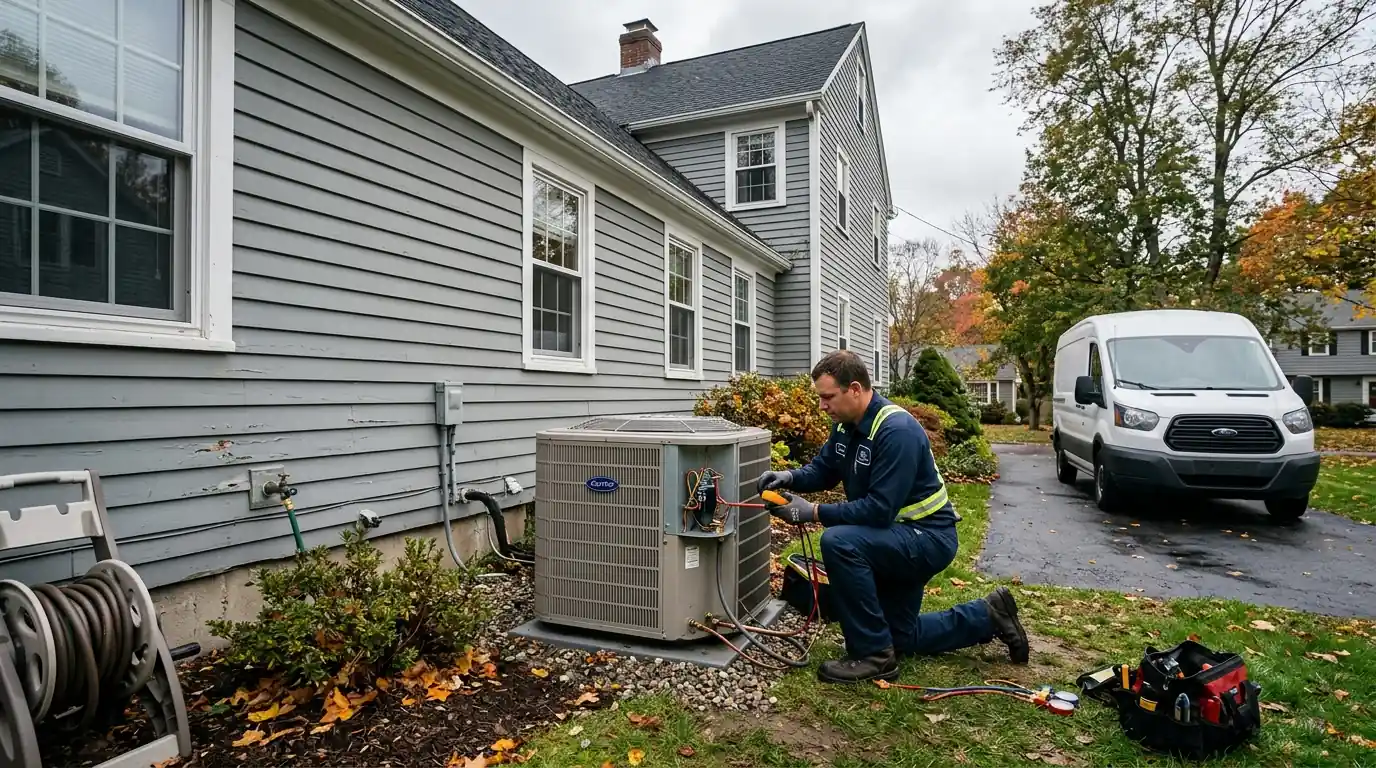
If the house has central air or a heat pump, we run it when the outdoor temperature allows and measure the temperature drop across the coil. We also check the outdoor unit and its electrical parts, look at the condensate drain and identify the refrigerant type. Systems on R-22, which is no longer produced, are flagged because repairs involving refrigerant can be expensive. Ductless mini splits get their indoor heads, drains and outdoor units checked the same way. If the weather is too cold to run cooling safely, the report says so.
Oil Tank and Chimney Check
In an oil-heated house the tank matters as much as the boiler. We look at its age where marked, condition, legs, fill and vent pipes, and signs of weeping or rust. We also check that the chimney drafts properly for the heating appliance and the water heater. A new owner who later switches heating systems may otherwise find the water heater left in an oversized flue. The report notes anything that should be addressed before or soon after closing, ranked by urgency.
How a home buyer inspection runs
- 1
Book around your timeline
Scheduled within your inspection window.
- 2
Coordinate access
With your agent and the seller's agent.
- 3
Inspect heating
Burner, controls, venting and combustion tested.
- 4
Inspect cooling
Operation, refrigerant type and condition checked.
- 5
Check tank and chimney
Oil tank, flue and draft inspected.
- 6
Photograph findings
Key issues documented.
- 7
Written report
Condition, approximate age and near-term needs.
How long the inspection and report take
The on-site inspection usually takes one to two hours for a single-family house, longer for multi-family homes with several systems. The written report follows promptly so it fits inside a typical inspection contingency period. If you are working to a tight deadline, tell us when you book and we will schedule around it.
What changes the cost of an HVAC inspection
Number of systems
Separate heating and cooling systems each take time.
Fuel type
Oil systems add tank and burner checks.
Steam or hot water
Boiler systems have more components to check.
Multiple zones or units
Multi-family houses take longer.
Access
Attic air handlers and crawlspaces slow the visit.
Report detail
A written report is included with every inspection.
Home Buyer HVAC Inspection questions from Bridgeport homeowners
Yes. It focuses only on heating, cooling, venting and oil tanks, in more depth.
Approximately, from data plates and model information.
Yes, visually, including fill and vent pipes.
Many buyers use it to ask for repairs or a credit.
We check what can be safely tested and note what could not be run.
Promptly after the visit, to fit your contingency period.
Related jobs we handle
Ductwork Installation
New and replacement ducts sized to the system.
Ductwork Installation in BridgeportDuct Sealing & Repair
Leaking and disconnected ducts sealed with mastic.
How we handle duct sealing & repairKnow what you are buying
Call to book a pre-purchase HVAC inspection within your contingency window.