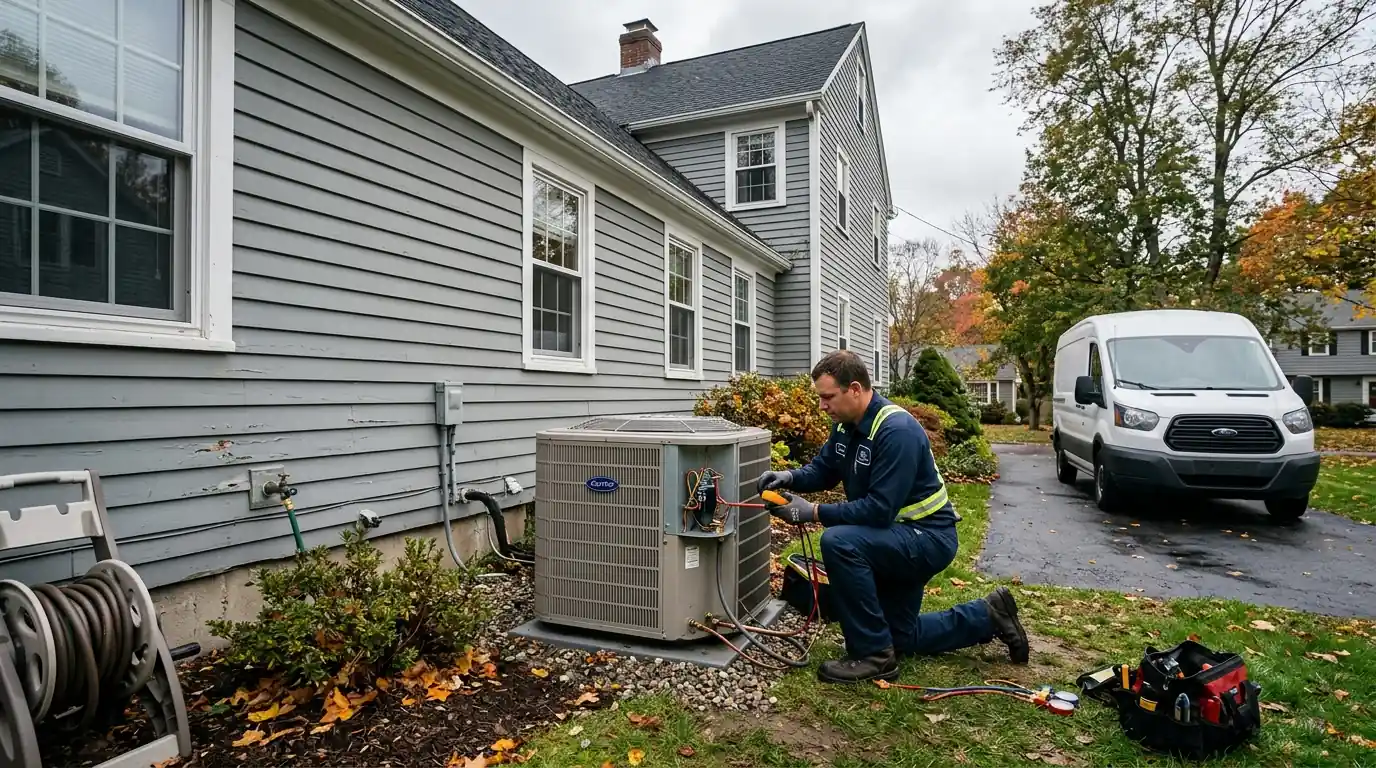
Hydro-air system repair and installation in Bridgeport
Boiler-fed air handlers that heat through ducts, often with central air in the same cabinet, repaired, replaced and installed new.
A hydro-air system uses a boiler to heat water that runs to a coil inside an air handler, and the blower pushes the warm air through ducts. Repairs usually come down to a zone valve or circulator, a coil full of air, a blower or control fault, or a boiler problem. We test both the boiler side and the air side before recommending a fix.
Updated October 2026
Two systems working as one
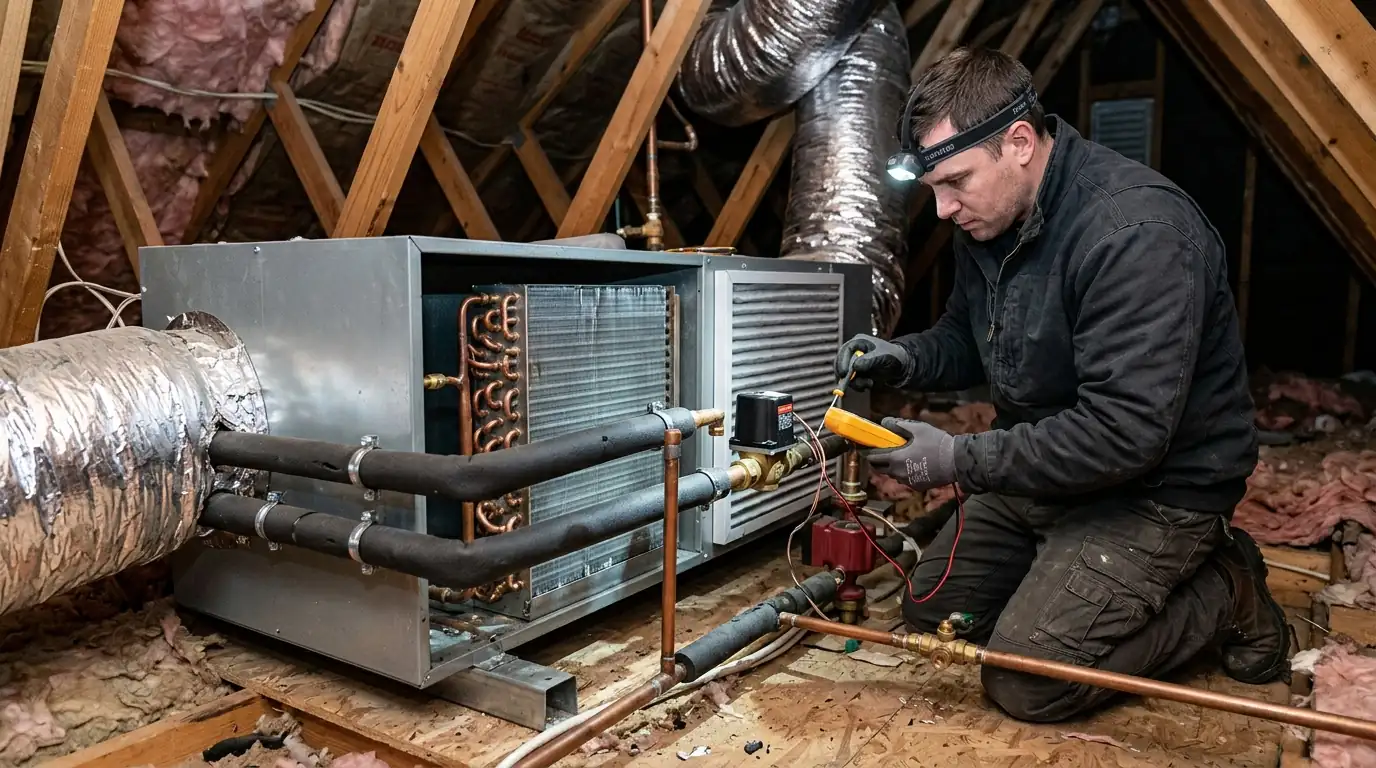
Hydro-air pairs a boiler with ductwork. The boiler heats water, a pump or zone valve sends it to a hot water coil in an air handler, and the blower moves air across the coil and out through the vents. The same air handler often holds the central air coil, so one set of ducts heats and cools the house, and the boiler can also run an indirect tank for domestic hot water.
Because two systems have to work together, a no-heat call can start in either one. We check the boiler, the pump or zone valve, the coil and the air handler controls in order, so nobody replaces a blower motor when the real fault is a stuck zone valve in the basement.
What changes the cost of hydro-air work
Repair or replacement
A zone valve or motor costs far less than a new air handler.
Attic access
Tight attics add labor for any replacement.
Boiler condition
An old boiler may need work or replacement too.
Coil and duct sizing
Undersized ducts may need changes for cooling.
Cooling or heat pump
Adding or replacing the cooling side changes the scope.
Controls
Freeze protection and dual-heat controls add parts.
Hydro-air, a furnace or radiators?
| System | Good fit for | Trade-off |
|---|---|---|
| Hydro-air | Homes that want a boiler for heat and hot water plus ducted cooling | Two systems to maintain and attic freeze risk |
| Gas furnace | Homes with ducts and gas service | No boiler for an indirect water heater |
| Boiler with radiators or baseboard | Older homes without ducts | Cooling needs ductless or high-velocity |
| Ducted heat pump with boiler backup | Owners lowering fuel use | More complex controls |
Hydro-Air Repair
The most common hydro-air faults are a zone valve or circulator that no longer opens, air trapped in the coil after a boiler service, a failed blower motor or capacitor, a bad fan control or aquastat, and a frozen coil in an attic that lost heat during a cold snap. We confirm water temperature and flow at the coil, purge air from the loop, test the blower and controls, and check that the boiler fires and holds temperature. Most repairs are finished the same visit with parts from the van.
New Hydro-Air Installs and Replacements
A replacement can be the air handler, the boiler, or both. We size the coil to the heat the house needs and the boiler to the coil plus any indirect water heater, check the duct sizes for both heating and cooling, and protect attic coils from freezing with proper controls. In houses that already have a boiler and want ducted air conditioning, adding a hydro-air handler with a cooling coil gives heat and cooling through one new duct system instead of two separate projects.
Hydro-Air with Central Air or a Heat Pump
Most hydro-air handlers carry a central air coil above the heating coil. When the cooling side is due for replacement, a heat pump can take the place of the air conditioner and heat the house through the same ducts in spring and fall, with the boiler coil taking over in deep cold. We set up the controls so the two heat sources never fight each other, and we explain how the system decides which one to run. Owners usually see lower fuel use in the shoulder seasons without giving up the boiler's comfort in January.
The Bridgeport side of this job
Hydro-air turns up most in Connecticut colonials built in the last few decades, where a builder wanted ducted air conditioning and still preferred a boiler for heat and hot water. Around Bridgeport and across Fairfield County, many of those air handlers sit in attics, where a lost boiler on a January night can freeze the coil. Calls on the shoreline toward Guilford are covered from the head office, and the rest from the Bridgeport service office.
How hydro-air service runs
- 1
Call any hour
We ask where the air handler is and what it is doing.
- 2
Check the boiler
Firing, water temperature and pressure confirmed.
- 3
Check flow to the coil
Zone valve, circulator and air in the loop.
- 4
Test the air handler
Blower, capacitor and fan controls tested.
- 5
Price the options
Repair or replacement, both sides explained.
- 6
Repair
Failed part replaced and the loop purged.
- 7
Run a full cycle
Heat at the vents and controls verified.
How long hydro-air work takes
Most repairs take a single visit of an hour or two. Replacing an attic air handler usually takes one full day, including the water and refrigerant connections, and replacing the boiler at the same time adds a day. New installs in houses that need ductwork take longer, depending on how the ducts can be routed through the attic and closets.
Hydro-Air Systems questions from Bridgeport homeowners
A boiler heats water that runs to a coil in an air handler, and the blower sends warm air through ducts.
Often a zone valve or circulator that will not open, air in the coil, or a boiler that is not firing.
Yes, in an attic, if the boiler stops or the loop loses flow in very cold weather.
Usually, yes. A cooling coil sits in the same air handler.
Yes. The heat pump handles milder days and the boiler coil takes over in deep cold.
Yes, both, which is how most hydro-air faults get found.
Related jobs we handle
Gas Furnace Installation & Replacement
80 and 96 percent furnaces sized by load calculation.
How we handle gas furnace installation & replacementOil Furnace Installation
New oil furnaces with the burner, flue and tank checked.
More on oil furnace installationGet heat back through the vents
Call any hour and tell us where the air handler is, and we will check both the boiler and the air side.