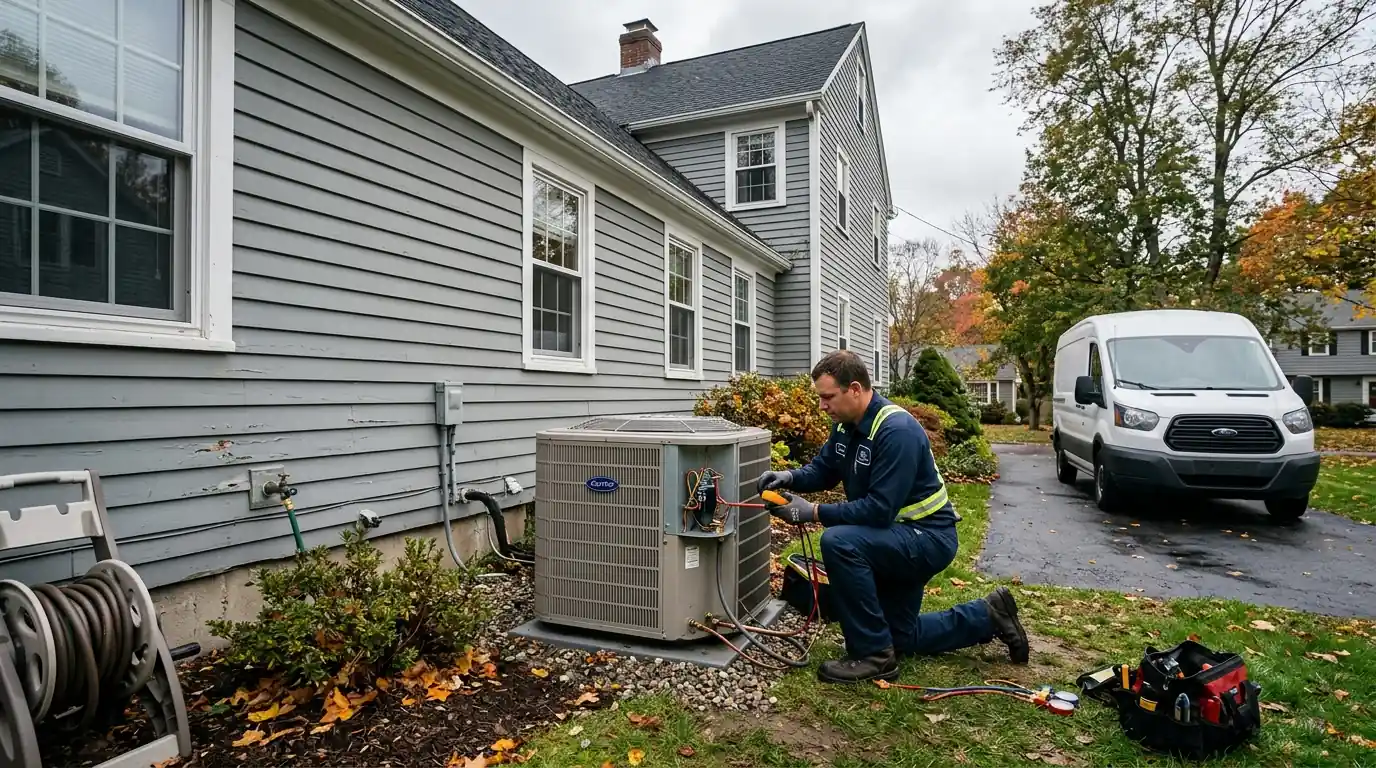
Oil burner cleaning and service for Bridgeport furnaces and boilers
The yearly visit an oil furnace or boiler needs to start reliably all winter: new nozzle and filters, soot cleaned out, and an efficiency test.
Oil burner service in Bridgeport is an annual cleaning that replaces the nozzle, oil filter and pump strainer, cleans soot from the combustion chamber and flue passages, adjusts the electrodes and tests efficiency and draft. It takes about an hour or two, and skipping it is the most common reason an oil system fails in the first cold week.
Updated October 2026
Why oil equipment needs a yearly cleaning
Oil burns less cleanly than gas. Over a heating season, soot builds up in the combustion chamber and flue passages, the nozzle wears and starts to spray unevenly. The oil filter collects sludge from the tank. Each of those lowers efficiency and raises the odds of a lockout on a cold night.
A proper cleaning resets all three. It is not a quick look; it is a set of parts replaced and measurements taken, finished with a combustion test so you know the burner is running clean.
What every oil burner service includes
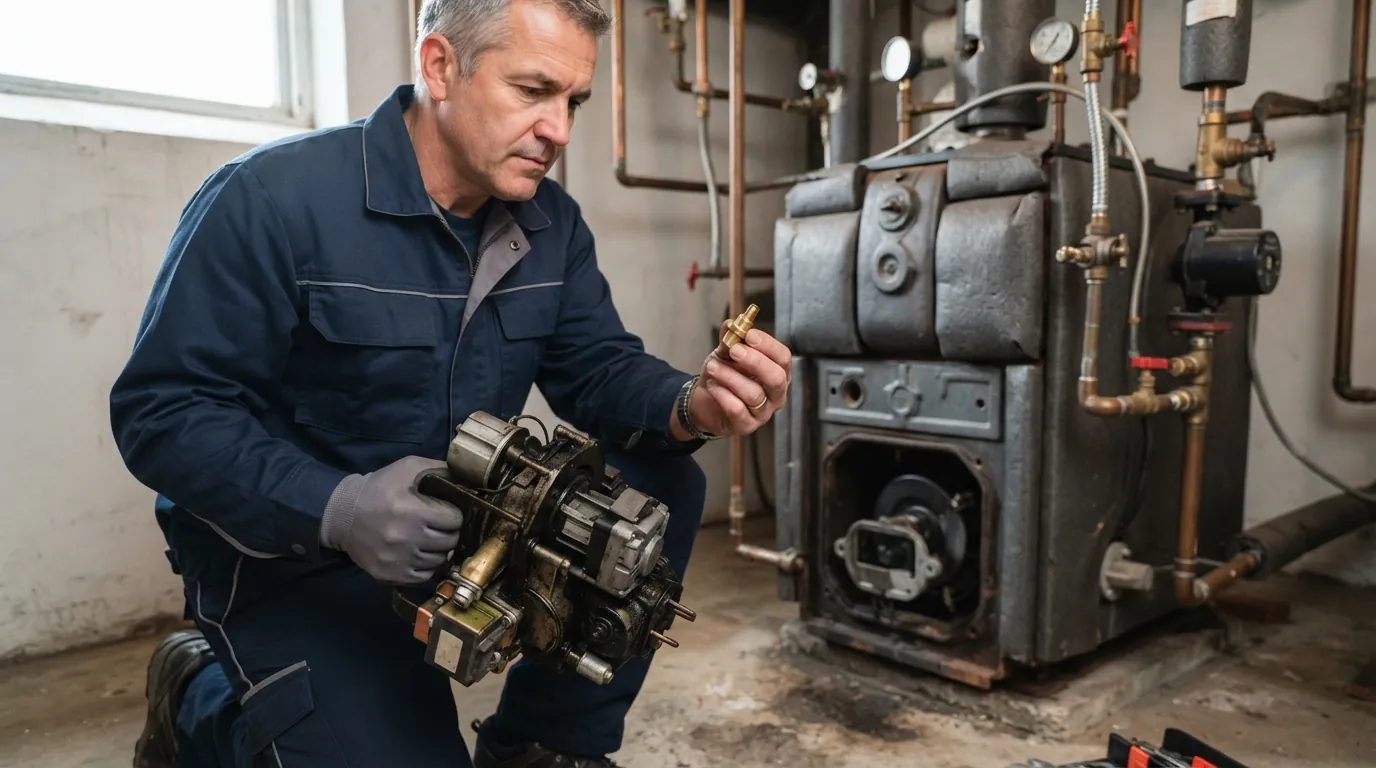
- Nozzle replacement to the appliance specification
- Oil tank line filter replacement
- Pump strainer cleaning or replacement
- Combustion chamber and flue passage soot cleaning
- Flue pipe inspection and cleaning
- Electrode cleaning and gap adjustment
- Cad cell cleaning or replacement
- Pump pressure set and lines bled
- Combustion and draft test with written report
Why Bridgeport houses change the approach
Heating a Connecticut home with oil cost about $1,500 last season, more than any other major fuel, so a burner running dirty wastes money on every delivery. Oil use across the state is slowly declining as homes move to gas and heat pumps. But plenty of Bridgeport houses still run oil, and some owners are weighing a switch. We can price an oil-to-gas conversion at the same visit if you want the comparison.
We service and install Carrier, Lennox, Trane, Goodman and more
Nozzle, Filter and Strainer Change
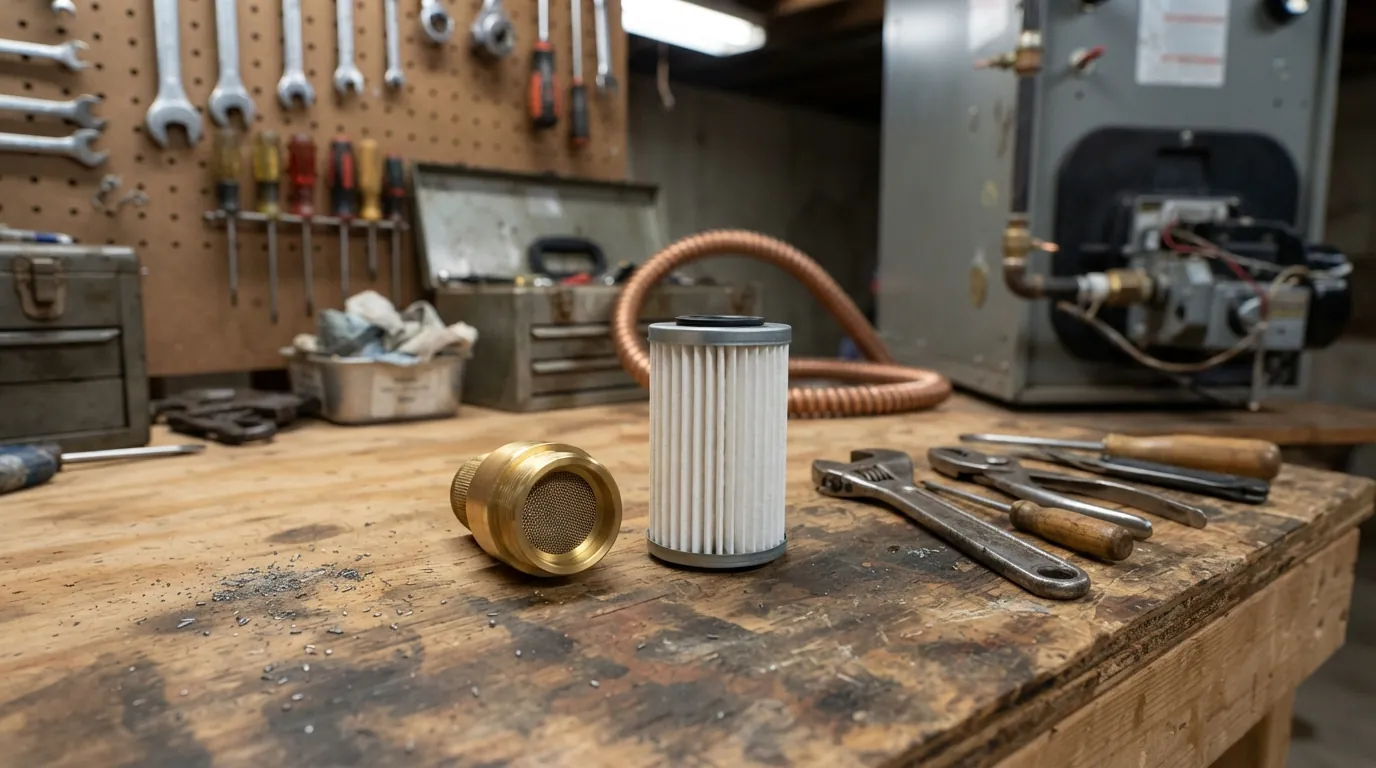
The nozzle atomizes oil into a fine spray, and even a slightly worn one sprays unevenly, which produces soot and wastes fuel. We replace it every year with the size and spray pattern specified for the appliance. The oil filter at the tank line and the strainer inside the pump catch sludge and water from the tank; clogged ones starve the burner and cause lockouts. Both are replaced, the lines are bled of air, and the pump pressure is set to specification.
Efficiency Test and Soot Cleaning
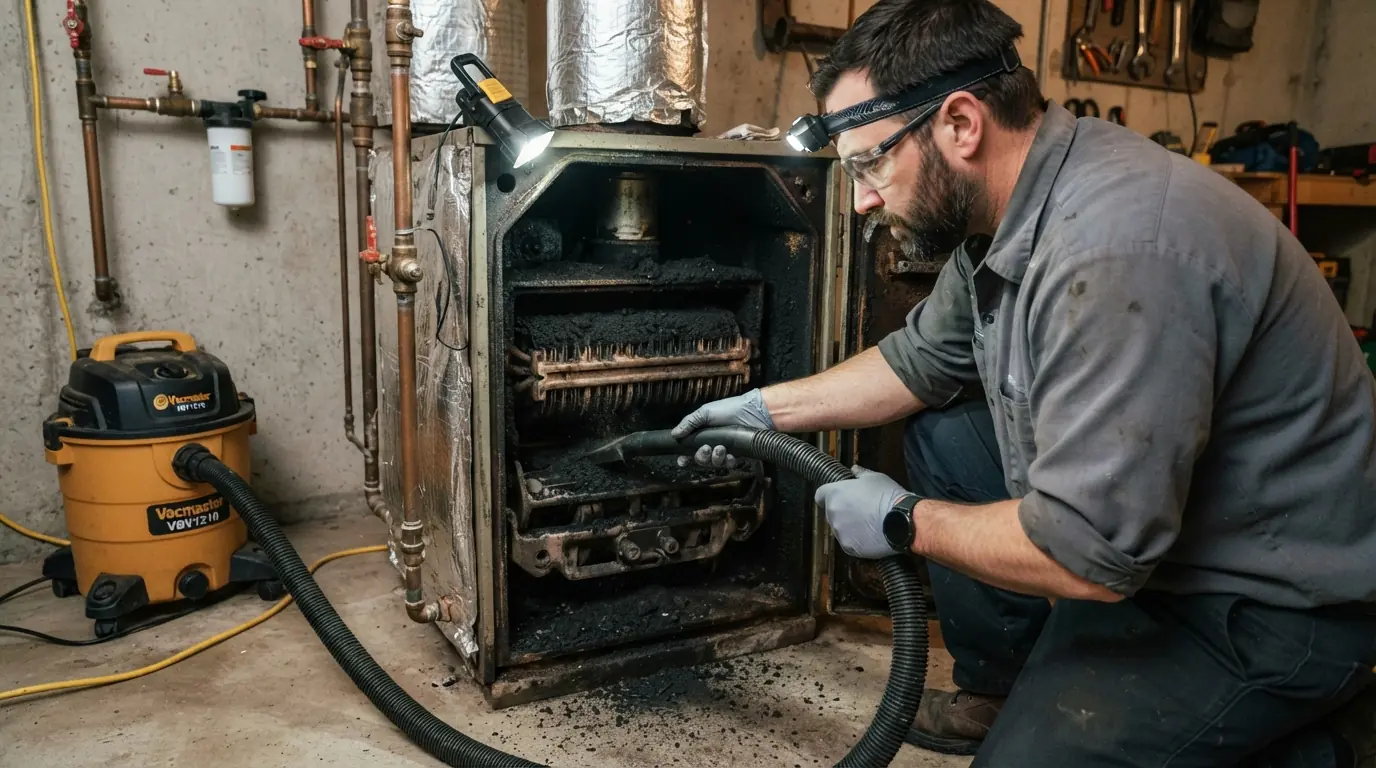
We vacuum and brush soot from the combustion chamber, heat exchanger passages and flue pipe, because a thin layer of soot insulates the heat exchanger and sends heat up the chimney instead of into the house. Then we run a combustion analysis: smoke, oxygen or carbon dioxide, draft and stack temperature. Those readings tell us whether the air setting is right and whether the appliance is venting safely, and they go on your service report. A high smoke number means we adjust and test again before leaving.
Electrode and Cad Cell Adjustment
The electrodes create the spark that lights the oil spray, and their gap and position have to be set precisely for reliable ignition. The cad cell is the eye that confirms a flame; a dirty or failing one shuts the burner down even when it lit. We clean and set the electrodes, clean or replace the cad cell, and check the primary control's response. Those small adjustments are what separate a burner that starts every time from one that locks out at 3 a.m.
How an oil burner service visit runs
- 1
Book before the cold
Fall visits are scheduled before the first freeze.
- 2
Shut down and open up
Burner removed, chamber opened for inspection.
- 3
Clean soot
Chamber, passages and flue pipe vacuumed and brushed.
- 4
Replace parts
Nozzle, filter and strainer changed.
- 5
Set ignition
Electrodes gapped, cad cell cleaned, pump pressure set.
- 6
Combustion test
Smoke, draft, efficiency and stack temperature recorded.
- 7
Report
Readings and any worn parts written up for your decision.
Signs your oil burner needs attention
Burner locking out
Often a clogged filter, worn nozzle or dirty cad cell.
Soot around the burner
Incomplete combustion that needs cleaning and adjustment.
Oil smell in the basement
A leaking line, filter or fitting.
Puffback or rumble at startup
Delayed ignition that should be checked promptly.
Fuel use climbing
Soot and a worn nozzle waste oil.
What changes the cost of oil burner service
Furnace or boiler
Boilers with more flue passages take longer to clean.
Soot level
A system skipped for a year or more needs heavier cleaning.
Parts found worn
Cad cells, transformers or pumps are quoted separately.
Tank line filters
Some systems have more than one filter to change.
Access
Tight basements and crawlspaces slow the work.
Plan or one-time
Plan visits are scheduled with cooling service.
Oil Burner Service & Annual Cleaning questions from Bridgeport homeowners
Once a year, ideally before the heating season starts.
Soot and a worn nozzle lower efficiency and raise the chance of a lockout on the first cold nights.
Usually one to two hours depending on the appliance and how much soot there is.
Once, at most. Repeated resets can flood the chamber with oil.
We check the tank, filter and lines, and replace tanks when needed.
Yes, oil-fired furnaces and boilers, including steam.
Related jobs we handle
Oil Tank Replacement
Basement and outdoor oil tanks replaced and removed.
Oil Tank Replacement in BridgeportRadiator & Baseboard Repair
Cold radiators, baseboard leaks and cracked cast iron.
More on radiator & baseboard repairGet the oil burner cleaned before winter
Call to book the yearly service now, before the first cold snap fills the schedule.