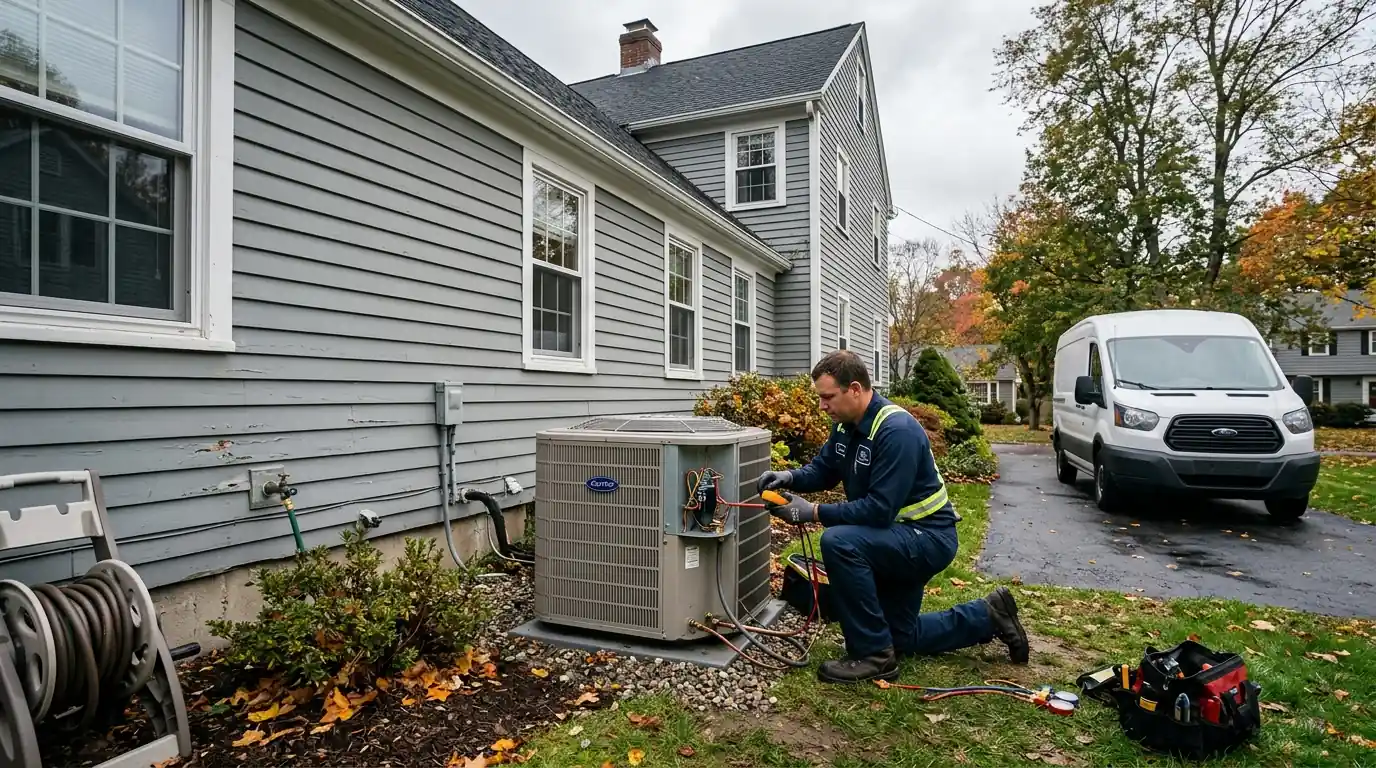
Gas line installation for furnaces, boilers and water heaters in Bridgeport
Correctly sized gas piping from the meter to your furnace, boiler, water heater or garage heater, pressure tested and inspected before anything is lit.
Gas line installation for HVAC equipment in Bridgeport covers running and sizing gas piping from the meter to furnaces, boilers, water heaters and unit heaters, adding shutoffs and sediment traps, and pressure testing the new piping. Undersized lines are a common problem when adding a tankless water heater or converting from oil, and they are sized by total appliance load.
Updated October 2026
Why gas pipe size matters
Every gas appliance needs a certain volume of gas at a certain pressure, and the pipe has to deliver that to all of them at once. An undersized line works fine until two appliances run together, then the furnace or water heater starves, lights poorly and locks out. That is especially common after adding a tankless water heater or a second appliance.
We calculate the total load of every gas appliance in the house, measure the pipe runs, and size the piping from the meter. New piping is pressure tested before it is connected, and the permit and inspection are part of the job.
What changes the cost of gas line work
Length of run
Longer runs from the meter need more pipe and labor.
Pipe size
Larger pipe for higher loads costs more.
Material
Black iron versus flexible CSST where approved.
Access
Finished ceilings and walls slow routing.
Number of appliances
Each connection needs a shutoff and trap.
Permit
Gas work is permitted and inspected.
What gas line installation includes
- Total gas load calculation
- Pipe sizing from the meter
- Routing plan through the house
- New piping with proper supports
- Shutoff valve at each appliance
- Sediment trap at each appliance
- Approved appliance connectors
- Pressure test before service
- Permit and inspection
Gas Piping for New Furnaces and Boilers
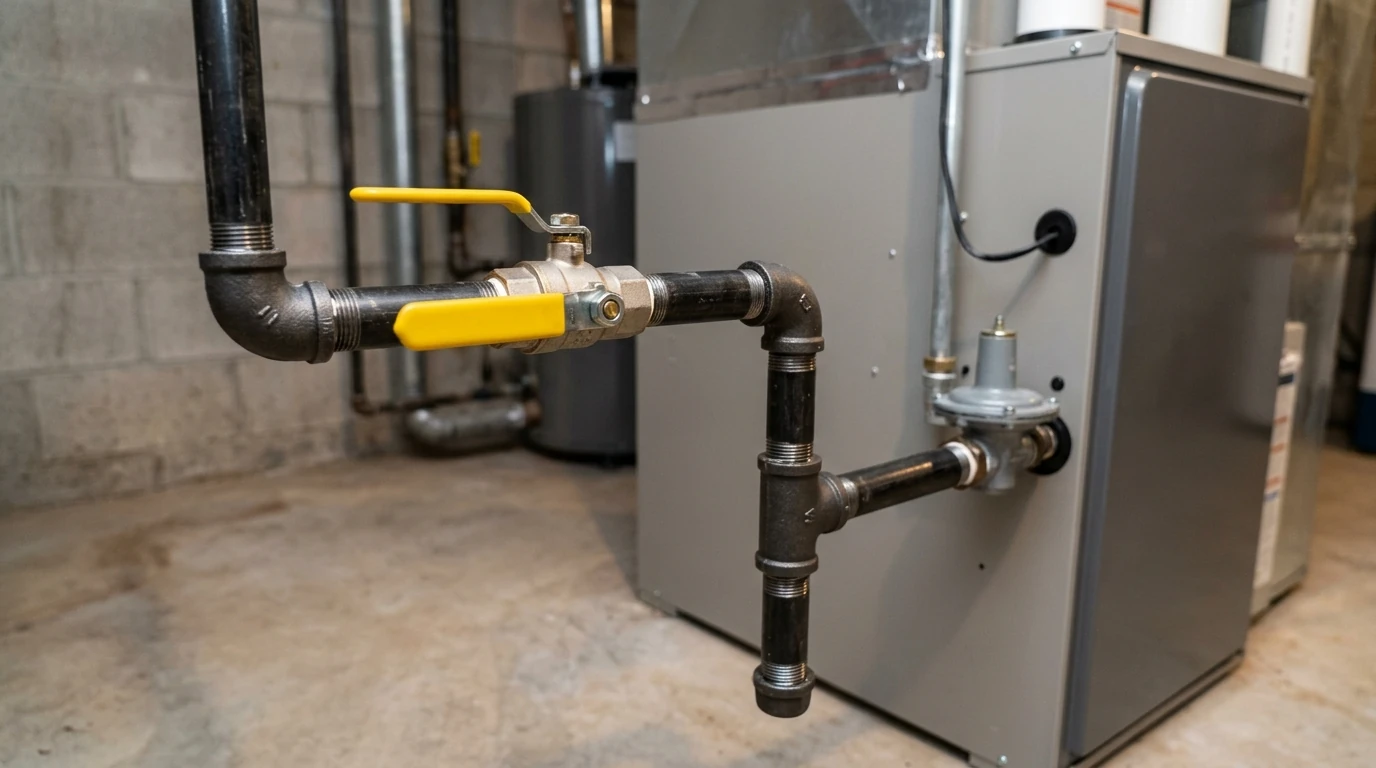
When a new furnace or boiler goes in, the gas connection is part of the install: a properly sized drop from the main, a manual shutoff within reach of the appliance, a sediment trap to catch debris before it reaches the gas valve, and an approved connector. Many older basements have piping that was installed decades ago for a smaller appliance or a different location. So we check the existing pipe size and condition rather than assuming it is adequate. See how we install gas furnaces for the rest of the job.
Upsizing Lines for Tankless and Conversions
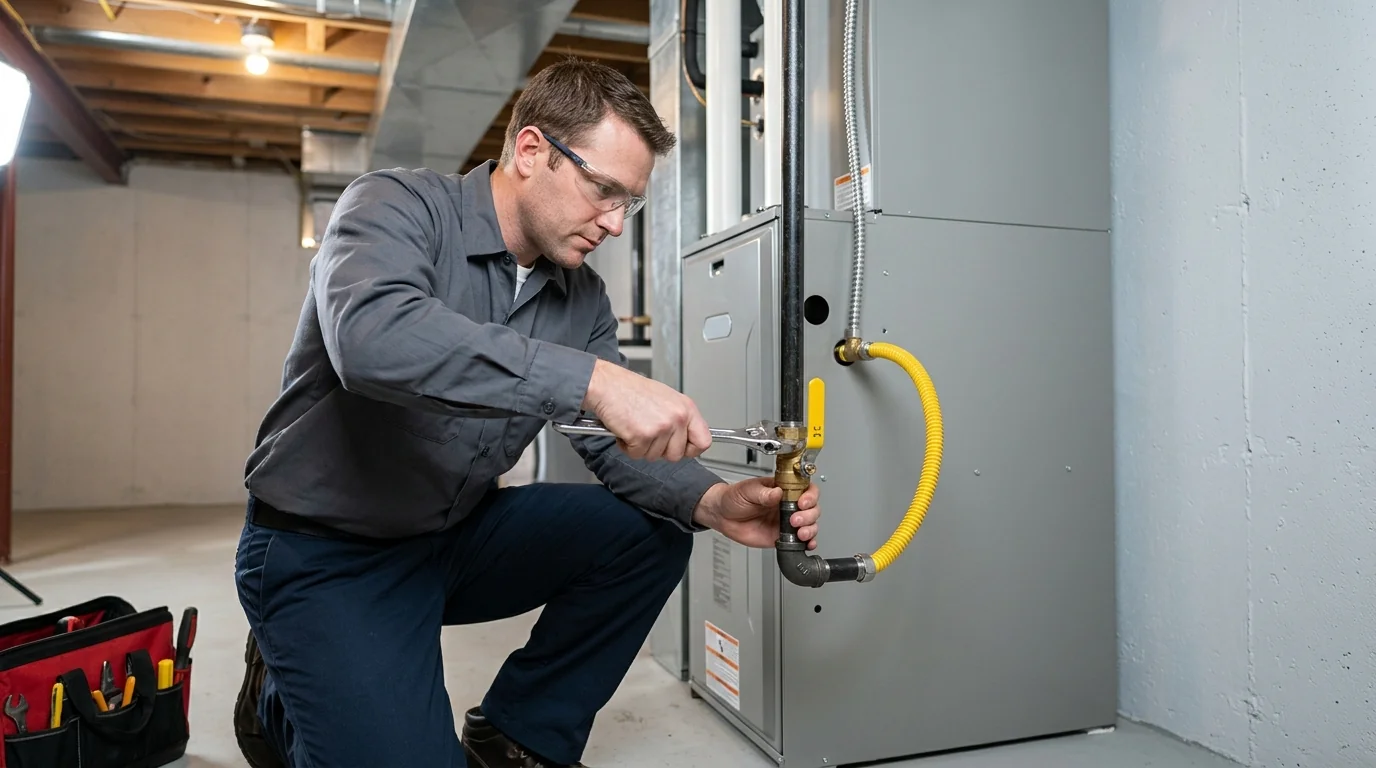
A tankless water heater can need several times the gas of a standard tank. An oil-to-gas conversion adds a large new load to a house that may have had only a stove on gas. In both cases the existing line from the meter is often too small. We calculate the new total load, check the meter capacity with the utility where needed, and upsize the main line or run a dedicated line to the new appliance. So everything in the house can run at once without starving.
Leak Testing and Shutoffs
All new gas piping is pressure tested before it is put into service, holding pressure for a set time to prove there are no leaks at any joint. After the test, joints are checked again with the gas on, and each appliance gets its own accessible shutoff valve. We also check existing piping near the work for corrosion, loose fittings and missing shutoffs. If you smell gas at any time, leave the house and call the gas utility or 911 from outside before calling us.
What we see in Bridgeport homes
Gas availability varies widely across Connecticut: around 7 percent of households heat with oil in gas-served cities such as New Haven, while many towns without gas mains rely on it far more heavily. In gas-served parts of Bridgeport and the shoreline, adding gas appliances or converting from oil is common. The interior piping is usually the part of the job that needs sizing work.
How gas line installation runs
- 1
List every appliance
Total gas load calculated.
- 2
Measure the runs
Pipe lengths and routes planned.
- 3
Size the piping
Pipe sized to deliver the full load.
- 4
Permit
Filed with the town.
- 5
Install
Piping, shutoffs and sediment traps.
- 6
Pressure test
New piping held under pressure to prove it tight.
- 7
Connect and check
Appliances connected, joints checked, pressure verified.
How long gas line work takes
A single new appliance connection is often done in a few hours. Upsizing a main line or running piping for a conversion usually takes a day, sometimes two when routing through finished spaces. If the meter itself needs upsizing, the gas utility's schedule sets the timeline, which is why we check meter capacity early.
Gas Line Installation for HVAC Equipment questions from Bridgeport homeowners
Often; tankless units need much more gas than standard tanks.
Only if the line can carry the total load; we calculate it.
Yes, new gas work is permitted and inspected.
A short pipe section that catches debris before it reaches the gas valve.
Leave the house and call the gas utility or 911 from outside.
Where approved, with proper bonding.
Related jobs we handle
Garage & Unit Heater Installation
Gas heaters for garages, workshops and warehouses.
More on garage & unit heater installationHVAC for Additions & Finished Basements
Heating and cooling for additions and finished basements.
How we handle HVAC for additions & finished basementsGas Fireplace Installation & Repair
Gas fireplaces and inserts installed and repaired.
More on gas fireplace installation & repairGet gas piping sized for everything you run
Call to book a visit. We add up every appliance and size the line before anything is connected.