Oil burner replacement for sound boilers and furnaces in Bridgeport
When the boiler or furnace body is still sound but the burner is old and unreliable, a new burner restores clean, dependable firing for a fraction of a full replacement.
An oil burner replacement in Bridgeport swaps the old burner on a sound boiler or furnace for a new flame-retention burner, with new controls, and sets it up with a combustion test. It fixes chronic lockouts, soot and poor efficiency when the heat exchanger itself is still in good shape, and costs far less than replacing the whole appliance.
Updated October 2026
When a new burner makes more sense than a new boiler
Cast iron boilers and well-built oil furnaces often outlast their burners. An old burner can lock out repeatedly, soot up the heat exchanger, or burn inefficiently even after cleaning, while the boiler sections themselves remain sound. Replacing only the burner restores reliable firing and noticeably better combustion.
It is not the right answer for every system. If the boiler is cracked, leaking or badly oversized for the house, a new burner is money spent on a failing appliance. We inspect the heat exchanger and check sizing before recommending a burner swap.
What changes the cost of a burner replacement
Burner model
Matched to the appliance's firing rate and chamber.
Controls
Primary control and safety upgrades.
Oil line work
New filter, fusible valve or line replacement.
Chamber condition
A damaged combustion chamber may need repair.
Appliance type
Boiler or furnace mounting differs.
Disposal
Removal of the old burner.
New burner, new boiler or a conversion?
| Situation | Usually | Why |
|---|---|---|
| Sound boiler, unreliable old burner | New burner | Restores reliability at far lower cost |
| Cracked or leaking boiler | Replace the boiler | A new burner will not fix the heat exchanger |
| Gas available and boiler aging | Consider oil-to-gas | Avoids investing in an oil system you may replace soon |
| Planning to leave oil | Consider a heat pump | Lower running cost than oil in most homes |
Replacing an Old Burner on a Sound Boiler or Furnace
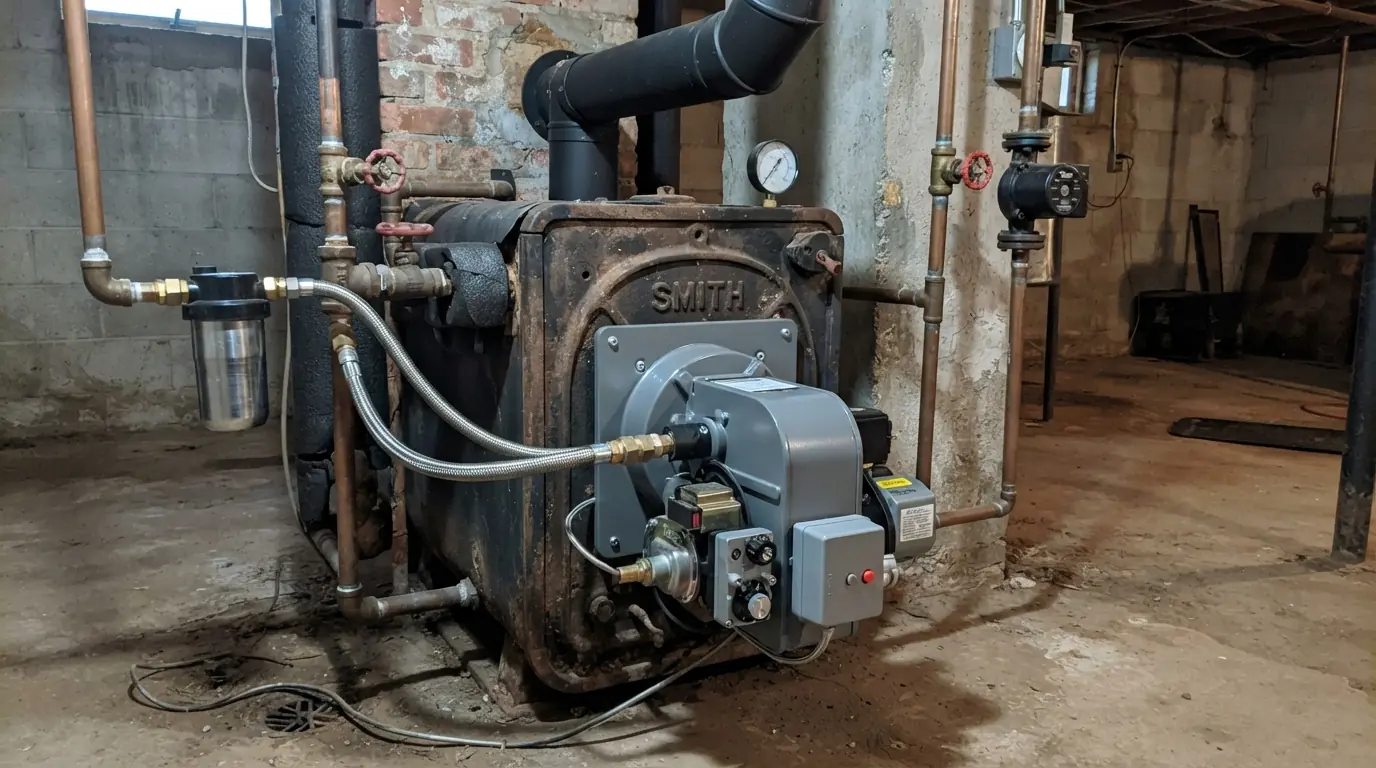
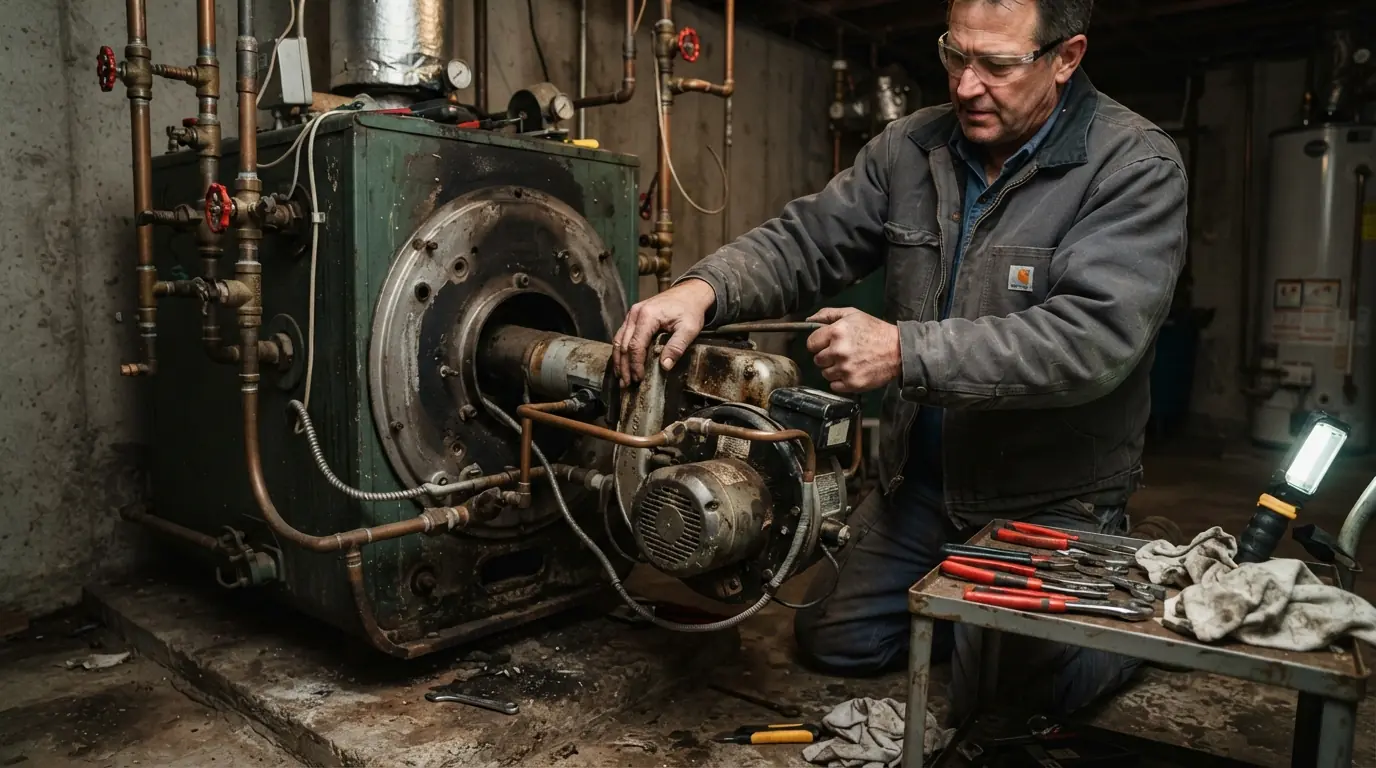
We inspect the boiler or furnace first: heat exchanger condition, chamber, flue passages and leaks. If it is sound, we remove the old burner, prepare the mounting, and install a new burner matched to the appliance's firing rate and combustion chamber. The oil line gets a new filter, the burner is fired. We set the nozzle, pump pressure and air with a combustion analyzer until smoke and efficiency readings are where they belong. The old burner is removed and disposed of.
High-Efficiency Flame Retention Burners
Modern flame retention burners mix oil and air far more effectively than older designs, producing a hotter, cleaner flame that transfers more heat and leaves less soot. On an older boiler with a sound heat exchanger, that improvement shows up as fewer lockouts, less frequent cleaning and lower oil use. We choose a burner model supported by the boiler or furnace manufacturer's specifications, so the flame fits the combustion chamber rather than impinging on it and causing damage. The burner model and settings go on your service record.
Burner Controls and Safety Upgrades
A new burner comes with a new primary control, which handles ignition timing, flame sensing through the cad cell, and safety lockout if the flame fails. Many older installations have worn controls, missing emergency shutoff switches at the top of the stairs, or no fusible valve on the oil line. We bring those up to current standards as part of the job. So the burner shuts down safely if something goes wrong, and we show you where the emergency switch is.
The Bridgeport side of this job
Roughly 524,000 Connecticut homes burn a fuel that costs more per unit of heat than a geothermal system delivers, and much of that is oil. For owners who are not ready to convert, a new burner on a sound boiler is the lowest-cost way to cut oil use and lockouts now. We can price a conversion or heat pump alongside it if you are weighing the next step.
We service and install Carrier, Lennox, Trane, Goodman and more
How a burner replacement runs
- 1
Inspect the appliance
Heat exchanger, chamber and sizing checked.
- 2
Recommend
Burner swap, full replacement or conversion priced honestly.
- 3
Remove old burner
Old burner and controls taken off.
- 4
Install new burner
Mounted and matched to the appliance.
- 5
Upgrade safety
Controls, emergency switch and oil line checked.
- 6
Combustion setup
Nozzle, pressure and air set by analyzer.
- 7
Test and explain
Several firing cycles, then a walk-through.
Signs your oil burner needs replacing
Repeated lockouts
The burner fails to light or stay lit despite service.
Heavy soot
Poor combustion even after cleaning and adjustment.
Puffback or rumbling
Delayed ignition that keeps returning.
Rising oil use
Efficiency dropping with no other cause.
Parts hard to find
An old burner with obsolete components.
Oil Burner Replacement questions from Bridgeport homeowners
Yes, if the boiler or furnace itself is sound.
A modern flame retention burner usually burns more efficiently than an old one.
Usually a few hours, including setup and testing.
It depends on the heat exchanger's condition and sizing; we inspect first.
Yes, including the emergency shutoff and oil line safety devices.
If gas is available and the boiler is aging, it is worth pricing.
Related jobs we handle
Steam-to-Hot-Water Conversion
Steam systems converted to quieter hot-water heat.
More on steam-to-hot-water conversionBoiler Installation & Replacement
Gas, oil, condensing and combi boilers for radiator homes.
How we handle boiler installation & replacementGet reliable firing back
Call to book an inspection. We check the boiler before recommending a new burner.