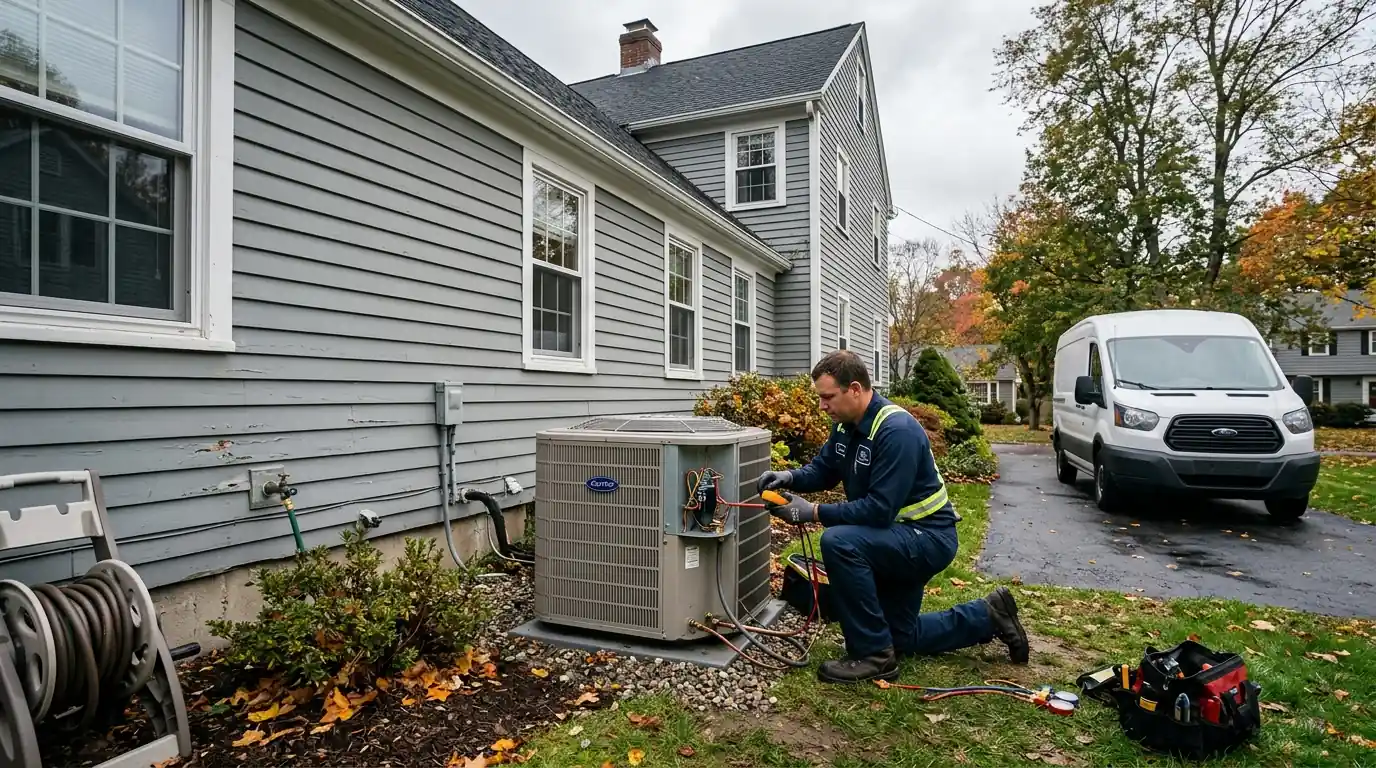
Thermostat and control repair in Bridgeport when the system will not respond
A blank screen, a system that ignores the thermostat, or one floor that will not shut off: we trace the fault through the wiring and controls and fix it.
Most thermostat problems in Bridgeport homes are dead batteries, a tripped furnace switch, a broken or loose wire, a missing common wire on a smart thermostat, or a failed zone control board on a boiler. We test the voltage at the thermostat and at the equipment to find which, then repair the part that failed.
Updated October 2026
Signs the controls, not the equipment, are the problem
Blank thermostat screen
No power at the thermostat, or failed batteries.
System ignores the thermostat
A broken wire, fuse or control fault.
One zone never shuts off
Often a stuck zone valve or failed relay.
Fan runs nonstop
A wiring fault or a thermostat set to fan on.
Smart thermostat keeps rebooting
Usually a missing common wire.
How we track down a control fault
- 1
Call any hour
We ask what the thermostat shows and what the system is doing.
- 2
Check power
Voltage at the thermostat and the equipment transformer.
- 3
Test the call
Each thermostat circuit is tested for a clean signal.
- 4
Check the board
Fuses, relays and zone outputs are tested.
- 5
Trace the wire
Damaged or loose conductors are found and repaired.
- 6
Price the repair
You approve the cost before any part goes in.
- 7
Test every zone
Each thermostat is run to confirm its zone responds.
Is it the thermostat or the equipment?
A thermostat is a switch. When it calls for heat, it closes a 24 volt circuit that tells the furnace, boiler or heat pump to start. If nothing happens, the fault could be the thermostat, the wire between them, the transformer that powers the circuit, or the control board at the equipment.
We test each point with a meter instead of swapping the thermostat and hoping. A new thermostat on a broken wire or a failed board fixes nothing.
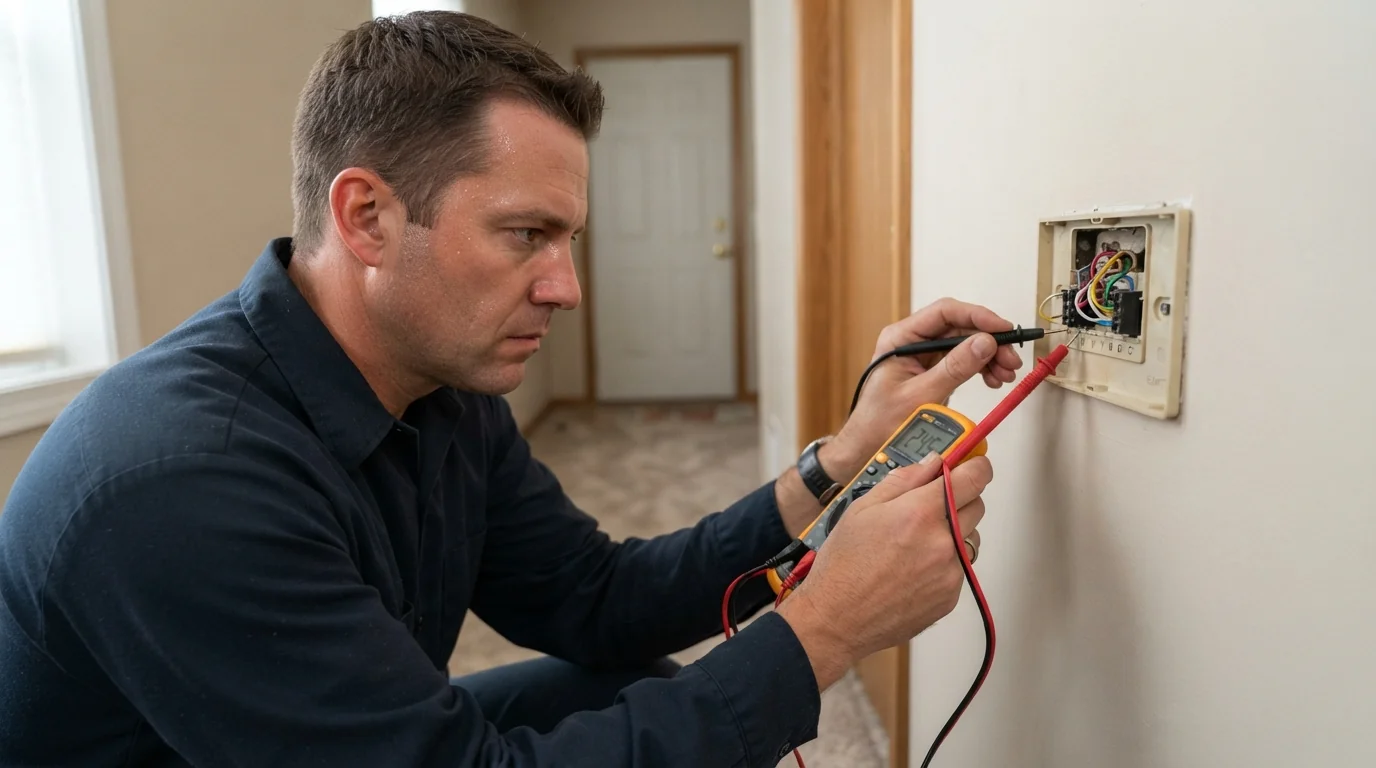
Blank or Unresponsive Thermostat
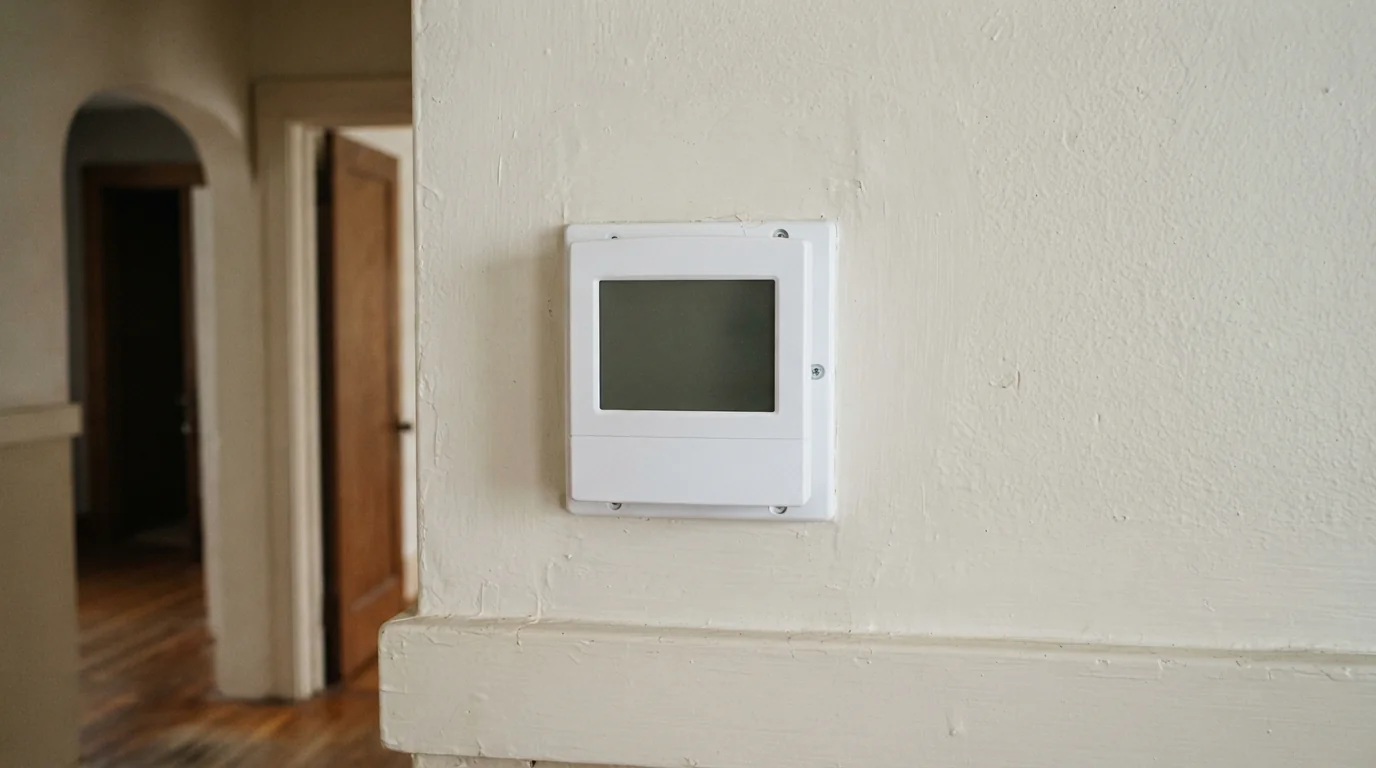
A blank screen usually means no power: dead batteries on a battery thermostat, or lost 24 volt power on a hardwired one. Lost power often traces back to the furnace or boiler service switch, a blown low-voltage fuse on the control board, or a failed transformer. A thermostat that powers up but does not respond to button presses may simply have failed. We check the power at both ends, replace the fuse or transformer if that is the cause, and replace the thermostat only when it is the part that has actually failed.
Wiring and C-Wire Problems
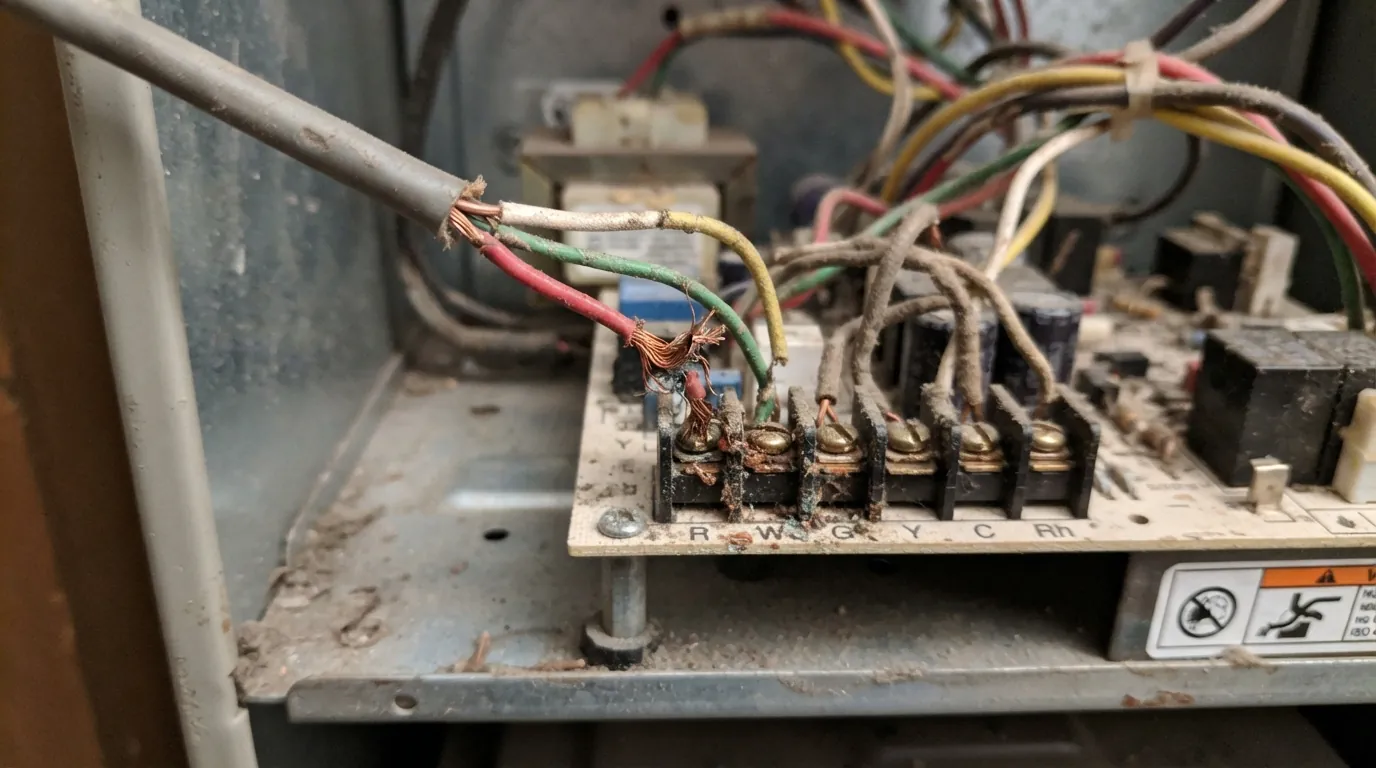
Thermostat wire runs through walls, basements and attics, and in older houses it can be decades old, brittle, chewed or loose at a terminal. A broken conductor gives symptoms like heat that never starts, a fan that runs constantly or cooling that will not turn off. Smart thermostats add another common problem: they need a common wire for constant power, and many older installations lack one. We trace the run, repair or replace damaged wire, and add a common wire or power adapter where the thermostat needs it.
Zone Control Board Faults
Homes with several heating zones, common on boilers, use a zone control board that takes calls from each thermostat and opens the right zone valve or starts the right circulator. When one zone will not heat, or one zone will not stop, the fault is often on the board: a failed relay, a burned terminal or a bad zone valve end switch. We test each zone's call, output and end switch, replace the failed relay or board, and confirm every zone opens and closes on its own thermostat.
How this job plays out in Bridgeport
Bridgeport has more homes built in 1939 or earlier than in any later period, and gas is now the city's most common heating fuel. So many houses carry original boilers or furnaces that were converted and rewired more than once. Connecticut's median home dates to 1967, which means thermostat wiring in a lot of houses is older than the equipment it runs. We check the whole low-voltage run, not just the thermostat on the wall.
We service and install Carrier, Lennox, Trane, Goodman and more
What to check before you call
Replace the thermostat batteries, confirm it is set to heat or cool and not away mode, and check the furnace or boiler service switch and the breaker. If the thermostat is a smart model, look for a power or wiring warning in its menu.
Leave control boards, transformers and zone valve wiring to a technician. Shorting two thermostat wires together, a common shortcut people try, can blow the low-voltage fuse or damage the board.
What changes the cost of a thermostat or control repair
The failed part
A fuse or batteries cost far less than a transformer, zone board or thermostat.
Wire repair
Replacing a damaged run through finished walls takes longer.
Number of zones
Each zone adds a thermostat, valve and end switch to test.
Equipment type
Heat pumps and multi-stage systems take more setup.
Thermostat choice
Replacing with a basic or smart thermostat changes the parts line.
After-hours timing
Overnight and holiday calls can carry a different visit rate.
Thermostat & Control Repair questions from Bridgeport homeowners
Dead batteries, a tripped furnace switch, a blown fuse or a failed transformer.
Usually a stuck zone valve or a failed relay on the zone board.
Most smart thermostats need one for constant power; we add it or an adapter.
Yes. Damaged runs are repaired or replaced.
Only if testing shows the thermostat failed; often it is the wire or board.
Calls are answered 24/7, and no-heat control faults are dispatched promptly.
Related jobs we handle
24/7 Emergency HVAC Repair
No heat, no cooling, gas smell or CO alarm. Answered any hour.
How we handle 24/7 emergency HVAC repairFurnace Repair
Ignitors, flame sensors, blowers and limit trips on gas and oil furnaces.
Furnace Repair in BridgeportAC Repair
Capacitors, contactors, leaks and frozen coils on central air and ductless.
More on AC repairGet the controls working again
Call any hour and tell us what the thermostat shows, and you get a time on the call.