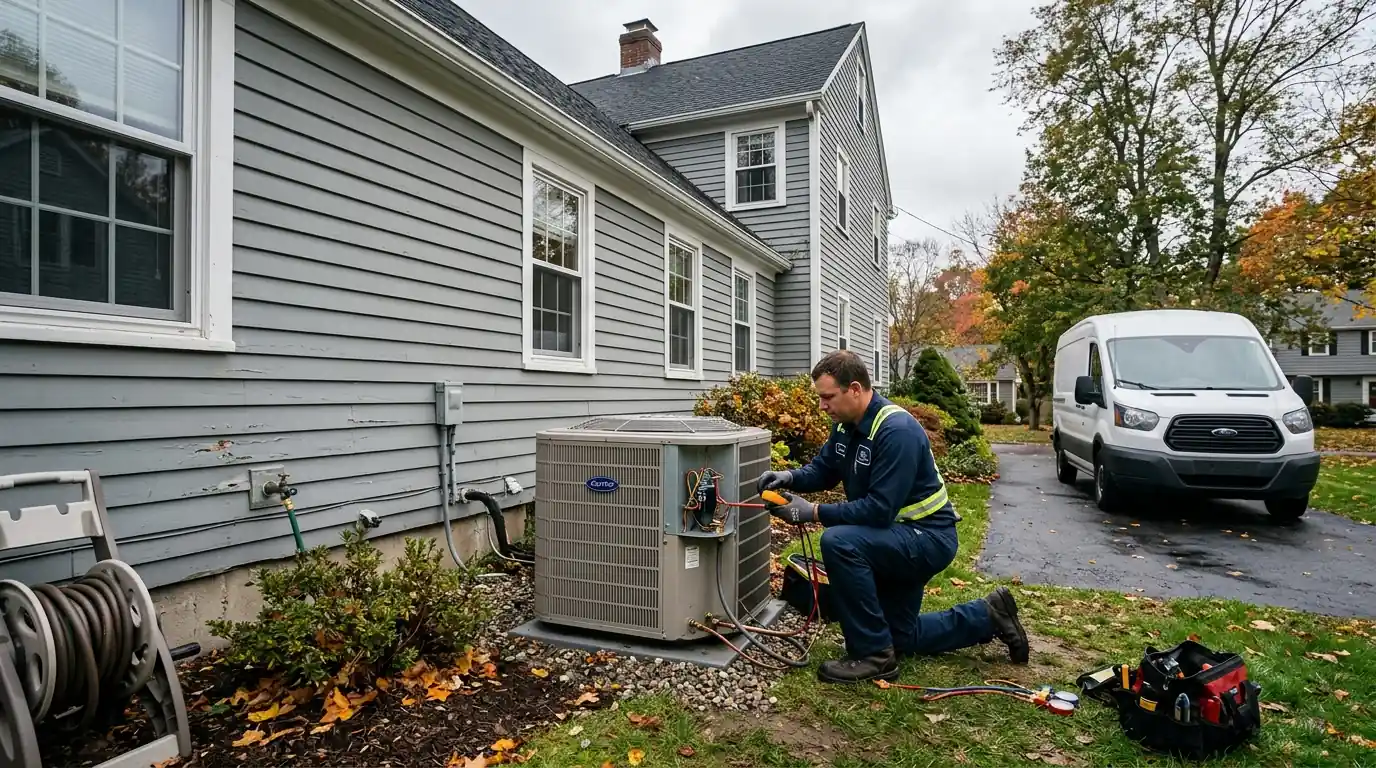
Water heater replacement in Bridgeport: gas, oil, indirect and tankless
In an older Bridgeport house the venting is where most of a water heater swap hides. We size it, vent it to code and haul the old tank away.
Replacing a standard gas water heater in Bridgeport usually takes half a day, with hot water back the same afternoon. The time goes up when the chimney needs a liner, when the unit changes from tank to tankless, or when an indirect tank is tied into a boiler. We size, vent, permit and test every install.
Updated October 2026
What a water heater replacement actually involves
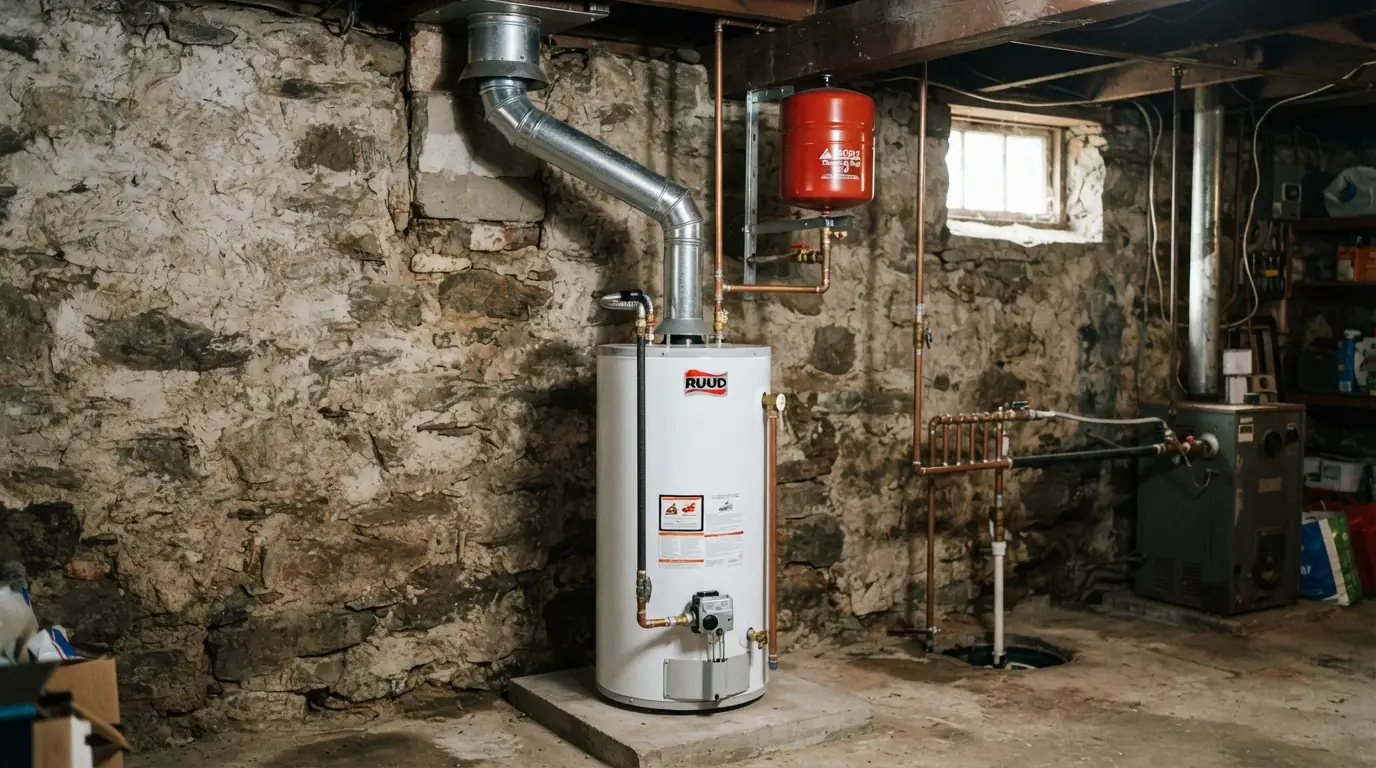
The tank is the easy part. What takes judgment is the venting, the gas line and whatever else shares the chimney. Many Bridgeport basements vent a water heater and a furnace or boiler into one masonry flue, and when the heating appliance is replaced with a sidewall-vented unit, the water heater can be left alone in a chimney too large for it.
We check the fuel, flue, gas pipe, expansion tank and shutoffs before quoting.
What changes the price of a water heater install
Fuel and type
Gas tank, oil-fired, indirect and tankless units differ widely in equipment and labor.
Venting
A new chimney liner, new flue connector or sidewall vent adds parts and time.
Gas line size
Tankless units often need the gas pipe upsized from the meter.
Access
Narrow stairs and tight corners take longer.
Code upgrades
Expansion tanks, drain pans and new shutoffs may be required.
Permit
Most water heater replacements in Connecticut need a permit and an inspection.
Everything included when we replace a water heater
- Removal and disposal of the old tank
- New flue connector or sidewall vent
- New gas flex connector and shutoff where needed
- Thermal expansion tank where the water service requires it
- Temperature and pressure relief valve with a proper discharge pipe
- New water shutoff valves and connectors
- Draft and combustion test
- Permit filing and inspection scheduling
- Temperature set and explained before we leave
Tank, indirect or tankless for your house
| Type | Good fit when | Tradeoff |
|---|---|---|
| Gas tank | You want the fastest, simplest swap | Can run out with several showers back to back |
| Oil-fired tank | There is no gas service at the street | Needs annual burner service like a boiler |
| Indirect tank | You already have a sound hot-water boiler | Depends on the boiler being on to make hot water |
| Tankless gas | You want endless hot water and wall space | Larger gas line and yearly descaling |
Gas and Oil Tank Water Heaters
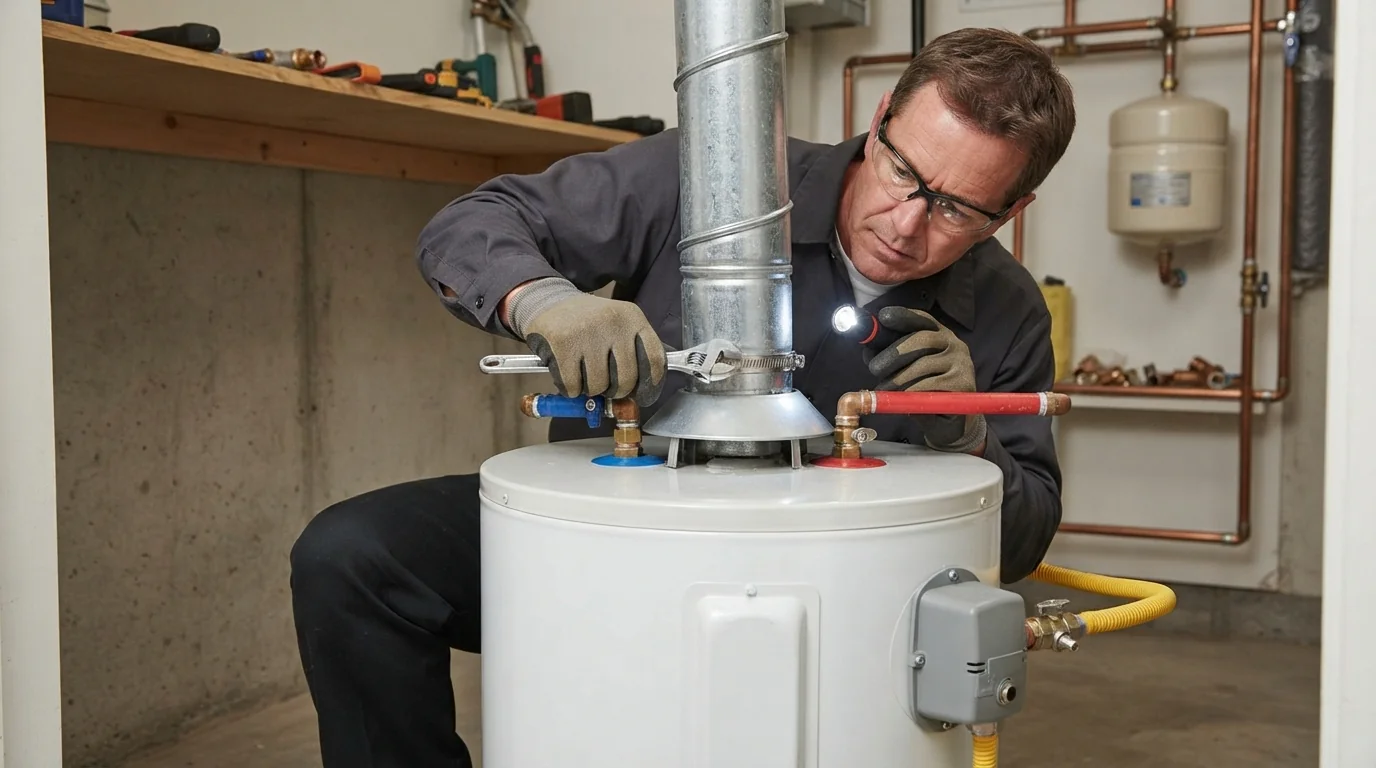
A standard tank is still the most common replacement we do, and it is the fastest way to get hot water back after a leak. Gas tanks run 40 or 50 gallons in most houses. Oil-fired water heaters are less common but still show up in homes that never had gas service, and they need the same burner care as an oil boiler. We match the capacity to the household, replace the flue connector, add a thermal expansion tank where the water service requires one, and set the temperature to a safe point before we leave.
Indirect Tanks Off a Boiler
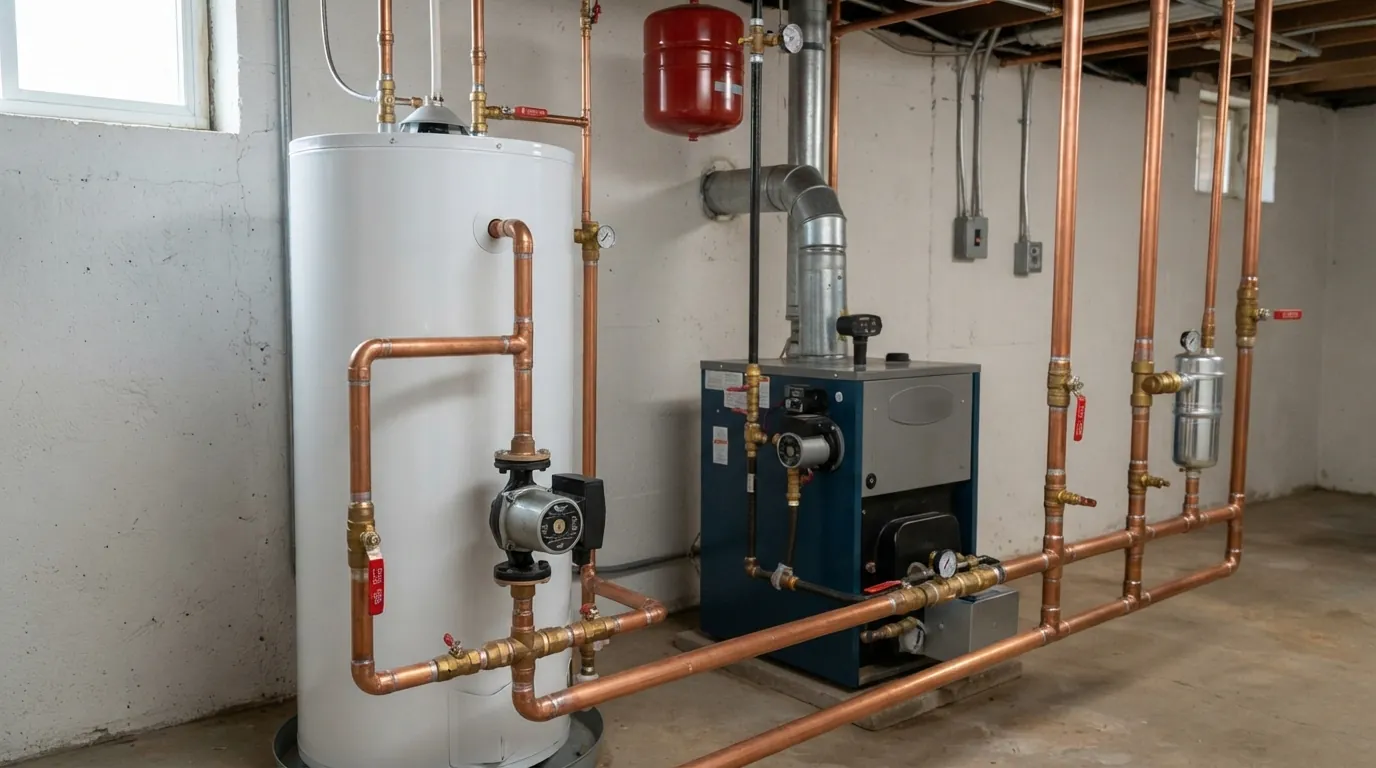
If the house already has a hot-water boiler, an indirect tank uses that boiler to heat domestic water through a coil inside the tank. There is no second burner and no second flue, and a well-insulated indirect tank loses very little heat standing. It works best when the boiler is in good shape and sized to carry the extra zone. We pipe it as its own priority zone with a dedicated circulator or zone valve, so showers stay hot when the heat is also calling. Pair this with a boiler replacement and the two are planned as one job.
Tankless Gas Water Heaters
A tankless unit heats water on demand and never runs out, but it needs a larger gas supply, a dedicated sidewall vent and, in hard water, regular descaling. In many older homes the existing half-inch gas pipe is too small, so the line has to be upsized from the meter. We check the gas load for every appliance in the house before recommending tankless, because a unit that starves the furnace on a cold morning is a worse outcome than a tank that runs out after the third shower.
Why Bridgeport houses change the approach
About 35 percent of Bridgeport housing was built before 1940, and a lot of it still vents the water heater into an old masonry chimney that once served a coal or oil boiler. With roughly a third of Connecticut heating with oil, we also still see oil-fired water heaters sharing a flue with the boiler. When one appliance on that chimney changes, the other has to be checked for draft, and it sometimes needs a stainless liner to vent safely.
We service and install Carrier, Lennox, Trane, Goodman and more
From shutoff to hot water
- 1
Look at the whole setup
Fuel, flue, gas pipe size and shared chimney use are checked before quoting.
- 2
Pick the right unit
You choose between tank, indirect or tankless with the tradeoffs laid out.
- 3
Pull the permit
We file with the town so the install can be inspected.
- 4
Drain and remove
The old tank is shut off, drained and carried out.
- 5
Set and connect
The new unit goes in with new connectors, shutoffs and an expansion tank where required.
- 6
Vent and test
Draft, gas pressure and combustion are tested with the burner running.
- 7
Walk-through
You see the shutoffs and settings, and we leave the paperwork with the unit.
Water Heater Installation questions from Bridgeport homeowners
Rust-colored hot water, water pooling at the base, rumbling from sediment and hot water that runs out faster than it used to are the common signs.
It makes sense when you want endless hot water and the gas service can support it. In many older homes the gas line needs upsizing first, which we check before recommending it.
Yes, through an indirect tank, if the boiler is in good condition and sized for the extra load.
In most Connecticut towns, yes. We file it and schedule the inspection as part of the job.
Usually. Tankless units mount on a wall, and high-efficiency tanks can be taller or wider, so we measure before ordering.
We drain it, carry it out and dispose of it as part of the install.
Related jobs we handle
Hydronic Baseboard & Radiator Installation
New baseboard and panel radiators off your boiler.
How we handle hydronic baseboard & radiator installationOil Burner Replacement
New flame retention burners on sound boilers and furnaces.
Oil Burner Replacement in BridgeportSteam-to-Hot-Water Conversion
Steam systems converted to quieter hot-water heat.
Steam-to-Hot-Water Conversion in BridgeportHot water back by tonight
Call with the size and fuel of your current water heater and whether it is leaking, and we will tell you what the replacement involves before we arrive.