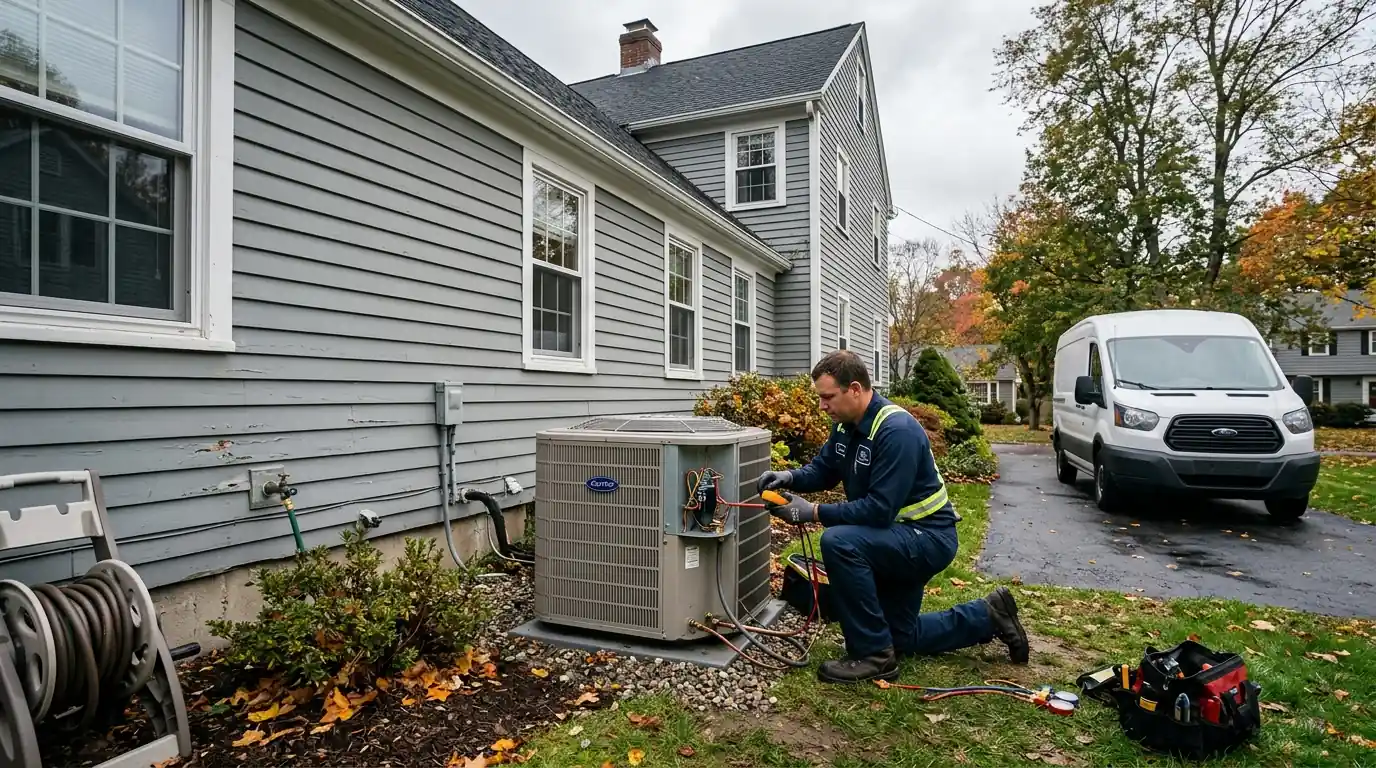
Duct sealing and repair for Bridgeport homes with uneven rooms
Leaking joints, disconnected runs and crushed ducts waste the air you pay to heat and cool. We find them, seal them properly and measure the difference.
Duct sealing in Bridgeport means finding the leaks, gaps and disconnected sections in a forced-air duct system and sealing them with mastic or approved foil tape, then insulating runs in unconditioned space. It fixes weak airflow to distant rooms, dusty air and high bills caused by heated or cooled air escaping before it reaches the house.
Updated October 2026
Where the air goes when ducts leak
Every leak in a supply duct sends conditioned air into a basement, attic or wall cavity instead of the room it was meant for. Every leak in a return duct pulls in dusty, damp or hot air from those same spaces. The system runs longer, rooms at the ends of runs stay uncomfortable, and the furnace or air conditioner works harder than it should.
Cloth duct tape is not a seal; it dries out and falls off within a few years. We seal joints with mastic, reconnect loose runs, and fix crushed sections, so the repair lasts as long as the ducts.
What changes the cost of duct sealing
Accessible duct length
More exposed duct means more joints to seal.
Access
Finished ceilings limit what can be reached without opening them.
Disconnected runs
Reconnecting and supporting loose sections adds time.
Crushed sections
Replacing damaged duct pieces adds material.
Insulation
Wrapping ducts in attics and crawlspaces.
Testing
Airflow and static pressure measured before and after.
Leaking Joints and Disconnected Runs
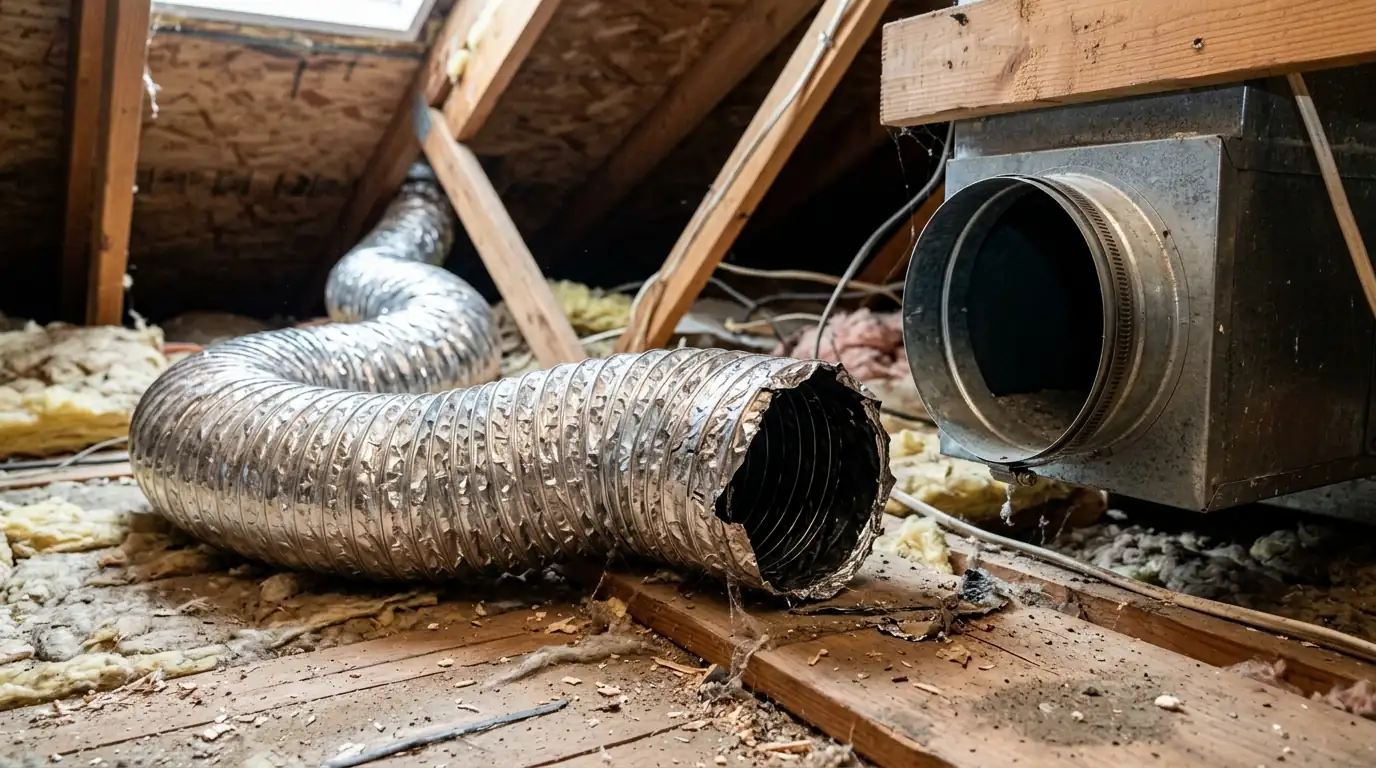
The most common duct defects we find are joints that were never sealed, seams that opened as the ducts settled, and branch runs that have pulled completely off their fitting, blowing air into a basement ceiling or attic. Disconnected flex duct in an attic is a frequent reason one bedroom never cools. We trace each run from the trunk to the register, reconnect anything loose with proper collars and fasteners, and support sagging ducts so the joints are not under strain.
Mastic Sealing and Insulation
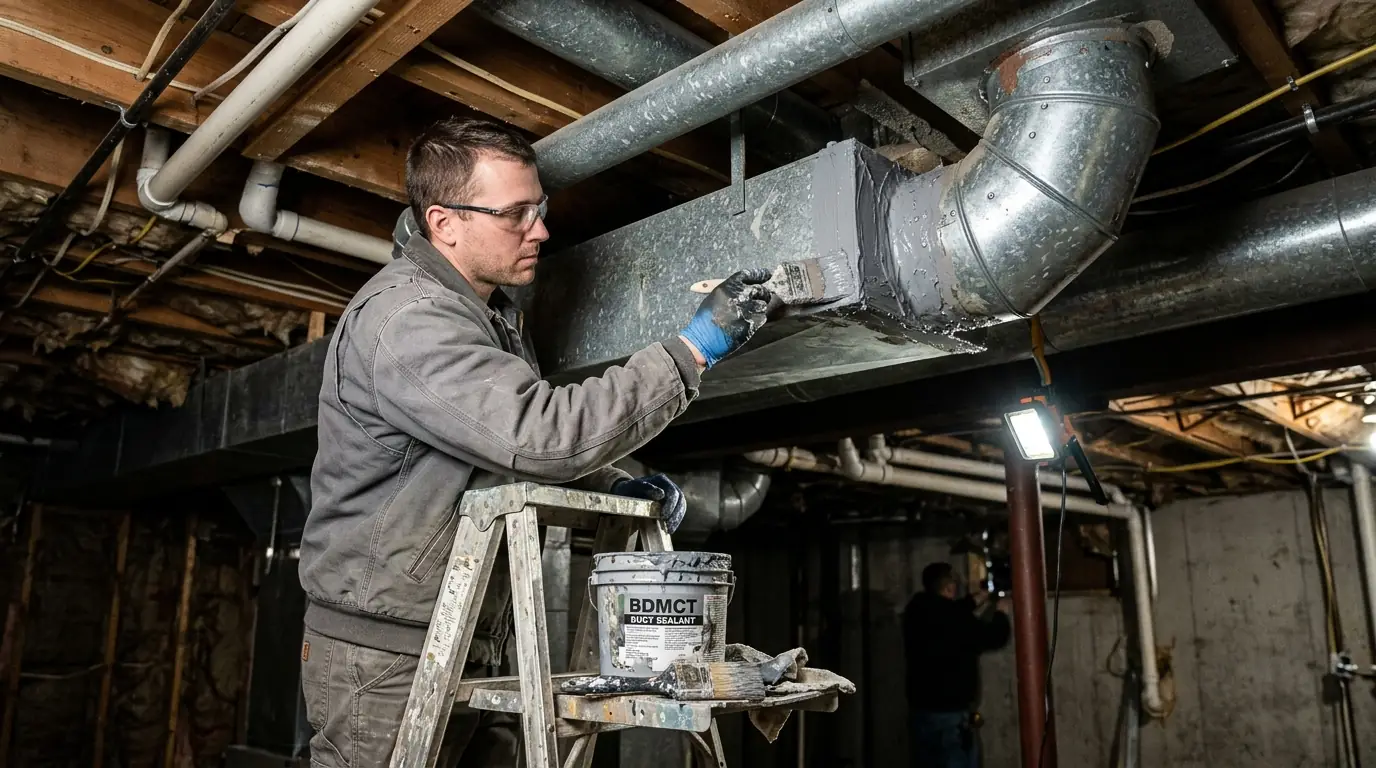
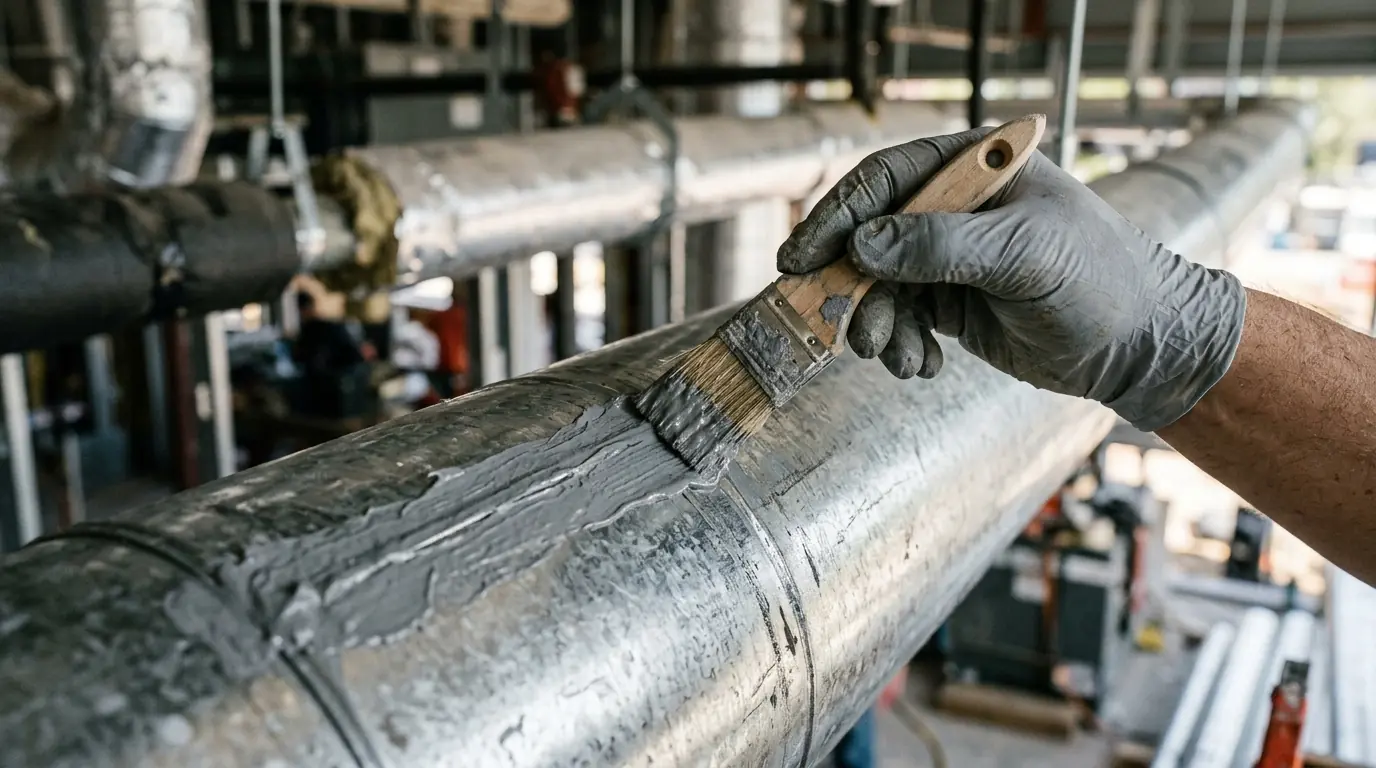
Once the ducts are connected and supported, every accessible joint and seam gets a coat of mastic, a thick paste that stays flexible and seals permanently, or a UL-listed foil tape where mastic is not practical. Supply ducts in attics, crawlspaces and unheated garages are then insulated so they neither lose heat in winter nor sweat in summer. Sealing comes first: insulation wrapped over a leaking joint hides the leak without stopping it. Returns get the same treatment as supplies.
Rooms That Never Heat or Cool Evenly
Uneven rooms are the most common reason people call about ducts. The cause is usually a combination: a long run with leaks, an undersized return, a crushed section, or a register that is closed or blocked. We measure airflow at the registers and static pressure across the system before and after the work, so you can see the change rather than take it on faith, and we rebalance the registers after sealing. If the ducts themselves are too small, see ductwork installation.
Why Bridgeport houses change the approach
With about 39 inches of rain a year, many Bridgeport basements and crawlspaces stay damp. Return ducts that leak in those spaces pull musty, humid air straight into the system. Sealing the returns is often the change homeowners notice first: less dust at the registers and less of that basement smell upstairs, alongside better airflow to the rooms that used to lag behind.
How a duct sealing job runs
- 1
Measure first
Static pressure and register airflow recorded.
- 2
Inspect every run
Trunks, branches and returns traced.
- 3
Reconnect and support
Loose runs reattached and hung properly.
- 4
Replace damage
Crushed or torn sections replaced.
- 5
Seal
Mastic or listed foil tape on every accessible joint.
- 6
Insulate
Runs in unconditioned space insulated.
- 7
Measure again
Improvement confirmed with the same tests.
How long duct sealing takes
Sealing the accessible ducts in a typical basement usually takes most of a day, including the before and after measurements. Attic and crawlspace work, or a house with many disconnected runs, can take a second day. The heating or cooling system is off only while we work on the sections nearest the furnace or air handler.
Signs your ducts are leaking
Rooms that lag behind
Weak airflow at the far ends of the system.
Dust near registers
Returns pulling air from dusty spaces.
Musty smell when the system runs
Leaky returns in damp basements or crawlspaces.
High bills with a new system
Air lost before it reaches the rooms.
Visible gaps or tape falling off
Old duct tape that has failed.
Duct Sealing & Repair questions from Bridgeport homeowners
Not for long; cloth duct tape dries and fails. Mastic is the lasting seal.
It reduces air lost before reaching the rooms, which usually helps.
We seal what is accessible; hidden sections may need other approaches.
Often a disconnected, leaking or undersized duct serving it.
Yes, after they are sealed.
We measure airflow and static pressure before and after.
Related jobs we handle
Indoor Air Quality Systems
Media filters, UV lights and fresh-air intakes.
Indoor Air Quality Systems in BridgeportWhole-Home Humidifiers & Dehumidifiers
Winter humidifiers and summer and basement dehumidifiers.
More on whole-home humidifiers & dehumidifiersSmart Thermostat Installation
Wired and configured for your furnace, boiler or heat pump.
How we handle smart thermostat installationStop paying to heat the basement ceiling
Call to book a duct evaluation. We measure first and show you the difference after sealing.