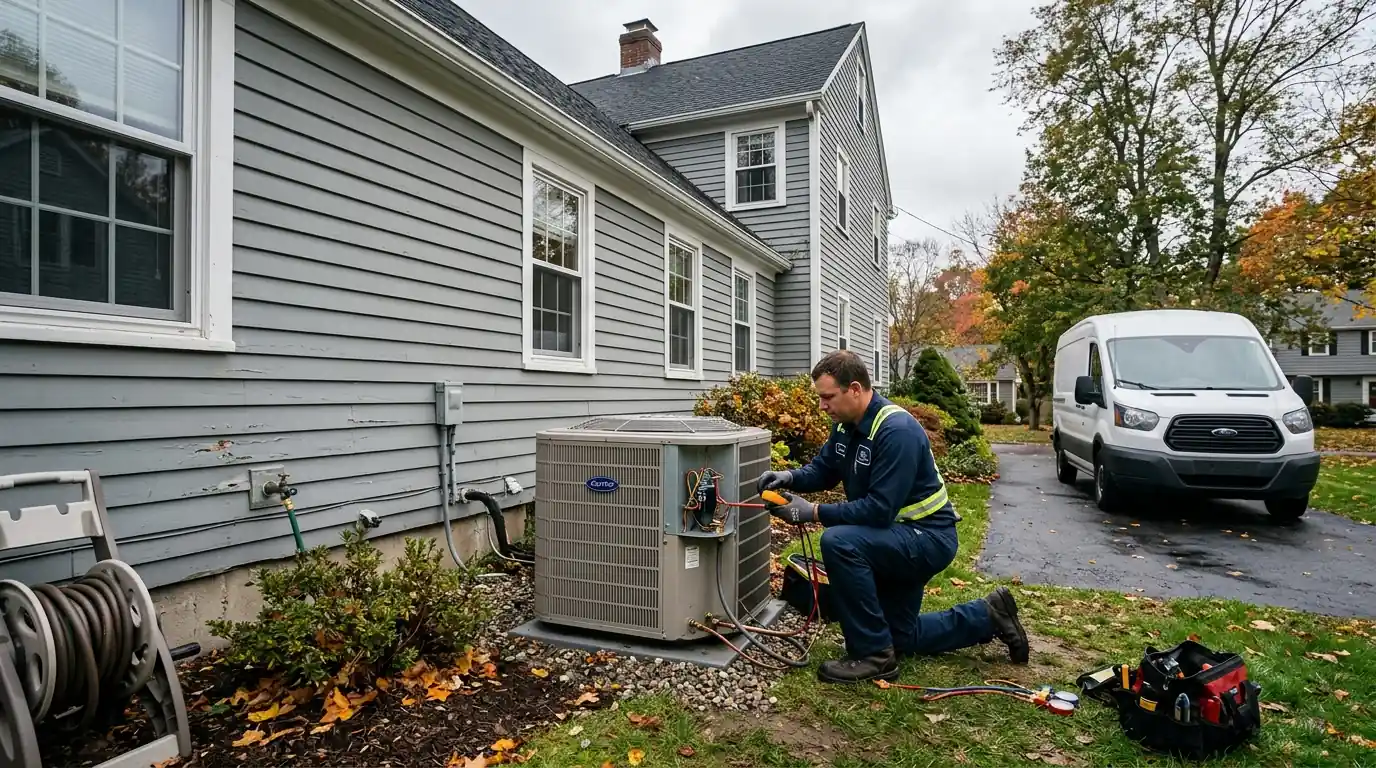
Radiator and baseboard heat repair for Bridgeport homes
Cold radiators, gurgling baseboards, leaks at the valves and cracked cast iron: we find why the heat is not reaching the room and fix it.
Radiators and baseboard heaters in Bridgeport homes usually go cold because of trapped air, a stuck zone valve, a closed or failed radiator valve, or a weak circulator. Leaks usually come from valve packing, unions or corroded fin-tube. We bleed, balance and repair the distribution side, and replace cracked radiators or failed baseboard sections when repair is not possible.
Updated October 2026
Signs your radiators or baseboards need service
Cold at the top
Air trapped in the radiator.
Gurgling in baseboards
Air moving through the pipes.
Water on the floor
A leaking valve, union or fin-tube section.
One room always cold
A closed valve, poor balance or zone fault.
Hissing or dripping valve
Worn valve packing.
How a radiator or baseboard repair runs
- 1
Call any hour
We ask which rooms are cold and whether there is a leak.
- 2
Check the boiler side
Pressure, circulation and zone calls first.
- 3
Go room by room
Radiators and baseboard checked for air, valves and flow.
- 4
Price the repair
You approve the cost before work starts.
- 5
Repair
Valves, sections or radiators replaced as needed.
- 6
Refill and purge
System refilled and air bled out.
- 7
Balance and test
Every room checked for heat.
When the boiler is fine but the room is cold
Plenty of heating calls turn out not to be the boiler at all. The boiler is hot and running, but a radiator stays cold, a baseboard run gurgles, or one room never warms. The problem is in the distribution: air, valves, piping or the radiators themselves.
We work room by room. A cold radiator gets checked for air, its valve, its piping and the zone it belongs to, until the reason heat is not getting there is found.
Radiators Cold on One Side
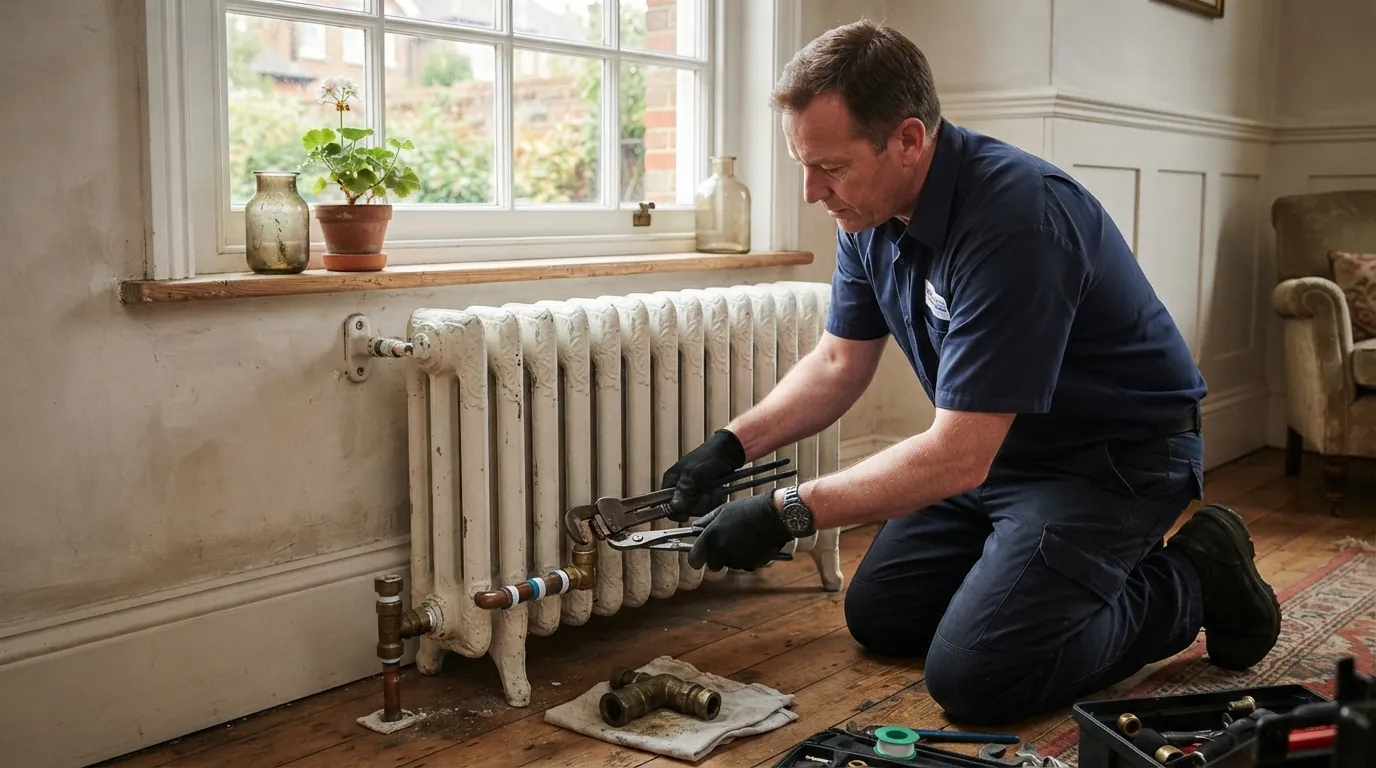
A hot-water radiator that is warm at the bottom and cold at the top has air trapped inside, and bleeding it at the top vent usually solves it. One that stays cold end to end may have a closed or seized valve, a clogged connection, or it may sit on a zone that is not calling. A radiator that heats on one end only can have sludge blocking flow through its sections. We bleed, check the valve and the zone, and flush or reconnect radiators that need it.
Leaking Baseboard Fin-Tube
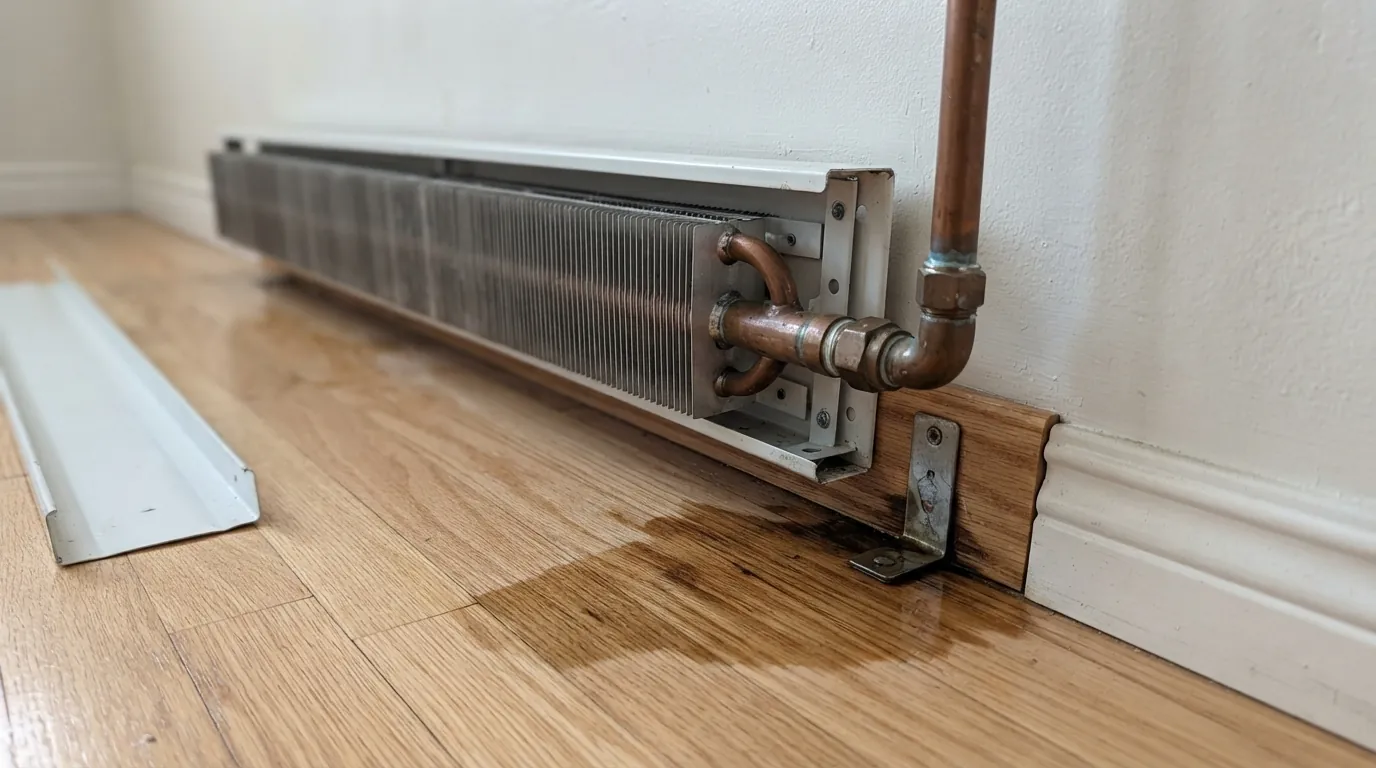
Baseboard heat is a copper pipe with aluminum fins inside a metal cover. Leaks usually appear at soldered joints, at the elbows at each end, or where corrosion has thinned the pipe. Water staining the floor below a baseboard is the typical sign. We cut out and replace the leaking section, resolder the joints, refill and purge the system, and replace damaged covers. Where fins are crushed from years of furniture and vacuum cleaners, we straighten or replace them so the heater gives off its full output.
Air Bleeding and Balancing
Air in a hot-water system collects at the high points and blocks circulation, which is why top-floor radiators often suffer most. We bleed every radiator, starting from the lowest floor, and check the system pressure after. Balancing comes next: adjusting radiator valves or balancing valves so rooms close to the boiler do not overheat while distant ones stay cool. On systems with persistent air, we look at the air separator and fill valve, since air that keeps returning has a source.
Replacing a Cracked Cast-Iron Radiator
Cast iron radiators rarely fail, but when one cracks, usually from freezing or physical damage, it cannot be reliably repaired. We isolate the radiator, drain it, disconnect it and remove it, which on a heavy cast iron unit is real work on stairs. The replacement can be a salvaged cast iron radiator of matching output or a new panel radiator sized to the room. We match the heat output to the room rather than just filling the same space, then refill, bleed and test.
Why Bridgeport houses change the approach
Roughly 40 percent of Bridgeport's housing predates 1940, city planners note, and about two-thirds of units sit in multifamily buildings. Cast iron radiators and decades-old baseboard runs are part of everyday service work here. In two- and three-family houses, one cold radiator on the top floor often traces back to air or a valve in a unit nobody has touched in years, which is why we check the whole zone.
What you can do before calling
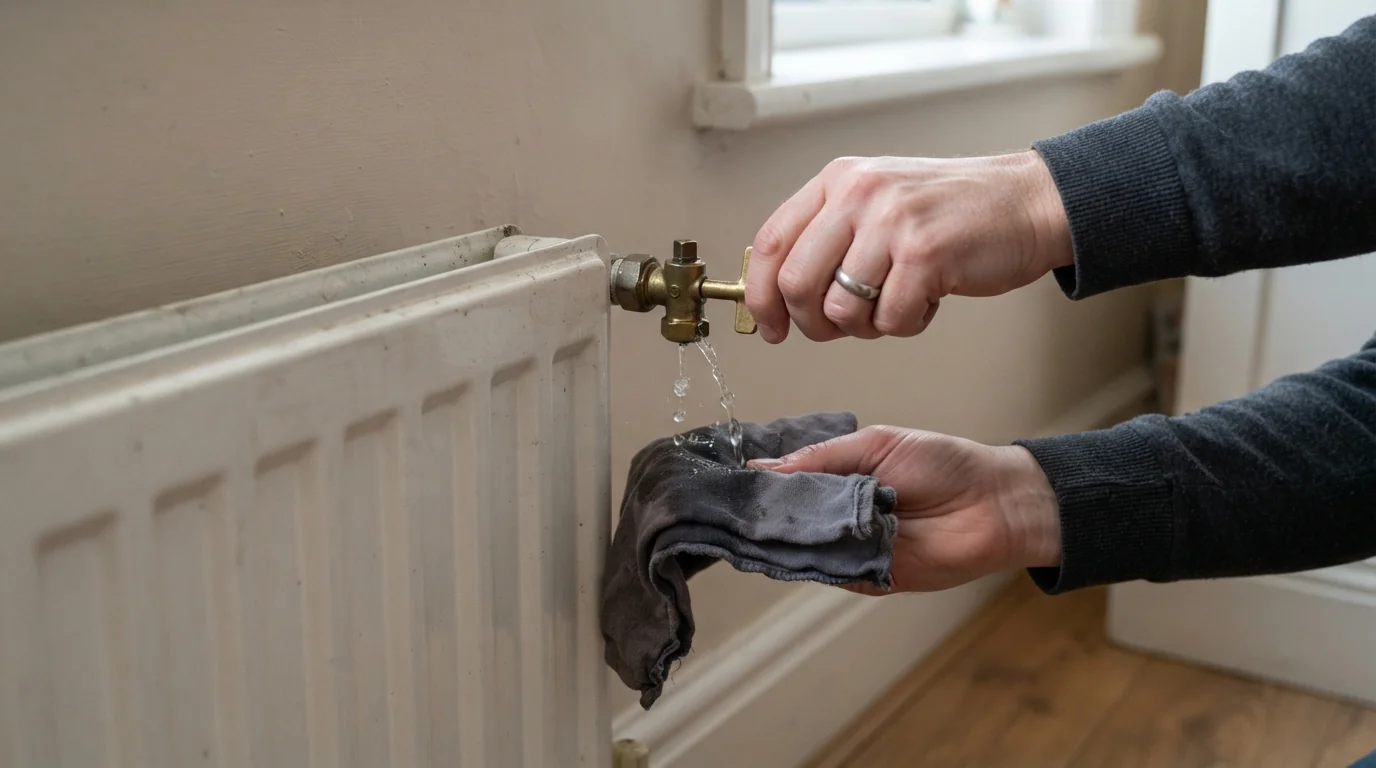
On a hot-water system, bleeding a radiator with a key is a reasonable homeowner job: hold a rag under the vent, open it until water comes out steadily, then close it. Check the boiler pressure afterward. Keep furniture and heavy curtains off radiators and baseboards so heat can move into the room.
Do not bleed a steam radiator; steam systems use automatic vents. And if a radiator or baseboard is actively leaking, turn the boiler off and call rather than tightening fittings on a hot system.
What changes the cost of radiator or baseboard repair
The repair
Bleeding and balancing costs less than replacing a valve or a section.
Draining
Replacing wet parts means draining, refilling and purging.
Radiator removal
Heavy cast iron on upper floors takes more labor.
Number of zones
Balancing several zones takes longer.
Covers and fins
Damaged baseboard covers or fins add parts.
After-hours timing
Overnight and holiday calls can carry a different visit rate.
Radiator & Baseboard Repair questions from Bridgeport homeowners
Trapped air; bleeding it usually fixes the problem.
Air in the lines; bleeding and checking the pressure helps.
Not reliably; it should be replaced with one sized to the room.
Often a closed valve, poor balancing or a zone problem.
Yes, including replacing corroded sections and joints.
Checking at the start of each season is a good habit.
Related jobs we handle
Water Heater Installation
Gas, oil-fired, indirect and tankless water heaters.
How we handle water heater installationHydronic Baseboard & Radiator Installation
New baseboard and panel radiators off your boiler.
More on hydronic baseboard & radiator installationGet heat back to every room
Call any hour and tell us which rooms are cold, and you get a time on the call.