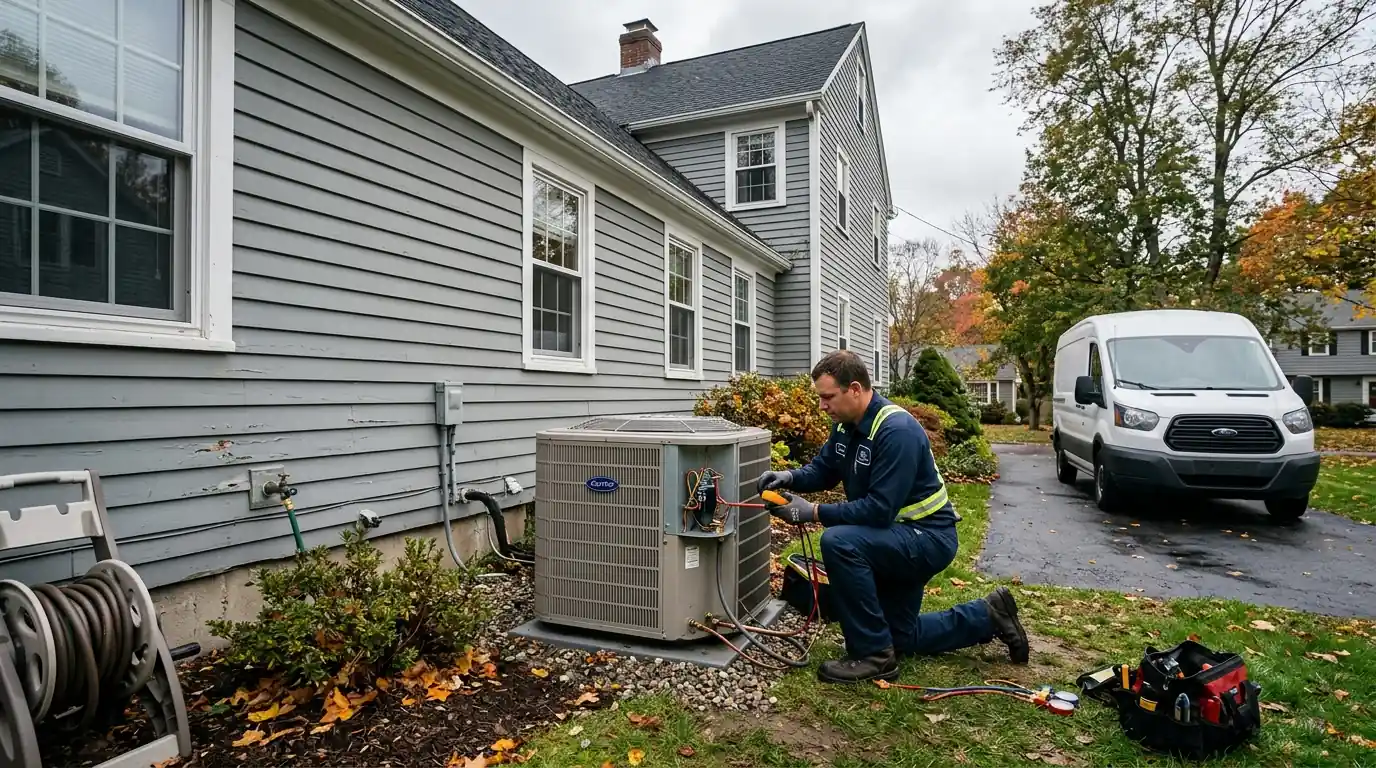
Switching from oil to gas heat in Bridgeport, start to finish
One project, one crew: the new gas furnace or boiler, the chimney or vent work, and the old oil tank out of the basement.
An oil-to-gas conversion in Bridgeport replaces the oil furnace or boiler with a gas unit once gas service reaches the house, then lines or reroutes the vent and removes the oil tank. A gas furnace in Connecticut typically runs about $3,500 to $8,000 installed and a boiler about $3,700 to $8,300, before venting and tank work.
Updated October 2026
What a conversion involves beyond the new unit
The appliance swap is one day. What surrounds it takes planning: getting gas service and a meter to the house, deciding whether the new unit vents up the old chimney with a liner or out the sidewall, and removing the oil tank and lines once the new system is running.
We coordinate those pieces in order, so the house is never without heat longer than the install day. The old oil system keeps running until the gas unit is ready to fire.
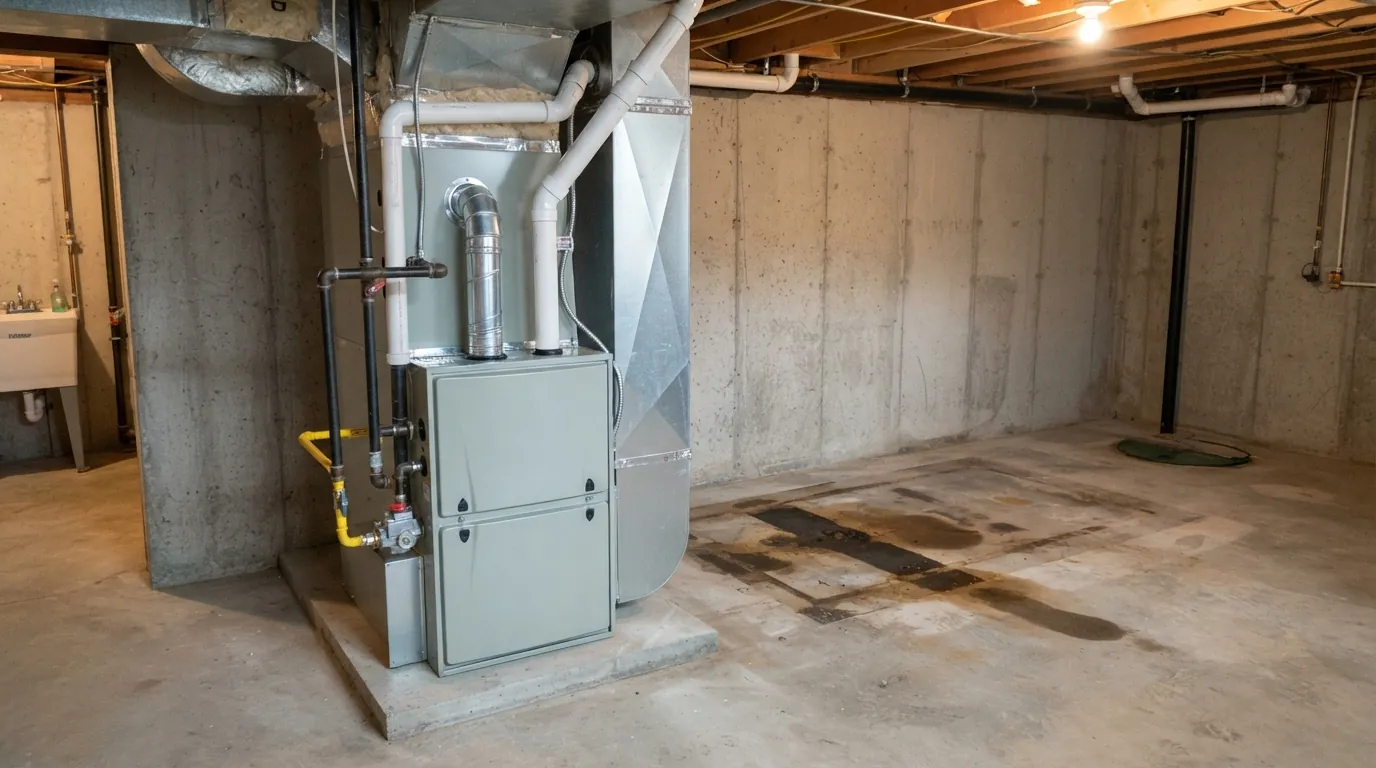
What decides the cost of a conversion
Published Connecticut ranges put a gas furnace at about $3,500 to $8,000 installed and a boiler at about $3,700 to $8,300. The conversion work around it adds the pieces below.
Furnace or boiler
Forced-air homes take a furnace; radiator homes take a boiler.
Efficiency and venting
A condensing unit vents sidewall; an 80 percent unit needs a chimney liner.
Interior gas piping
The run from the meter to the unit and other appliances.
Oil tank removal
Basement or outdoor tank, fill and vent pipe removal.
Water heater
A water heater left in an oversized chimney may need its own liner or a replacement.
Permit
Connecticut permits for heating installs typically run $100 to $300.
What the conversion includes
- Gas load calculation for the whole house
- Help with the utility service request
- Interior gas piping to the new unit
- New gas furnace or boiler installed
- Stainless chimney liner or sidewall PVC venting
- Combustion and draft testing
- Permit filing and inspection
- Oil tank pumped and removed
- Fill and vent pipes removed and capped
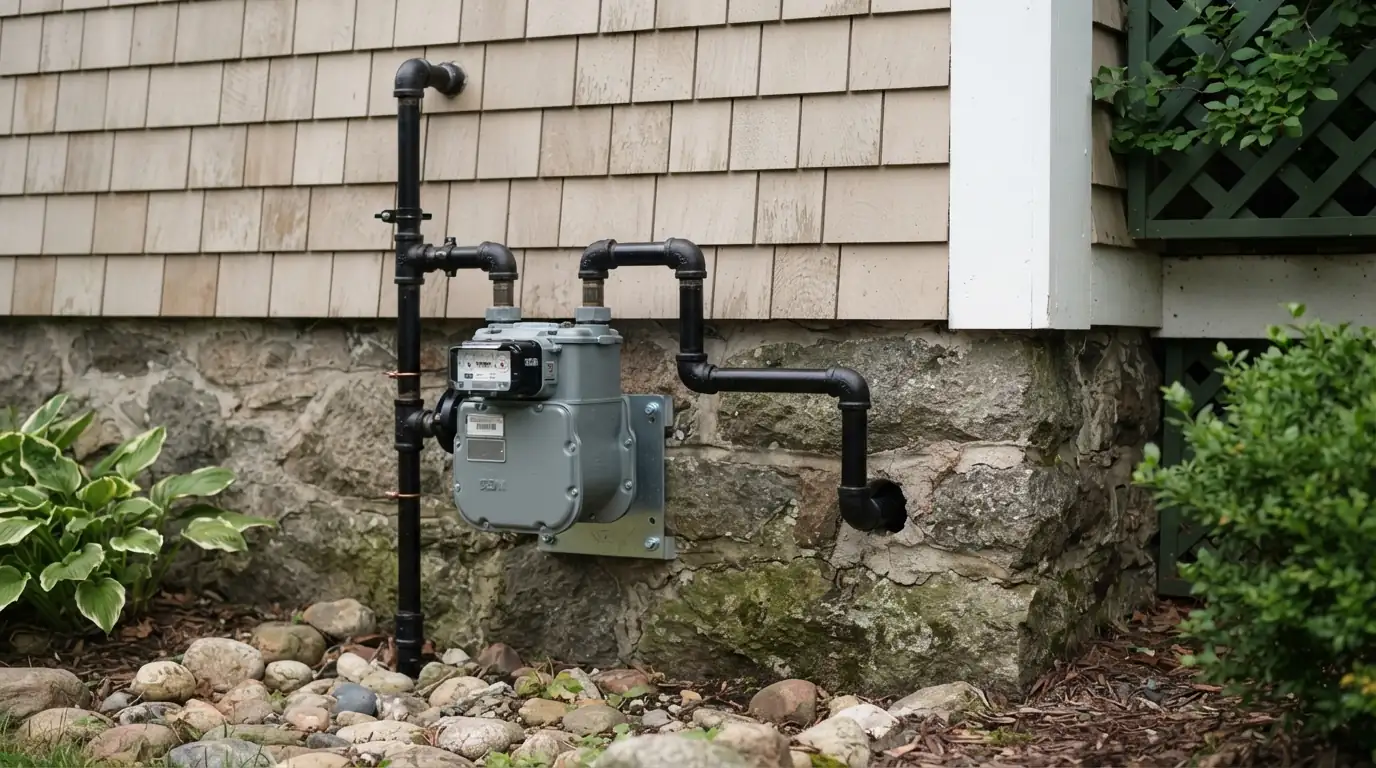
Gas Service and Meter Coordination
Before anything is installed, the house needs a gas service line and a meter sized for every gas appliance you plan to run. If there is gas in the street but not to the house, the gas utility runs the service; if the house already has gas for a stove or water heater, the meter may need upsizing. We calculate the total load, help you with the service request, and plan the interior gas piping from the meter to the new unit so it is ready when the utility sets the meter.
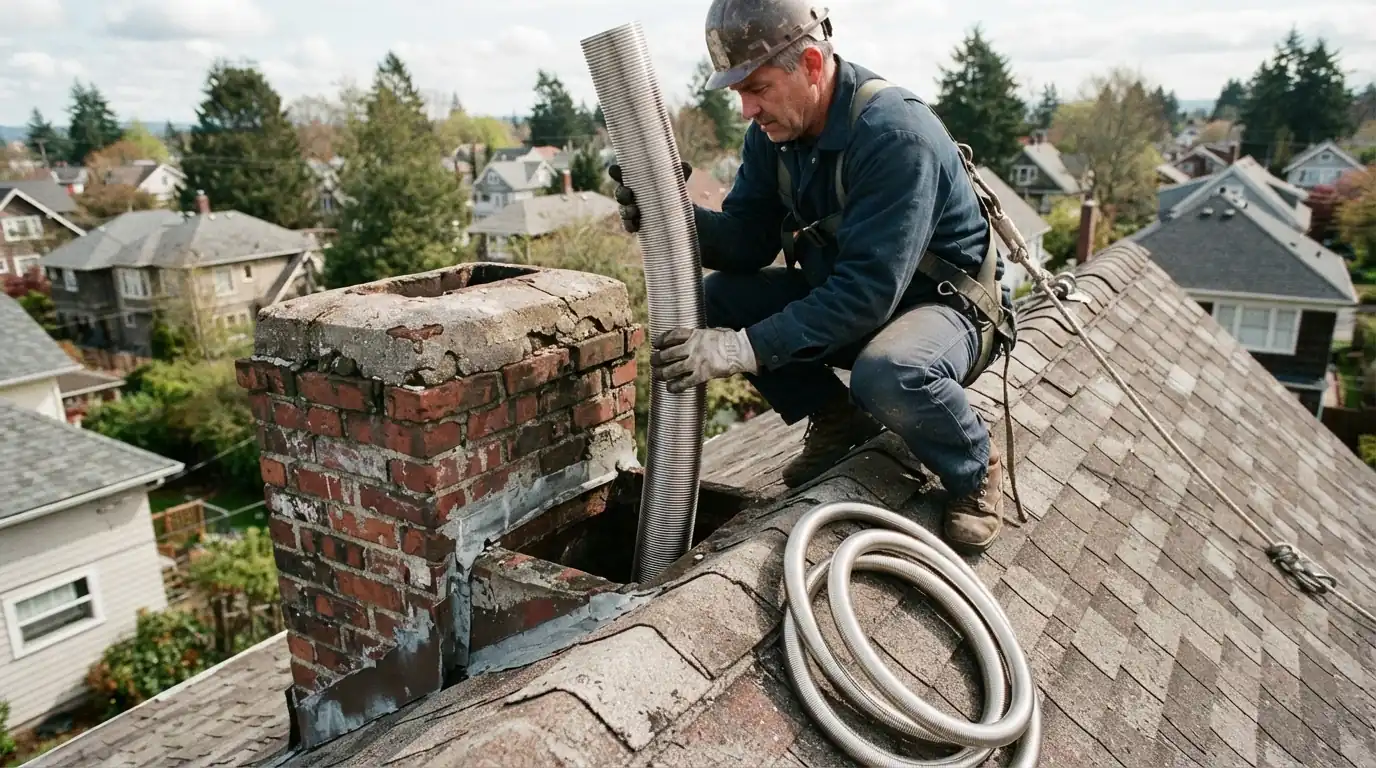
Chimney Liner for the New Appliance
A chimney built for an oil burner is usually too large for a gas appliance's cooler exhaust, which condenses on the way up and damages the masonry. An 80 percent gas furnace or a standard gas boiler needs a properly sized stainless liner. A condensing furnace or boiler skips the chimney entirely and vents through the sidewall in PVC. If a water heater still uses the chimney, it has to be accounted for too. We decide the venting before quoting so it is not a surprise on install day.
Oil Tank Removal After Conversion
Once the gas system is running, the oil tank, fill pipe, vent pipe and supply lines come out. Basement tanks are pumped of remaining oil, cut or removed whole, and carried out, and the exterior fill and vent pipes are removed and capped so no delivery driver ever pumps oil into an empty line. If the tank is outdoors, it is emptied and hauled away. We handle the removal as part of the conversion, so there is one crew and one schedule.
Why Bridgeport houses change the approach
Oil heat cost the average Connecticut home about $1,500 last season, more than any other major fuel, and statewide oil use is slowly declining as homes move to gas and electric heat. Conversions also need a permit and an inspection in towns around here, Milford among them, with fees usually $100 to $300. We file it and schedule the inspection so the new gas unit is signed off before the oil tank leaves.
We service and install Carrier, Lennox, Trane, Goodman and more
How a conversion runs, in order
- 1
Gas load check
We add up every gas appliance and size the service.
- 2
Utility request
The gas service and meter are requested from the utility.
- 3
Quote
Unit, venting, piping and tank removal priced in writing.
- 4
Permit
We file with the town.
- 5
Install day
Gas unit installed, piped and vented while oil heat stays on until the switch.
- 6
Commission
Gas pressure, combustion and draft are tested.
- 7
Tank out
The oil tank, lines and exterior pipes are removed.
How long you are without heat
Usually one day. The oil system stays in service until the gas unit is installed and ready to fire, so the only gap is the hours between shutting one down and starting the other. The utility's timeline for running gas service to the house is the longest step, which is why we start that request first.
Oil-to-Gas Conversion questions from Bridgeport homeowners
The gas utility can confirm it. If there is a main in the street, a service line can usually be run to the house.
Gas usually has lower running costs at current Connecticut electric rates; a heat pump adds cooling. We price both if you ask.
Yes. A gas boiler connects to the existing radiators and piping.
Yes for most non-condensing gas appliances. A condensing unit vents through the sidewall instead.
It is pumped out before the tank is removed.
Only for part of one day, when the oil system is shut down and the gas unit is started.
Related jobs we handle
Complete HVAC System Replacement
Matched furnace and AC replaced together, ducts checked.
More on complete HVAC system replacementFurnace Tune-Up
Fall combustion, safety and airflow check with a written report.
Furnace Tune-Up in BridgeportRadiant Floor Heating
Hydronic radiant zones for baths, additions and basements.
How we handle radiant floor heatingStop scheduling oil deliveries
Call and tell us whether you have a furnace or a boiler and whether gas is on your street. We will plan the conversion from the meter to the tank removal.