Carbon monoxide safety for Bridgeport homes in heating season
Where carbon monoxide comes from, how to keep it out of the house, and exactly what to do if an alarm goes off.
By Eleanor Boyer, HVAC Guides Editor · Updated October 2026
Carbon monoxide comes from fuel-burning appliances that are not venting properly: furnaces, boilers, water heaters and oil burners with blocked flues, cracked heat exchangers or backdrafting chimneys. Put alarms on every level and near sleeping areas, test them monthly, and have fuel-burning equipment checked every year. If an alarm sounds, get outside and call the fire department.
Where carbon monoxide comes from
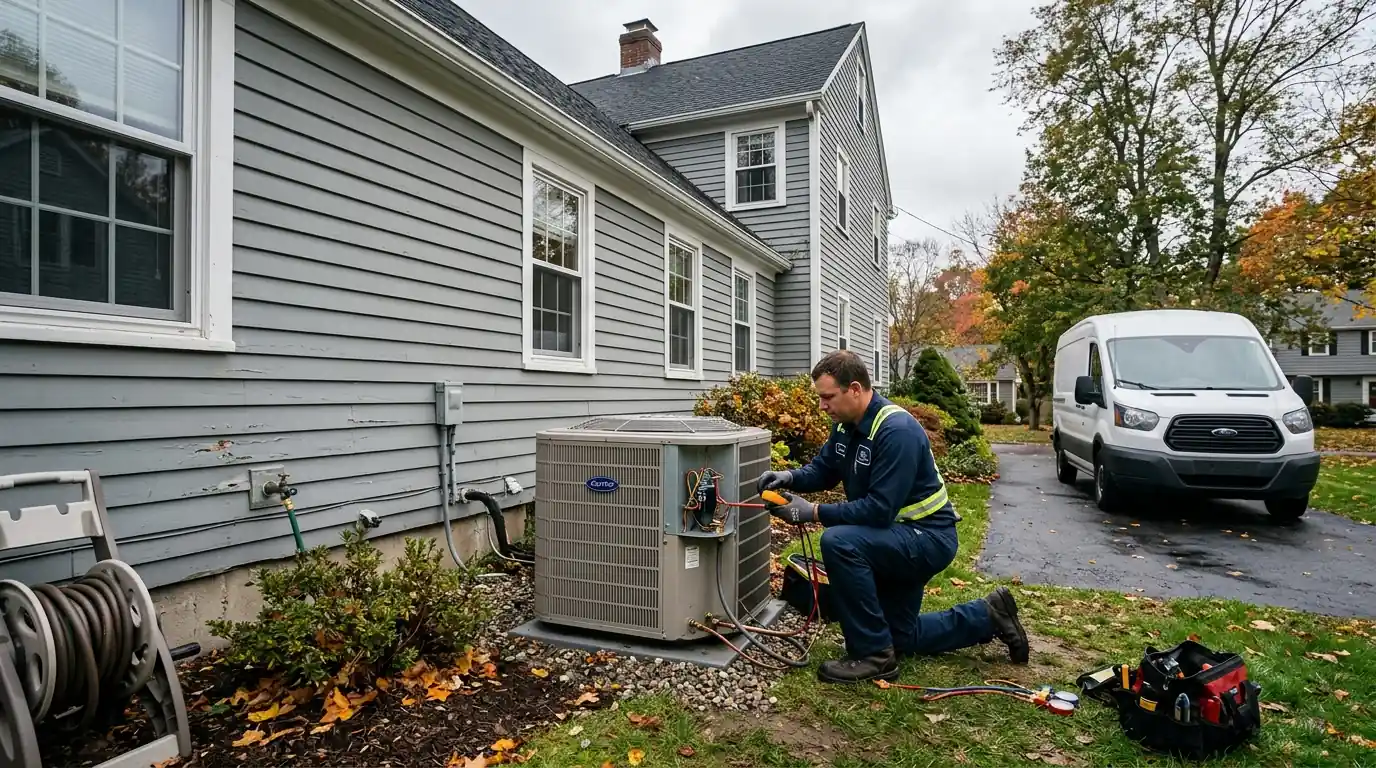
Carbon monoxide is produced whenever fuel burns without enough air, or when exhaust that should leave the house does not. In a home, the usual sources are gas and oil furnaces, boilers, water heaters, stoves and fireplaces. Properly working, properly vented equipment sends its exhaust outside. Problems start when something interrupts that path.
The heating faults that cause it
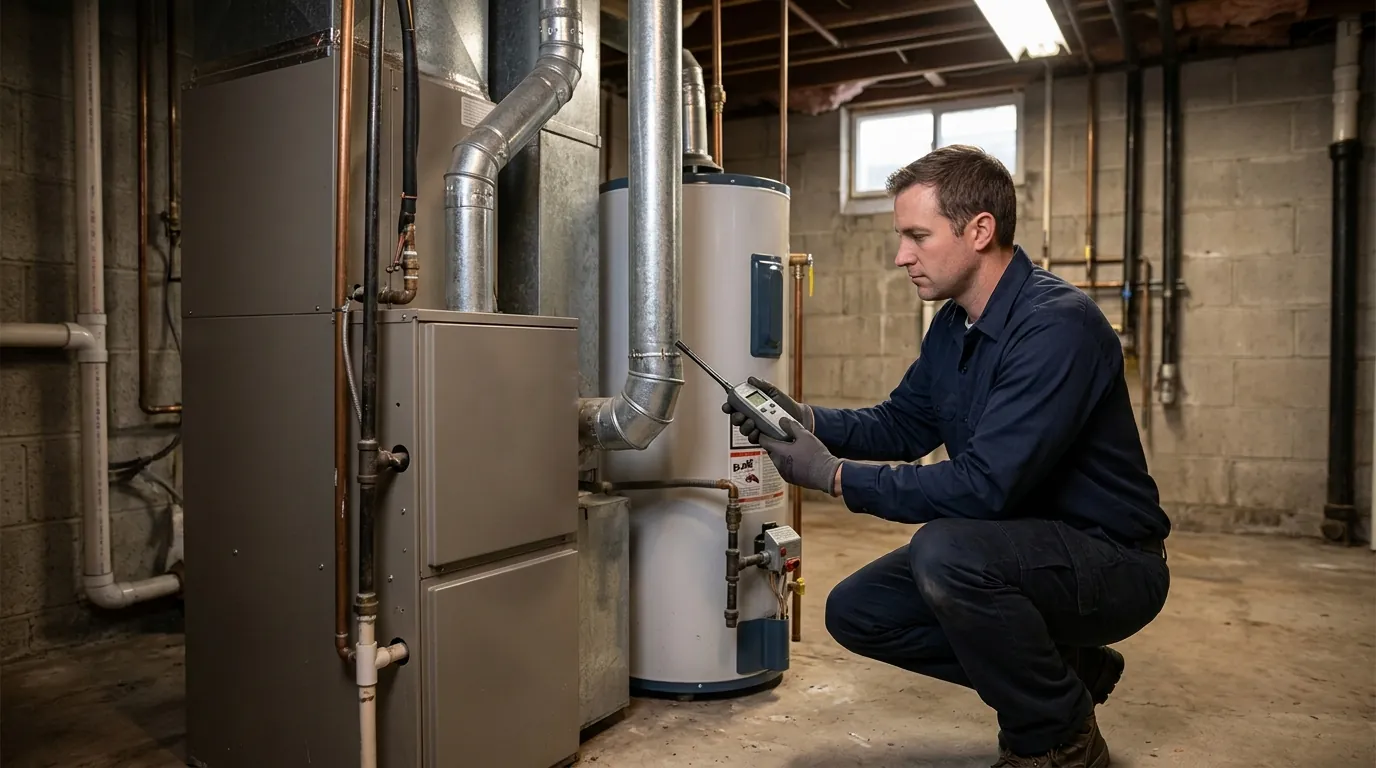
A cracked heat exchanger in a furnace can let combustion gases into the air that circulates through the house. A blocked or disconnected flue pipe, a chimney clogged by debris or a collapsed liner, or a sidewall vent buried in snow can all push exhaust back inside. Backdrafting happens when a chimney cannot pull exhaust up, often because the house is under negative pressure from exhaust fans, or because a water heater was left alone in a chimney sized for a much larger appliance.
Poorly adjusted burners make it worse, because they produce more carbon monoxide to begin with. That is one reason a combustion test is part of every annual tune-up.
Where to put alarms
Install carbon monoxide alarms on every level of the home, including the basement, and outside each sleeping area so they can be heard at night. Follow the manufacturer's placement instructions, which usually keep alarms away from the appliance itself and from bathrooms and kitchens where steam and cooking can cause false alarms. Combination smoke and carbon monoxide alarms are fine as long as they are placed correctly for both.
Test and replace them
Press the test button monthly and replace batteries on the schedule the manufacturer recommends. Many people tie it to the clock change in spring and fall. Carbon monoxide alarms also wear out; most have a replacement date printed on the back and will chirp at the end of their life. An alarm past its date is not protecting anyone.
Symptoms to take seriously
Carbon monoxide has no smell or color. Exposure can cause headache, dizziness, nausea, tiredness and confusion, often mistaken for the flu. A clue is when several people in the house feel unwell at the same time, or when symptoms ease after leaving the house. If you suspect exposure, get everyone into fresh air and seek medical help.
Worried about carbon monoxide?
Book a safety check. We test every fuel-burning appliance and the venting.
(203) 568-0715What to do if an alarm sounds
Get everyone out of the house, including pets, and call the fire department or 911 from outside. Do not open windows and go back in to look for the source. Once the fire department has cleared the house, call a heating technician to find and fix the cause. The appliance involved should stay off until it has been repaired and tested.
Sources beyond the heating system
Heating equipment is not the only risk. A car left running in an attached garage, a generator run near a window or in the garage during an outage, a charcoal grill used indoors, or a gas oven used to heat a room can all fill a house with carbon monoxide quickly. These are among the most dangerous situations because they tend to happen during storms, when people are trying to stay warm.
After a storm or power outage
When the power comes back after a storm, check that sidewall vents are clear of snow and ice before restarting condensing equipment, and run generators only outdoors, well away from doors and windows. If the heating system was off for a long time, watch it through its first few cycles and listen for anything unusual.
How annual service keeps it away
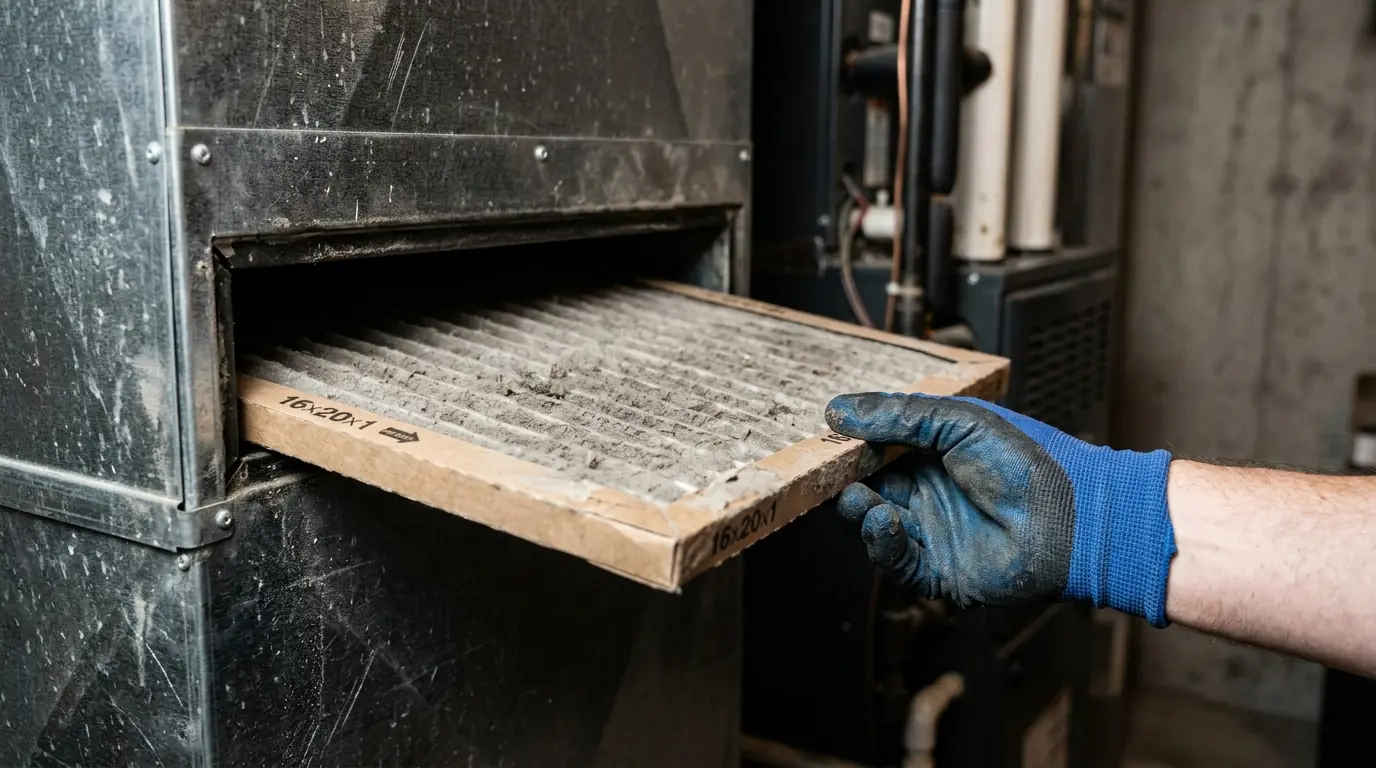
A yearly visit on each fuel-burning appliance is the best prevention. The technician measures carbon monoxide in the flue and at the registers, checks the heat exchanger, confirms the venting draws properly and clears any blockage. After a heavy snow, also check that sidewall vents for condensing furnaces and boilers are clear. See furnace tune-ups and emergency repair for when you need us.
More guides for Bridgeport homeowners
Boiler Replacement Cost in Connecticut: What Drives It
Published Connecticut ranges for gas and oil boiler replacement, what pushes a quote up or down, and how to.
Read the guideHeat Pump Cost in Connecticut, Before and After Rebates
Published Connecticut heat pump prices, Energize CT rebate figures, and what changes the cost for ducted and.
Read the guideWhy One Radiator Stays Cold While the Others Heat
Steam or hot water, the usual reasons one radiator stays cold, what you can safely check, and when a.
Read the guideCommon questions
On every level and outside each sleeping area, following the manufacturer's instructions.
Monthly, with batteries replaced on the manufacturer's schedule.
Yes, through a cracked heat exchanger, blocked flue or backdrafting.
Get everyone outside and call the fire department from outside.
Yes. Sidewall vents buried in snow can push exhaust back inside.
Check the replacement date on the back; many last several years.
Get your heating equipment safety-checked
Call to book a visit. We test for carbon monoxide at every fuel-burning appliance and check the venting.