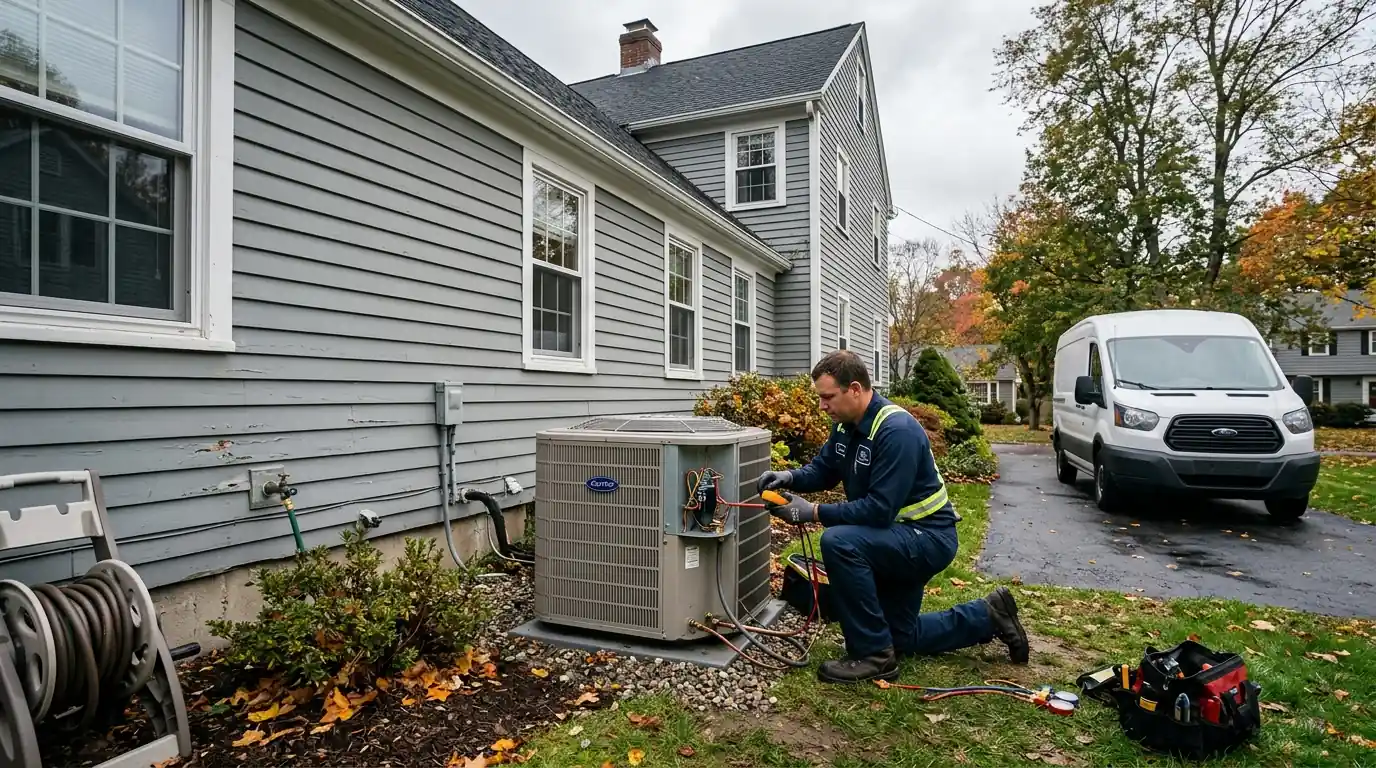
No heat in your Bridgeport home: the first things to check
A calm, ordered checklist for the moment the house goes cold, plus how to keep pipes from freezing while you wait for help.
By Eleanor Boyer, HVAC Guides Editor · Updated October 2026
If the heat goes out in Bridgeport, check the thermostat, the furnace or boiler switch and the breaker first, then the filter on a furnace or the pressure gauge on a boiler. If none of that restores heat, call for service. Never ignore a gas smell or a carbon monoxide alarm; leave the house and call from outside.
First, rule out anything dangerous
If you smell gas, leave the house without flipping switches, and call the gas utility or 911 from outside. If a carbon monoxide alarm is sounding, get everyone into fresh air and call the fire department. Neither is a heating repair until the house has been cleared. Once it has, call us and the appliance stays off until the cause is found.
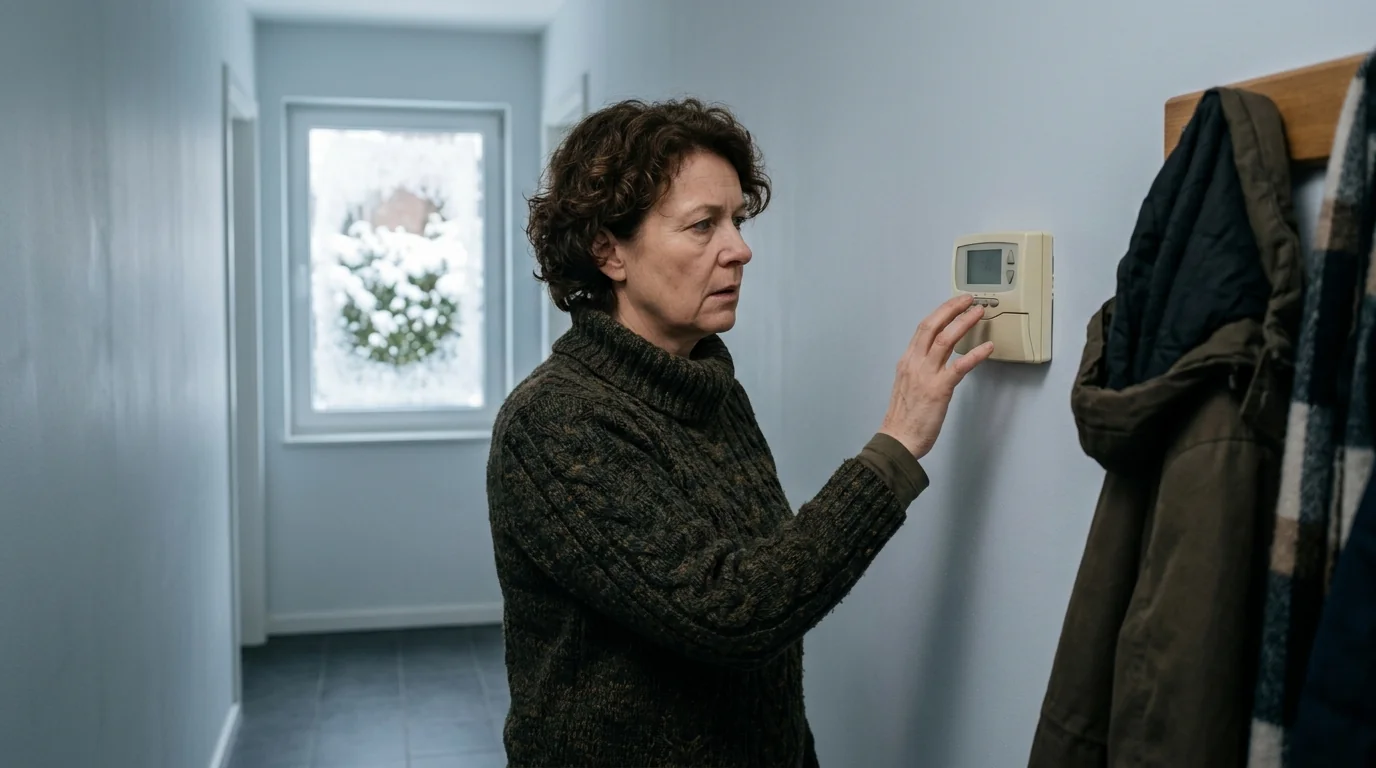
Check the thermostat
It sounds obvious, and it solves more calls than you would expect. Make sure it is set to heat, set a few degrees above room temperature, and has fresh batteries if it uses them. A blank screen usually means dead batteries or no power from the equipment. On a smart thermostat, check that it has not dropped into an away or eco mode overnight.
Check the power
Every furnace and boiler has a service switch, often at the top of the basement stairs or on the side of the unit, that looks like a light switch. Make sure it is on. Then check the breaker panel for a tripped breaker labeled furnace, boiler or burner. Reset a tripped breaker once. If it trips again, leave it off and call.
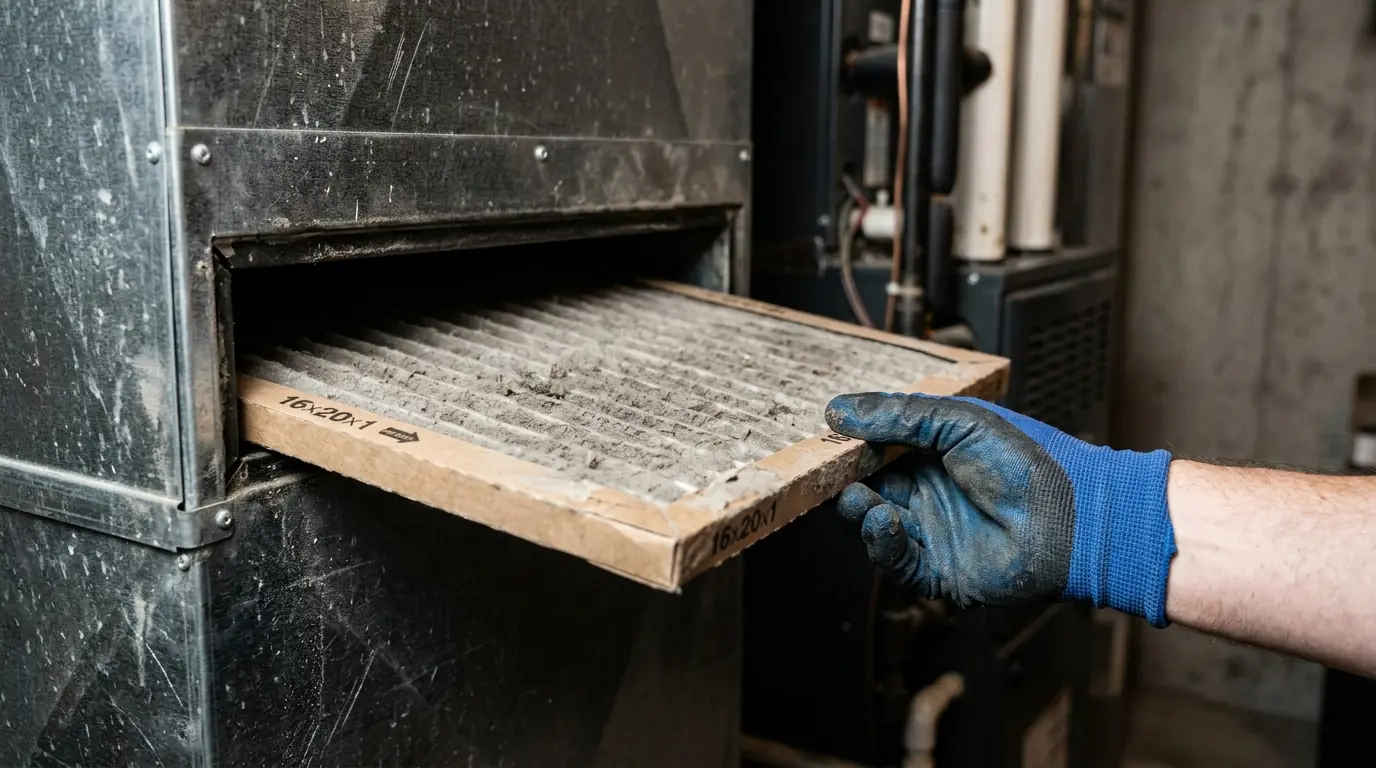
Furnace: check the filter and the door
A badly clogged filter can make a furnace overheat and shut itself off on a safety switch. Pull it out and look; if it is caked gray, replace it or run the furnace without it briefly while you wait for a new one. Also make sure the furnace's front panel is fully closed. A small safety switch behind the door keeps the furnace off if the panel is loose.
Listen as it tries to start. If it clicks, tries to light and shuts down again, that points to an ignitor or flame sensor, which is a repair call. See our furnace repair page for what those faults usually are.
Boiler: check the pressure and the water
On a hot-water boiler, look at the pressure gauge. Around 12 to 15 psi cold is normal. Much lower and the upper floors may go cold; much higher and the relief valve may open. On a steam boiler, check that water is visible in the sight glass. Do not add water to a hot steam boiler with an empty glass; turn it off and call.
If only some radiators are cold, air in those radiators or a stuck zone valve is the usual cause. Bleeding a radiator on a hot-water system is a reasonable homeowner job. Anything more belongs to boiler repair.
House still cold after these checks?
Call any hour. A person answers and you get a time on the call.
(203) 568-0715Oil burner: press reset only once
Oil burners have a red reset button on the primary control. Press it once. If the burner fires and keeps running, keep an eye on it and book a service visit, since a lockout usually means a clogged nozzle or filter. If it does not fire, do not keep pressing. Repeated resets can flood the combustion chamber with oil, which turns a simple repair into a dangerous one.
When it can wait until morning
Not every heating problem is an emergency. If the house is holding above about sixty degrees, there is no gas smell or alarm, and nobody in the home is especially vulnerable to cold, a morning appointment is usually fine. A furnace that is noisy but still heating, or one room running cooler than the rest, can also wait. When you call, we help you decide which situation you are in.
What to tell us when you call
A few details help the technician arrive with the right parts. Say whether the system is a furnace, boiler or heat pump, and whether it runs on gas, oil or electricity. Mention any error code or blinking light, what happens when it tries to start, and what the pressure gauge reads on a boiler. Tell us if anyone at home is elderly, very young or unwell, since that changes how we prioritize the call.
Protect the pipes while you wait
Bridgeport January lows average around 27 degrees, and pipes along outside walls are the first to freeze. Open cabinet doors under sinks on outside walls, let a faucet drip, and close doors to rooms you are not using to hold heat. A space heater used carefully in the main room helps. Never heat the house with an oven, a grill or a generator indoors.
More guides for Bridgeport homeowners
Steam vs Hot Water Radiators: Which Do You Have?
Steam or hot water radiators? How to tell, why it changes repairs and replacements, and what each needs in.
Read the guideEnergize CT HVAC Rebates in 2026: What Qualifies
What Energize CT pays in 2026 for heat pumps and central air, how Energy Optimization works, and what ended.
Read the guideSigns Your Furnace Is Failing Before Winter
Short cycling, rising bills, odd noises and cold rooms: what each furnace warning sign means and when to.
Read the guideCommon questions
Thermostat settings and batteries, the furnace or boiler switch, and the breaker.
Once. Repeated resets can flood the chamber with oil.
Briefly, while you get a new filter, yes. Do not leave it that way.
About 12 to 15 psi cold on a typical hot-water boiler.
Open cabinets on outside walls, drip a faucet, and keep the main rooms warm.
Any time the basic checks do not restore heat, or immediately for a gas smell or CO alarm.
Still no heat? Call now
Tell us whether it is a furnace, boiler or heat pump and what it is doing, and you get a time window on the same call.