Selling a Bridgeport house with an oil tank: what buyers and inspectors ask
Oil tanks are a common question in Connecticut home sales. Here is what inspectors, buyers and lenders usually ask, and how to get ahead of it.
By Eleanor Boyer, HVAC Guides Editor · Updated October 2026
Connecticut has no single statewide rule that every oil tank must be removed before a sale, but buyers, home inspectors, lenders and insurers often ask about tanks, especially buried ones. An old or leaking basement tank is usually replaced or removed, and many towns require a permit from the fire marshal to remove or abandon a tank. Check your town's rules early.
Why tanks come up in a sale
About a third of Connecticut households heat with oil, so tanks turn up in a large share of home inspections. Buyers worry about leaks, the age of the tank and what happens if they want to switch fuels, and insurers and lenders sometimes ask about tanks before they will write a policy or a loan. A tank that is clearly in good shape, or already dealt with, removes one more reason for a buyer to negotiate.
Basement and above-ground tanks
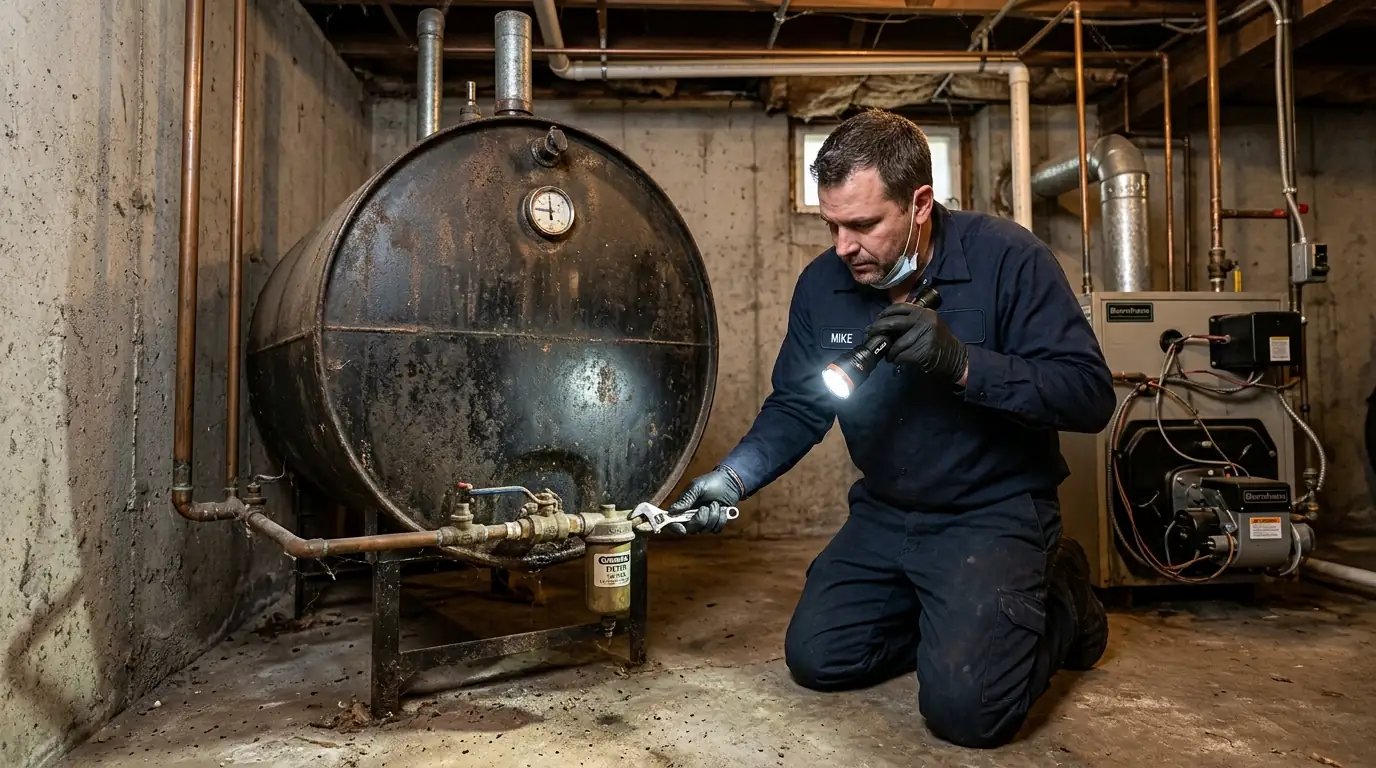
Inspectors look at the tank's age, rust on the bottom and seams, wet spots or weeping, the condition of the legs, and the fill and vent pipes outside. Tanks often carry a manufacture date on a label. An old tank with rust or seepage is usually replaced before listing, and a tank that is no longer in use after a conversion is usually removed. See oil tank replacement for how we handle both.
Buried tanks
Underground oil tanks get the most attention, because a leak can reach the soil and groundwater and is expensive to clean up. Old fill or vent pipes sticking out of the ground near the house are the usual clue that a buried tank exists. Buyers often ask for the tank to be tested or removed, and some lenders and insurers require it. If you suspect a buried tank, find out before you list rather than during the inspection.
Permits and your town
Many Connecticut towns require a permit from the local fire marshal to remove or abandon an oil tank, and some have their own rules for tanks that are no longer in use. The rules differ from town to town, so check with yours before work starts. Removal should also cover the fill and vent pipes and the oil lines, so nothing suggests a tank that is no longer there.

Selling a house with an oil tank?
We check the tank and tell you whether replacement, removal or a conversion makes the most sense before you list.
(203) 568-0715Replace, remove or convert?
If the house will keep heating with oil, replacing an old tank with a new one is the simplest fix and reassures buyers. If the house is switching to gas or a heat pump, removing the tank as part of the conversion settles the question for good. See oil-to-gas conversion or heat pumps for homes leaving oil if a fuel change is on the table.
Paperwork buyers like to see
Keep the receipt and date for a tank replacement, any permit and sign-off from the town, and a recent service record for the boiler or furnace. A short, dated note from the contractor describing what was done is easy for a buyer's inspector to verify and tends to end the conversation quickly.
Plan ahead of the listing
Tank work is easier on your schedule than on a buyer's. Replacing or removing a tank, or converting fuels, can take a few weeks once permits and scheduling are counted. Start a few weeks before you list so the work and the paperwork are finished before the first showing.
More guides for Bridgeport homeowners
What a Furnace Replacement Costs in Bridgeport, CT
Connecticut furnace replacement ranges, what pushes a quote up or down, and how to compare bids in.
Read the guideHeat Pump vs Oil Heat in Connecticut: Real Costs
Heat pump or oil in Connecticut? Fuel costs, installed prices, Energize CT rebates and when to keep oil as.
Read the guideNo Heat in Bridgeport: What to Do First
Furnace or boiler out? What to check in the first ten minutes, how to protect pipes, and when to call for.
Read the guideCommon questions
Not by one statewide rule, but buyers, lenders and insurers often ask, and old or buried tanks are usually dealt with before a sale.
Old fill or vent pipes in the yard near the house are the usual sign.
Many Connecticut towns require one from the fire marshal. Check with your town.
Replace it if the house stays on oil; remove it if you are converting to another fuel.
Often a few weeks once permits and scheduling are counted, so start before you list.
It can raise questions, but a documented replacement or removal usually settles them.
Get the tank sorted before you list
Call to book a tank check. We tell you what buyers are likely to ask and what to do about it.