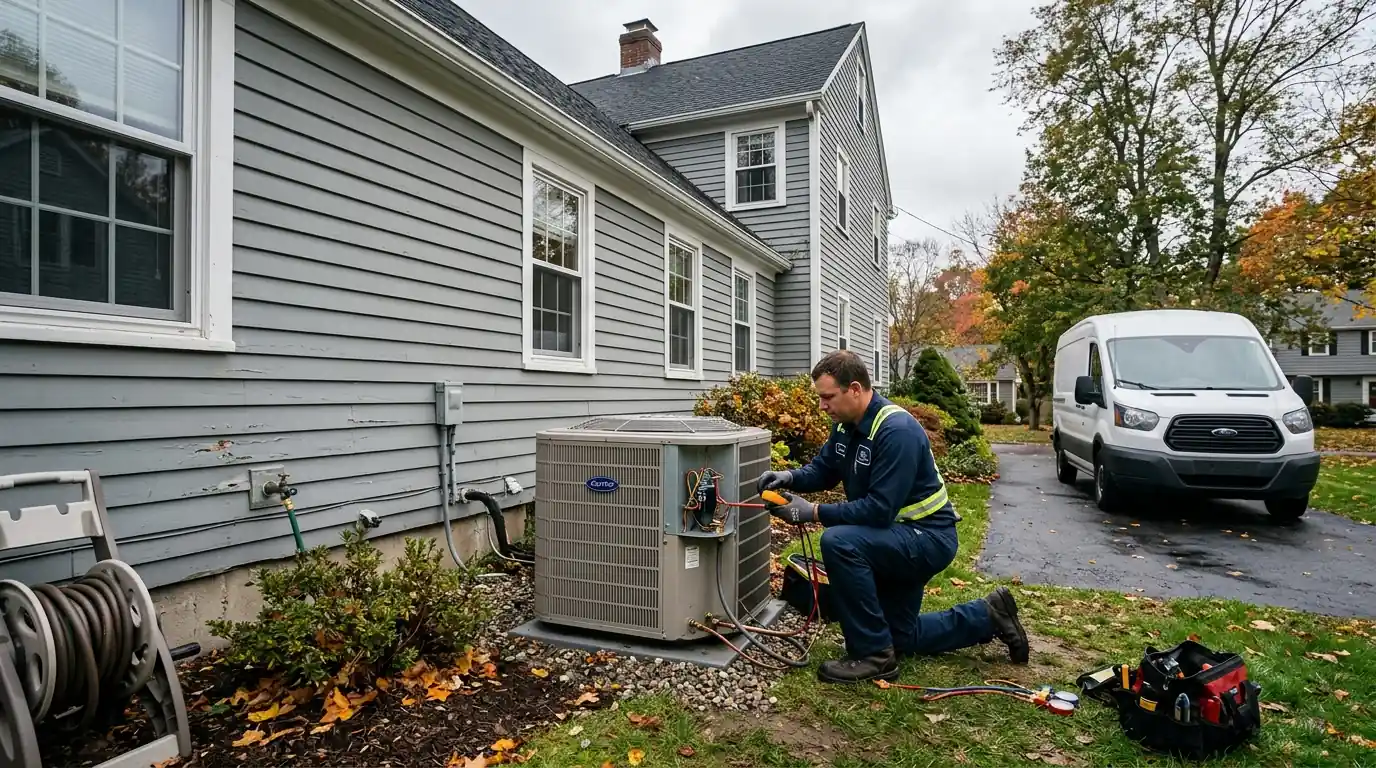
Is switching from oil to gas worth it for a Bridgeport home?
The costs, the steps and the honest comparison with keeping oil or moving to a heat pump instead.
By Eleanor Boyer, HVAC Guides Editor · Updated October 2026
For a Connecticut home with gas in the street, converting from oil to gas usually lowers heating costs and ends deliveries. A new gas furnace typically runs about $3,500 to $8,000 installed and a gas boiler about $3,700 to $8,300, plus venting, gas piping and oil tank removal. Whether it pays off depends on gas availability and the age of your oil system.
Why homeowners consider the switch
About a third of Connecticut homes still heat with oil, and oil was the most expensive major heating fuel for a typical home last season, at roughly $1,500 for the winter in federal estimates. Oil prices also swing during the season, which makes bills hard to plan. Gas is usually cheaper per unit of heat, arrives by pipe, and needs no tank in the basement.
First question: is gas available?
Everything depends on whether there is a gas main in your street. If there is, the gas utility can usually run a service line to the house. If there is not, a conversion is off the table, and the comparison becomes oil against a heat pump. The utility can confirm availability, and it is worth asking before anyone quotes equipment.
What the conversion involves
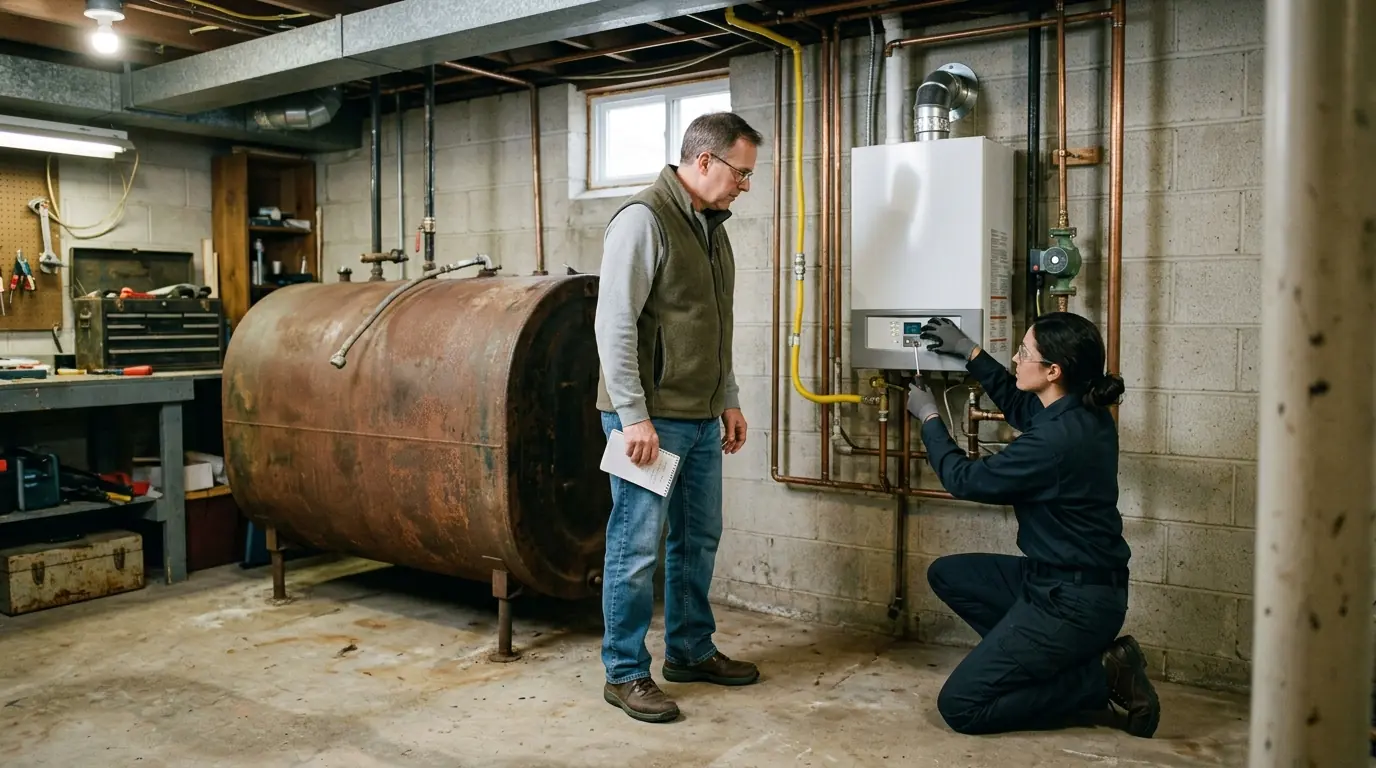
The appliance swap itself is usually one day. Around it sit several other pieces: the gas service line and meter, interior gas piping from the meter to the new furnace or boiler and to any other gas appliances, venting, a permit and inspection, and removal of the oil tank and its fill and vent pipes. In towns around here, Milford among them, heating permits typically run $100 to $300.
Venting is the piece people forget. A chimney built for oil is usually too large for a standard gas appliance, which then needs a stainless liner. A condensing furnace or boiler skips the chimney and vents through the sidewall instead.
What it costs
Published Connecticut ranges put a gas furnace at about $3,500 to $8,000 installed, and a gas boiler at about $3,700 to $8,300, rising to around $12,000 for high-efficiency models. Venting, gas piping and tank removal add to that, and the total depends heavily on the house. A quote should list each piece separately so you can see where the money goes.
Gas or a heat pump?
At current Connecticut electric rates, natural gas usually costs less to run than a heat pump. A heat pump adds air conditioning and qualifies for Energize CT rebates, and it avoids new gas piping. Some homeowners do both: gas heat for winter and a heat pump or mini splits for cooling and the shoulder seasons. See heat pump installs in Bridgeport for that route.
Thinking about leaving oil behind?
Tell us whether gas is on your street and we will price the conversion end to end.
(203) 568-0715When a conversion makes the most sense
A conversion makes the most sense when gas is already in the street, the oil boiler or furnace is old enough to need replacing soon anyway, and the oil tank is aging. Replacing a failing oil system with another oil system and then converting a few years later means paying for two installs. If the oil equipment is young and gas is years away, a well-maintained oil system is still a reasonable choice for now.
What happens to the oil tank
Once the gas system is running, the oil tank should not simply be left in place. It is pumped of any remaining oil, disconnected, cut up or removed whole, and carried out, and the fill and vent pipes outside are removed and capped. Leaving a live fill pipe on the house is how oil ends up pumped into a basement by mistake. An outdoor tank is emptied and hauled away.
Timing the switch
Late spring through early fall is the easiest window. The heating system can be off for a day without anyone noticing, the utility's service work is easier outside frozen-ground season, and there is time to compare quotes. A conversion done in a January emergency usually costs the same money with twice the stress.
How we plan a conversion
We start with the gas load for the whole house, request the service from the utility, and plan the furnace or boiler, venting and piping together. The oil system stays running until the gas unit is ready to fire, so the house is only without heat for part of one day, and the tank comes out once the new system is running. See how an oil-to-gas switch works for the details.
More guides for Bridgeport homeowners
Carbon Monoxide and Your Heating System: A Winter Guide
Where carbon monoxide comes from in a heating system, where to put alarms and what to do if one sounds in.
Read the guideBoiler Replacement Cost in Connecticut: What Drives It
Published Connecticut ranges for gas and oil boiler replacement, what pushes a quote up or down, and how to.
Read the guideHeat Pump Cost in Connecticut, Before and After Rebates
Published Connecticut heat pump prices, Energize CT rebate figures, and what changes the cost for ducted and.
Read the guideCommon questions
The new gas unit typically runs $3,500 to $8,300 before venting, piping and tank removal.
The install is usually one day; getting gas service to the house takes longer.
Usually for a standard gas appliance; condensing units vent through the wall.
Yes. A gas boiler connects to the existing radiators.
Usually, per unit of heat, in Connecticut.
Gas usually costs less to run; a heat pump adds cooling and earns rebates.
Price your conversion
Call with your street and your current system, and we will plan the conversion from the meter to the tank removal.