Ductless or central air for an older Bridgeport home
How to cool a house that was built long before air conditioning, and how the three main options compare on cost, looks and disruption.
By Eleanor Boyer, HVAC Guides Editor · Updated October 2026
In an older Bridgeport home with radiators and no ducts, ductless mini splits are usually the simplest way to add cooling, because each room gets its own head and no ductwork is needed. Central air makes sense when the house already has ducts from a furnace. High-velocity systems suit owners who want hidden vents and have attic space.
Why older houses make cooling tricky
Roughly a third of Bridgeport's homes were built before 1940, long before central air was common. Most heat with a boiler and radiators, which means there are no ducts to carry cool air. The usual result is window units in every bedroom: noisy, blocking the view, and pulled out every fall. Adding real cooling means either bringing air in without ducts, or finding a way to add ducts without tearing the house apart.
Option one: ductless mini splits
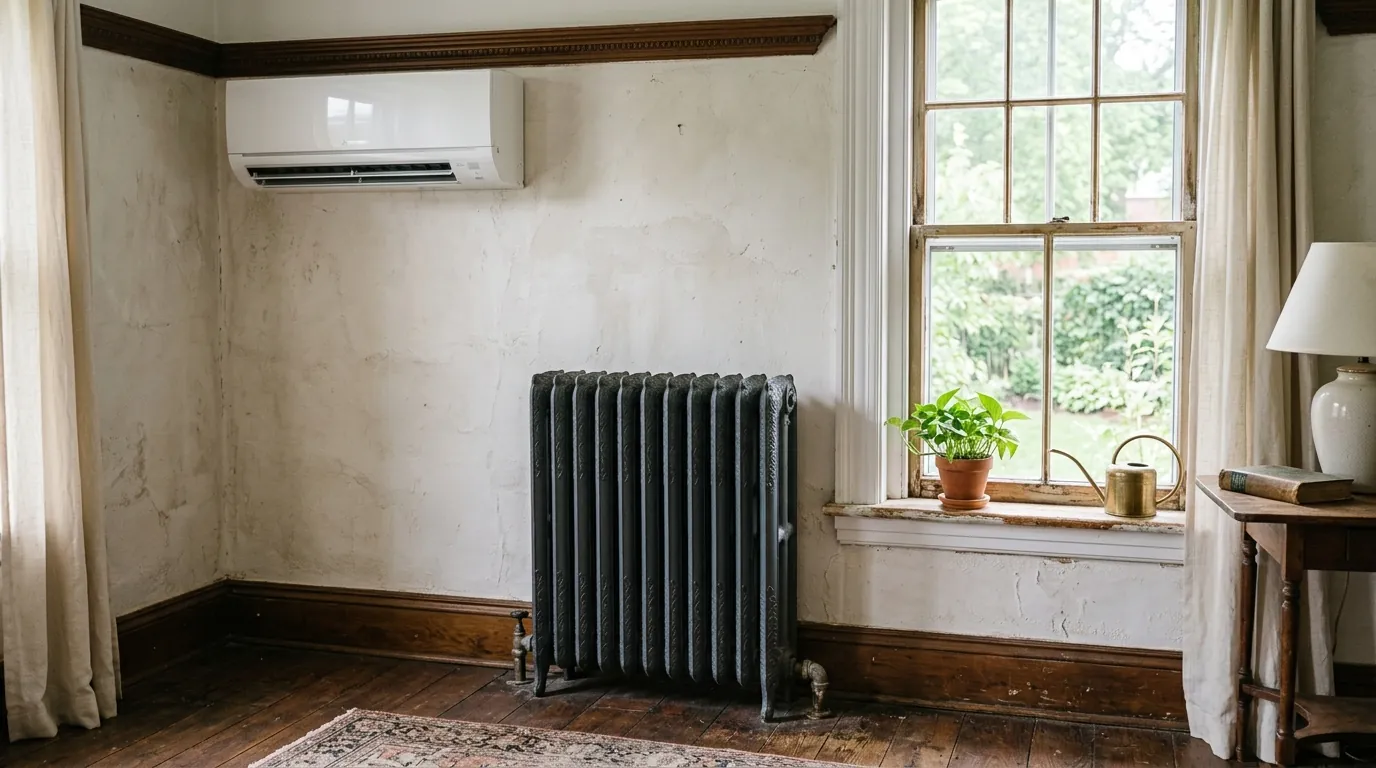
A mini split system uses an outdoor unit connected to one or more indoor heads by a small line set that passes through a three-inch hole in the wall. Each head cools, and in heating mode heats, the room it sits in, with its own temperature control. Nothing inside the walls has to change.
The tradeoff is visible equipment: each head is on the wall, ceiling or floor. Layout matters more than brand; a head placed well throws air across the room, while one placed badly blows on the bed or the couch. See ductless mini split installation for how we plan them.
Option two: central air
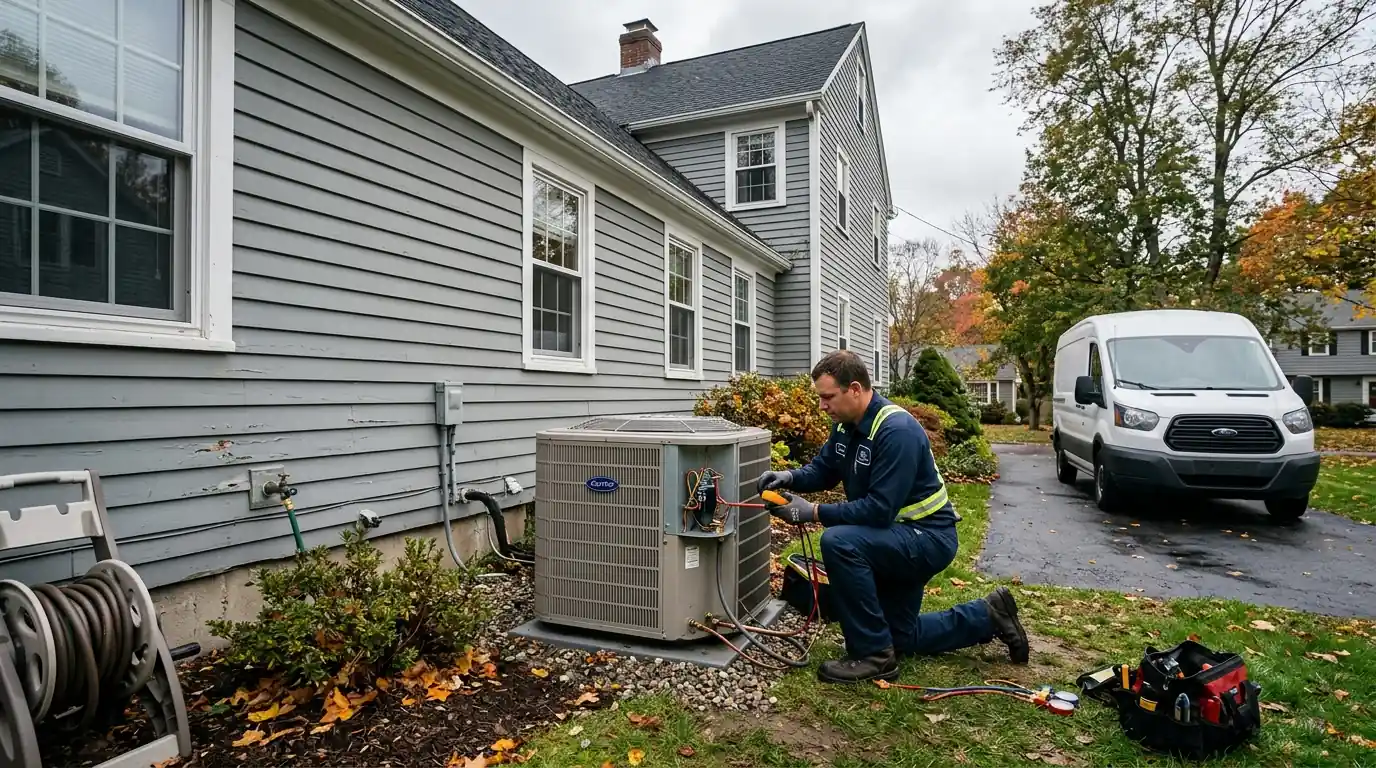
If the house already has a forced-air furnace, central air is usually straightforward: a coil on the furnace, a condenser outside and a line set between them. Published Connecticut ranges put central AC replacement at about $4,200 to $9,500. The catch is ducts. Heating ducts are often too small for cooling airflow, especially the returns, so the system needs to be checked before it is quoted. See central air installation.
Option three: high-velocity small-duct systems
High-velocity systems push air through small flexible tubes, about two inches across, that can be snaked through closets, attics and wall cavities with little demolition. The room outlets are small round vents rather than wall units, which appeals to owners of historic homes who want the cooling to disappear. They need attic or basement space for the air handler, and they cost more than a basic mini split system.
How the options compare
For a radiator house with no ducts, ductless is usually the lowest-disruption, most flexible route, and it can carry part of the heating load in spring and fall. For a house that already has a furnace and reasonable ducts, central air is the natural fit. For owners who want no visible equipment at all and have the space, high-velocity is worth pricing. Many houses end up mixing: central air on the first floor from an existing furnace, a mini split for a hot top floor.
Planning to cool an older home?
We lay out every room on paper before we quote, so you can see where everything goes.
(203) 568-0715Humidity matters as much as temperature
Bridgeport summers are humid, with relative humidity in the mid 70s much of the year. An air conditioner that is oversized cools the air quickly and shuts off before it has pulled out the moisture, leaving rooms cold and clammy. Whichever option you choose, sizing each zone to its actual load is what makes the house feel dry and comfortable, not just cold.
Using mini splits in winter too
Because most mini splits are heat pumps, they do not sit idle once summer ends. In spring and fall they can heat the rooms they serve and let the boiler stay off, and in an oil-heated house that trims deliveries. On the coldest nights, the boiler takes over. Planning the system with both seasons in mind is what turns a cooling purchase into one that also lowers the heating bill.

Questions to ask before choosing
Ask how each room will be sized, where the indoor units or vents will go, how the line sets will be routed and covered outside, and whether the electrical panel has capacity. Ask whether the system can also help with heat, since a mini split or heat pump can lower oil use in the shoulder seasons. A contractor who answers those questions before quoting has actually looked at your house.
More guides for Bridgeport homeowners
Is an Oil-to-Gas Conversion Worth It in Connecticut?
What an oil-to-gas conversion involves, what it costs, how it compares with a heat pump, and when it makes.
Read the guideCarbon Monoxide and Your Heating System: A Winter Guide
Where carbon monoxide comes from in a heating system, where to put alarms and what to do if one sounds in.
Read the guideBoiler Replacement Cost in Connecticut: What Drives It
Published Connecticut ranges for gas and oil boiler replacement, what pushes a quote up or down, and how to.
Read the guideCommon questions
Not without adding ducts. Ductless or high-velocity systems are usually better fits.
Indoor heads are quiet; the outdoor unit runs outside, away from bedrooms.
Yes. Most are heat pumps and heat well in Connecticut's shoulder seasons and beyond.
A single-zone mini split is usually the least expensive way to cool one room.
Wall heads are compact; ceiling cassettes and floor consoles are alternatives.
Yes. Many homes use central air downstairs and a mini split upstairs.
Find the right cooling for your house
Call to book a layout visit. We look at the rooms, the panel and the walls before recommending anything.